
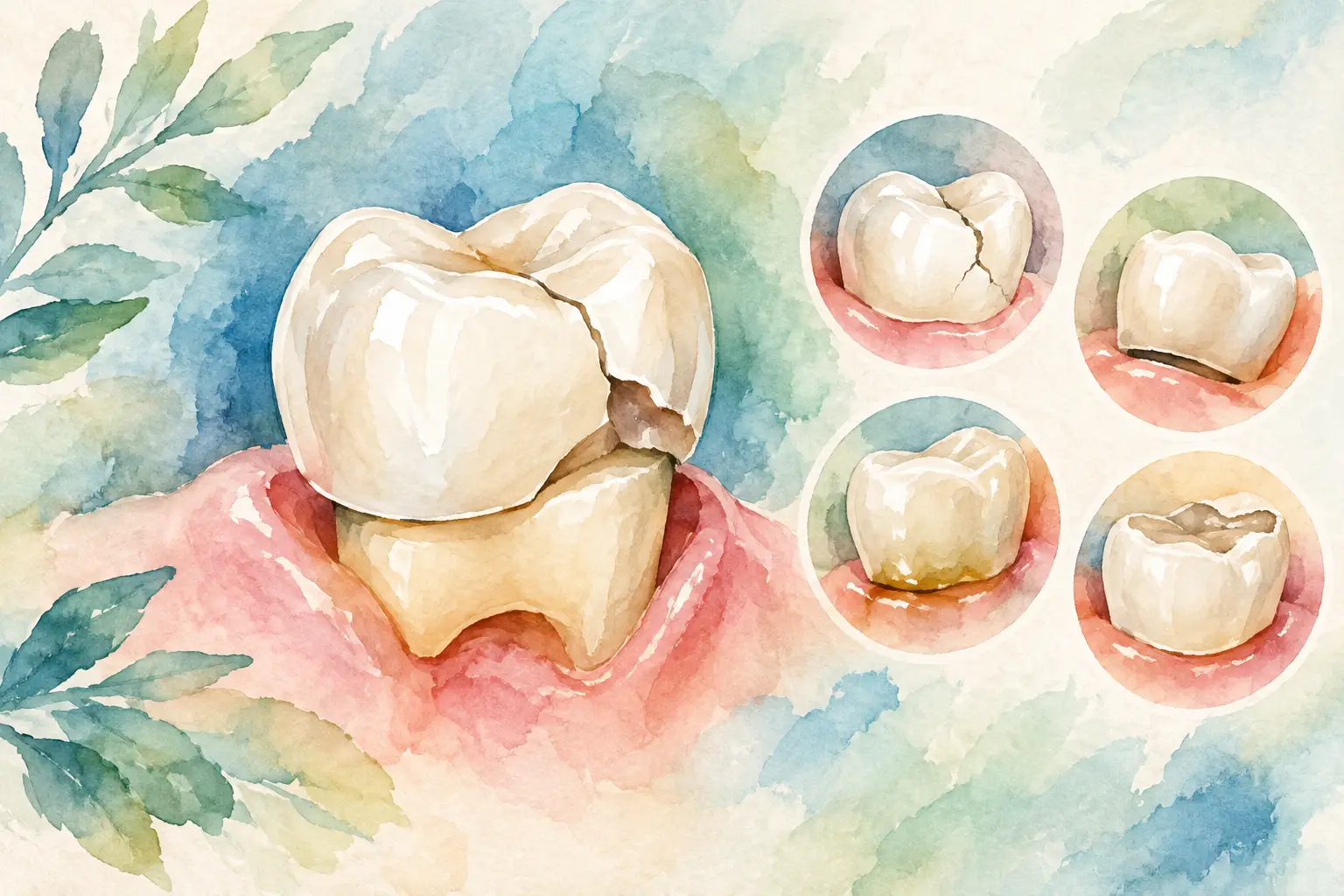
A crown is designed to restore a damaged tooth so you can chew, speak, and smile comfortably again. But patients often ask, when do crowns fail? The answer is not always obvious. A crown may look intact while a problem develops underneath it, or it may loosen suddenly after years of reliable use. Recognizing the early signs gives you the best chance of protecting the tooth beneath the restoration.
Most dental crowns last many years, often a decade or longer with good care. Their lifespan depends on the crown material, the condition of the supporting tooth and gums, bite forces, daily habits, and regular dental maintenance. A crown is durable, but it is not indestructible – and neither is the natural tooth supporting it.
When Do Crowns Fail? It Is Not Always Sudden
Crown failure can mean different things. Sometimes the crown itself cracks, chips, wears down, or comes loose. In other cases, the crown remains in place but the tooth underneath develops decay, a fracture, or a root canal infection. Gum disease can also reduce the support around the tooth, affecting the long-term outlook for the restoration.
A crown that falls off is certainly a clear problem, but it is not always the most serious one. In some cases, the crown has simply lost its cement and can be recemented if both the crown and tooth are in good condition. If decay has weakened the tooth or the crown no longer fits accurately, a replacement may be the safer solution.
The important point is that crowns do not usually fail because a patient has done something wrong. Restorations experience years of chewing pressure, temperature changes, and exposure to plaque bacteria. Regular exams help identify smaller concerns before they become painful or more complex to treat.
Signs Your Dental Crown Needs Attention
Sensitivity or discomfort is one of the most common warning signs. A brief response to cold can happen for several reasons, but persistent sensitivity, pain when biting, or a lingering ache should be assessed. It may indicate a gap around the crown, decay near the edge, a crack in the tooth, or irritation of the dental pulp.
You may also notice that your bite feels different. A crown should feel like part of your natural smile, not like it is hitting first when you close your teeth. A new high spot, pressure during chewing, or discomfort on one side can occur if the crown has shifted, if the supporting tooth has changed, or if there is a fracture.
Other signs include a visible chip, crack, dark line near the gumline, rough edge, recurring bad taste, swelling, or bleeding around the crowned tooth. A loose crown should be examined promptly, even if it is not painful. Food and bacteria can enter beneath a loose restoration, where they may cause decay without being easily visible.
If a crown comes off, keep it in a clean container and contact your dental office. Do not use household glue or attempt to force it back into place. The crown may be reusable, but it needs to be evaluated and cemented properly.
Why Dental Crowns Fail
Decay at the Crown Margin
The margin is the fine line where the crown meets your natural tooth. Plaque can collect here, particularly if brushing or flossing is difficult. Over time, bacteria can cause decay at this edge and underneath the crown. Because the crown covers the tooth, this decay may not be visible until it has progressed.
This is one reason daily flossing matters even when a tooth is crowned. A crown cannot decay, but the natural tooth and gum tissue around it still can.
Cracks in the Tooth or Crown
Teeth that need crowns have often been weakened by large fillings, trauma, or root canal treatment. Although the crown protects the tooth, a crack can still develop in the remaining tooth structure, particularly under heavy bite pressure. Grinding or clenching, chewing ice, and biting hard foods can also chip porcelain or fracture a crown.
Small surface chips may be repairable depending on the material and location. A deeper crack often requires replacement. If the tooth itself is split below the gumline, saving it may not be possible, and options such as implant-supported tooth replacement may be discussed.
Loose Cement and Poor Fit
Dental cement can weaken gradually. A crown may begin to feel loose, trap food, or develop a slight movement before it comes off. In other situations, wear, gum recession, or changes in the tooth can create a gap at the margin.
A poorly fitting crown can allow bacteria in from the start, which is why accurate planning, imaging, and careful placement matter. Modern digital dentistry can support precise restorative planning, but regular follow-up remains essential.
Gum Disease and Bone Loss
A crown relies on the tooth, gum tissue, and bone around it for support. Periodontal disease can cause gum inflammation, recession, and bone loss, exposing crown margins and weakening the foundation around the tooth. This is especially relevant for patients who have bleeding gums, persistent bad breath, or teeth that feel mobile.
Managing gum health may involve a more detailed cleaning program or periodontal treatment before replacing a failing crown. Simply placing a new crown without addressing active gum disease may not provide a lasting result.
Bite Forces and Grinding
Nighttime grinding can place significant stress on crowns, natural teeth, and jaw joints. Signs include worn chewing surfaces, jaw soreness, morning headaches, or repeated chipping of restorations. A custom night guard may help protect a new or existing crown when grinding is a concern.
Crown material also matters. Porcelain can provide a highly natural appearance, while materials such as zirconia may be recommended where greater strength is needed. The best choice depends on the location of the tooth, your bite, aesthetic goals, and the amount of healthy tooth structure remaining.
How Long Should a Crown Last?
There is no single expiry date for a dental crown. Many last 10 to 15 years, and some last longer. Others need attention sooner because of decay, trauma, grinding, changes in gum health, or a crack in the tooth beneath them.
Age alone does not mean a crown must be replaced. A crown that is older but stable, comfortable, properly fitting, and free from decay may continue to serve well. On the other hand, a newer crown with pain, a poor margin, or a fracture should be assessed without delay.
During routine checkups, your dentist can examine the crown margins, gums, bite, and nearby teeth. X-rays may be recommended when needed to look for decay or infection below the visible surface. This monitoring is particularly valuable because early crown problems can be treated more conservatively than advanced ones.
What Happens When a Crown Cannot Be Saved?
Treatment depends on what has failed. If the crown is sound and the tooth is healthy, recementing it may be possible. If there is limited decay or a small defect, your dentist may recommend repair or replacement. When the nerve inside the tooth is infected, root canal treatment may be needed before a new crown is placed.
When too little healthy tooth remains to support another crown, the next step may involve rebuilding the tooth, assessing whether a surgical procedure can improve access to healthy structure, or considering extraction and tooth replacement. Dental implants are often an option for replacing a tooth that cannot be restored, though suitability depends on bone levels, gum health, medical history, and overall treatment goals.
This is where coordinated care can make a difference. At ORIS Dental Clinics, restorative, endodontic, periodontal, surgical, and implant considerations can be reviewed together, so the recommendation reflects the full condition of your mouth rather than the crown alone.
Protecting a Crown for the Long Term
Brush twice daily with fluoride toothpaste, clean between your teeth every day, and attend recommended hygiene and examination visits. Avoid using your teeth to open packages, and be mindful of hard foods if you have a porcelain crown. If you clench or grind, ask whether a night guard is appropriate.
Most importantly, do not wait for severe pain. A crown that feels slightly loose, sensitive, rough, or different when you bite is worth checking. Prompt care may mean the difference between a simple repair and more extensive treatment, helping you keep your natural tooth for as long as possible.