
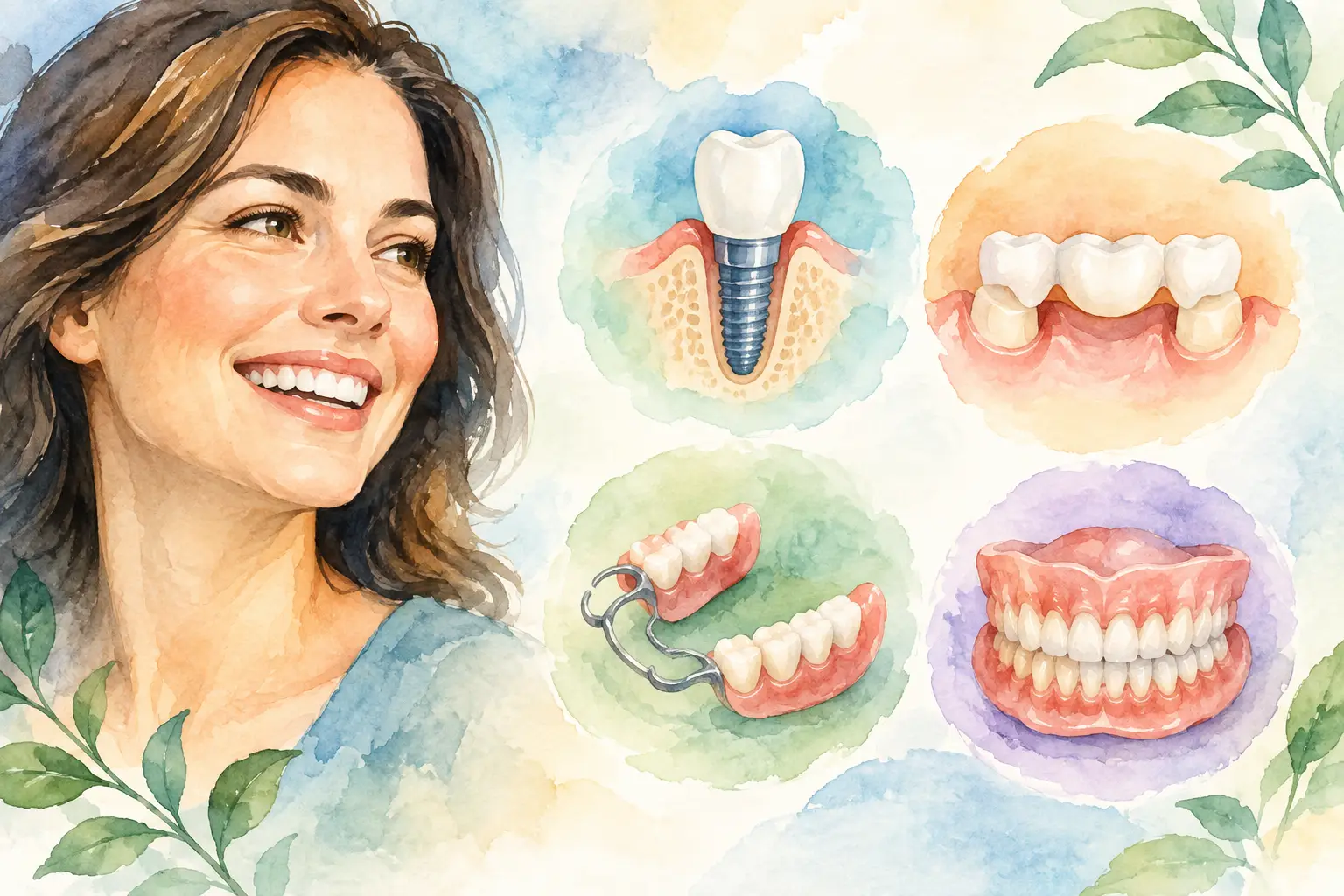
A missing tooth can change more than a smile. You may start chewing on one side, avoid certain foods, feel self-conscious in photos, or notice that nearby teeth are shifting into the space. The best options for missing teeth depend on where the tooth was lost, how many teeth are involved, the health of your gums and jawbone, and what matters most to you day to day.
There is no single replacement option that is right for every person. Some patients need a fast, non-surgical solution. Others want the closest possible replacement for a natural tooth and are comfortable with a longer treatment timeline. A thoughtful dental assessment helps turn a stressful decision into a clear plan.
Best options for missing teeth: what dentists consider first
Before recommending a treatment, your dental team will look beyond the gap itself. Digital imaging and an exam can show whether the surrounding teeth are healthy, whether there is enough bone to support an implant, how your bite functions, and whether gum disease or decay needs attention first.
The location of the missing tooth also matters. Replacing a front tooth often involves added aesthetic planning, while replacing a back tooth focuses heavily on chewing strength and bite balance. A single missing tooth may be treated differently than several missing teeth or a full arch.
Your medical history, comfort with surgery, budget, insurance coverage, and timing are all valid parts of the conversation. The goal is not simply to fill a space. It is to restore comfortable function while protecting the rest of your mouth.
Dental implants: the closest replacement for a natural tooth
A dental implant replaces the root of a missing tooth with a small biocompatible post placed in the jawbone. Once it heals and integrates with the bone, it supports a custom crown. Because the implant stands on its own, adjacent natural teeth usually do not need to be reduced or altered.
For many adults, an implant is the preferred long-term option for replacing one missing tooth. It can look and feel very similar to a natural tooth, provide strong chewing support, and help limit bone loss in the area where the tooth was lost. Bone preservation is a meaningful advantage, since the jawbone can gradually shrink after tooth loss.
Implants can also support multiple replacement teeth. Two or more implants may hold a bridge, and a carefully planned number of implants can secure a full-arch prosthesis for people missing all teeth in the upper or lower jaw.
The trade-off is time and surgery. Implant treatment may take several months from planning to final restoration, particularly if the site needs time to heal after an extraction or requires bone grafting. Not every patient has enough healthy bone immediately, but bone grafting can often make implant treatment possible. Good home care and regular professional maintenance are essential, as implants can still be affected by gum inflammation and bone loss.
Dental bridges: a fixed option without implant surgery
A dental bridge fills a gap by attaching an artificial tooth, called a pontic, to neighbouring teeth. In a traditional bridge, crowns are placed on the teeth beside the space to support the replacement tooth between them. The final restoration is fixed in place, so it does not come out for cleaning.
A bridge can be a practical choice when the teeth beside the missing space already have large fillings, crowns, or damage that would benefit from full coverage. Treatment is generally faster than implant placement and does not require surgery. It can restore appearance and chewing ability efficiently, especially for one or a small number of missing teeth.
The main consideration is that a conventional bridge relies on neighbouring teeth. Those teeth must be shaped to hold crowns, even if they are otherwise healthy. Cleaning beneath the pontic also requires a little extra attention, usually with floss threaders or special brushes.
In selected front-tooth cases, a resin-bonded bridge may be considered. This more conservative option attaches to the back of an adjacent tooth with minimal preparation. It is not suitable for every bite or every location, but it may be useful where chewing forces are lighter.
Partial dentures: flexible support for several missing teeth
A removable partial denture replaces one or more missing teeth and is designed to fit around the natural teeth that remain. It may be made with an acrylic base, a metal framework, or flexible materials, depending on the treatment plan.
Partial dentures are often a sensible option when several teeth are missing in different areas, when surgery is not appropriate, or when a patient needs a more economical route to restoring their smile. They can improve speech, help with chewing, and reduce the tendency for remaining teeth to drift into open spaces.
Because a partial denture is removable, there is an adjustment period. Some patients find that it takes time to become comfortable speaking and eating with it. It must be removed daily for cleaning, and it may need adjustment as the gums and bone change over time. Still, a well-designed partial denture can be a valuable and attractive solution, particularly when combined with a long-term plan for the remaining teeth.
Complete dentures and implant-supported dentures
When all teeth in an upper or lower arch are missing, a complete denture can restore the appearance of a full smile and provide basic chewing function. Conventional dentures sit on the gums and are held in place by suction, muscle control, and the shape of the jaw. Adhesives may help some patients feel more secure.
For others, denture movement is a major concern. Lower dentures in particular can be difficult to keep stable because the lower jaw has less surface area for support. Implant-supported dentures offer a stronger alternative. Depending on the design, the denture may snap onto implants for easy removal or be fixed in place and removed only by a dental professional.
Implant support can improve stability, comfort, and confidence while eating and speaking. It may also reduce pressure on the gums and help preserve bone. However, it involves surgical treatment, adequate bone support, and a higher initial investment than a conventional denture. Your dentist can explain whether a removable implant-retained denture or a fixed full-arch restoration better suits your needs.
When immediate replacement matters
If a visible tooth has been removed, waiting months without a replacement may not feel acceptable. In some cases, a temporary tooth, temporary bridge, or immediate denture can be provided while the area heals or while an implant is planned. This protects appearance during treatment and can help you speak and smile more comfortably.
An immediate solution is not always the final solution. The gums and bone naturally change after an extraction, so temporary restorations may need adjustment. Planning ahead of an extraction gives your dental team the best chance to discuss options and create a smooth transition.
Choosing based on cost, comfort, and long-term care
Upfront cost is understandably part of the decision, but it should be weighed alongside expected lifespan, future maintenance, and the health of neighbouring teeth. A removable denture may have a lower initial cost, while an implant may offer greater stability and bone preservation over the long term. A bridge may be the efficient middle ground when adjacent teeth already need crowns.
Insurance coverage varies by plan, and eligibility under the Canadian Dental Care Plan can also depend on the service and individual circumstances. Asking for a written treatment plan helps you understand fees, sequencing, and available coverage before treatment begins. At ORIS Dental Clinics, coordinated care can be especially helpful when a replacement plan involves extractions, gum treatment, bone grafting, sedation, implants, and final restorative work.
Dental anxiety should never prevent you from replacing a missing tooth. Comfort-focused appointments and sedation options may make surgical or restorative treatment feel more manageable. Let the dental team know early if past experiences have made you nervous.
A missing tooth does not need to become a permanent compromise. Whether your best fit is a bridge, denture, implant, or a staged combination of treatments, the right plan should leave you feeling informed, comfortable, and able to use your smile with confidence.