
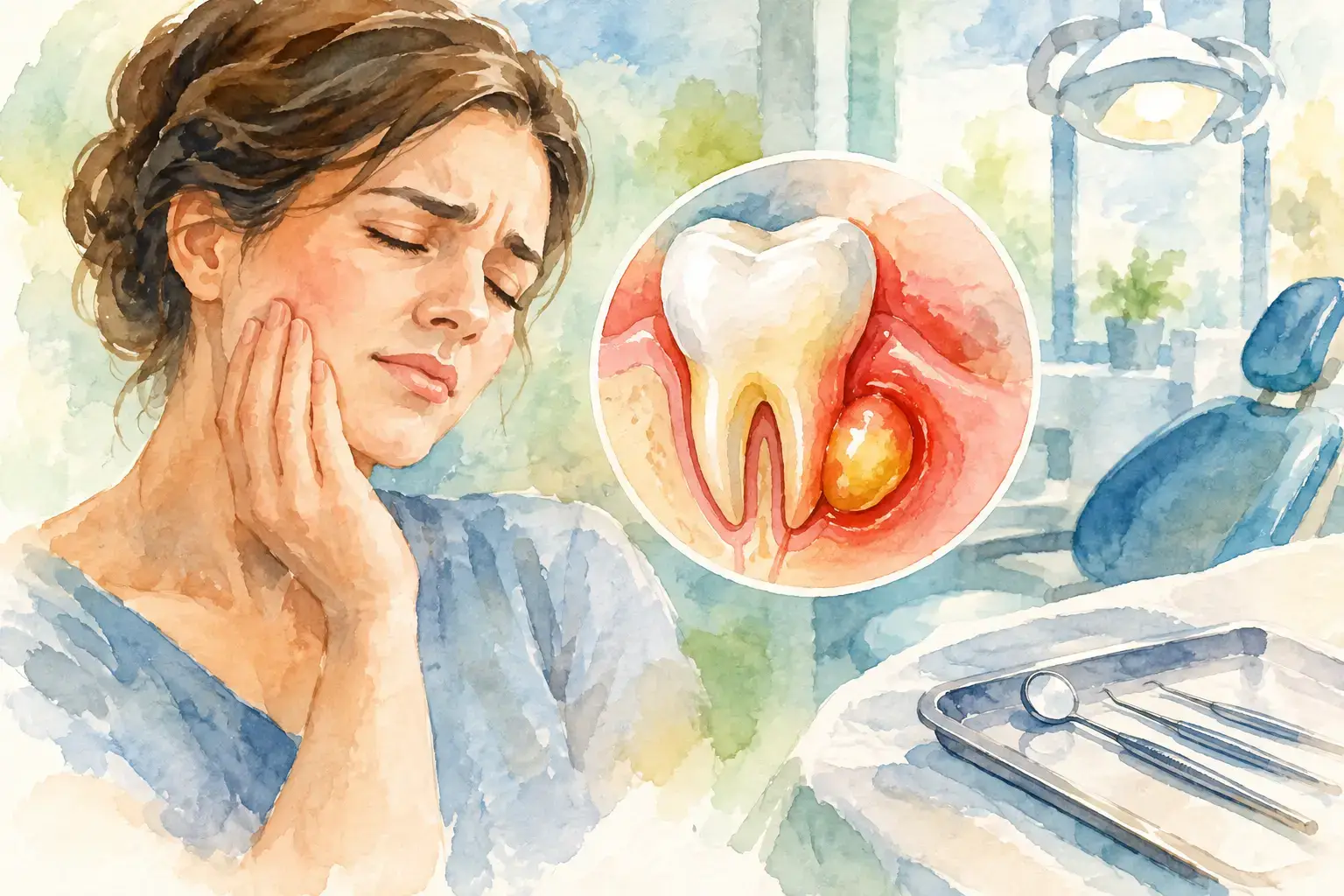
A throbbing tooth that keeps you awake, swelling along the gumline, or a bad taste that will not go away can point to a dental abscess. This tooth abscess treatment guide explains what may be happening, when you need urgent help, and how a dentist can remove the source of infection rather than simply quieting the pain.
A tooth abscess is not a problem to watch and wait on. Pain may briefly lessen if an abscess drains, but the infection can remain inside the tooth, gum, or surrounding bone. Prompt dental assessment offers the best chance of relieving discomfort, protecting your overall health, and, when possible, saving the tooth.
What a tooth abscess is
An abscess is a pocket of pus caused by a bacterial infection. It commonly develops when bacteria enter the inner portion of a tooth through deep decay, a crack, an old restoration that no longer seals properly, or trauma. An infection can also start in the gums, particularly where advanced gum disease has created a deep pocket beside a tooth.
There are two common patterns. A periapical abscess begins at the tip of a tooth root after infection reaches the pulp, where the tooth’s nerve and blood supply are located. A periodontal abscess begins in the supporting gum and bone tissues. The symptoms can overlap, which is why an examination and dental X-rays are often needed to identify the source and plan the right treatment.
Signs you need a dentist quickly
Tooth abscess pain can range from a persistent ache to intense, pulsing pain that spreads to the jaw, ear, or neck. You may have facial swelling, a tender bump on the gum, sensitivity to heat or cold, pain when biting, or a loose-feeling tooth. Some people notice a pimple-like swelling that releases fluid with a salty or unpleasant taste.
Book an urgent dental appointment if you have tooth pain with swelling, drainage, fever, or increasing sensitivity. Even without severe pain, a swollen gum bump near a tooth deserves timely care.
Seek emergency medical care immediately if swelling is affecting your eye area, neck, breathing, swallowing, or ability to open your mouth. Fever with rapidly spreading facial swelling, confusion, or significant weakness also requires urgent attention. These signs can indicate that an infection is spreading beyond the tooth and needs immediate medical management.
What happens during a dental abscess visit
The first priority is to locate the infection and make you comfortable. Your dental team will ask about your symptoms and health history, examine the affected tooth and surrounding tissues, and typically take X-rays. These images help show whether infection has reached the bone around the root, whether a tooth is cracked, and whether the tooth has a reasonable long-term outlook.
Treatment depends on the cause, location, and severity of the abscess. The central goal is source control: removing infected material and allowing pressure to drain. Antibiotics can be valuable in certain situations, but they do not replace dental treatment for an infection contained inside a tooth or gum pocket.
Drainage for pressure and pain relief
If there is a collection of pus in the gum tissue, a dentist may make a small opening to drain it. In some cases, drainage occurs through the tooth during root canal treatment. This can reduce pressure and provide rapid pain relief, while also allowing the area to heal once the source of infection is addressed.
Root canal treatment to save a tooth
When infection comes from inside a tooth, root canal treatment is often the preferred way to preserve it. The dentist removes infected pulp tissue, cleans and disinfects the narrow root canals, then seals them to help prevent reinfection. A crown may be recommended afterward, especially for a back tooth or a tooth that has lost substantial structure. The trade-off is that treatment may involve more than one appointment and a final restoration, but keeping a natural tooth is often beneficial for chewing, appearance, and bite stability.
Extraction when a tooth cannot be saved
Sometimes a tooth is too fractured, severely decayed, or too compromised by infection and bone loss to restore predictably. Extraction removes the source of infection and may be the healthiest option. Your dentist can then discuss replacement choices, such as a dental implant, bridge, or removable solution. The right next step depends on the tooth’s location, your bone and gum health, your bite, and your goals for long-term function.
Gum treatment for periodontal abscesses
When an abscess is connected to gum disease, treatment may involve cleaning below the gumline, draining the area, and addressing the periodontal pocket that allowed bacteria to collect. Ongoing gum care is essential because infection around the supporting tissues can recur if the underlying periodontal condition is not managed.
When antibiotics are used
Antibiotics may be prescribed when an infection is spreading, when there is fever or significant swelling, or when a patient has particular health considerations that raise the risk of complications. They are also sometimes used alongside drainage or root canal treatment.
However, antibiotics alone often provide only temporary improvement because they cannot remove dead tissue inside a tooth or correct a deep gum pocket. Take medication exactly as prescribed, finish it unless your prescriber tells you otherwise, and report signs of an allergic reaction promptly. Do not use leftover antibiotics or someone else’s prescription.
Managing discomfort before your appointment
Home care can help you get through the hours before professional treatment, but it should not delay your visit. If these medications are safe for you, over-the-counter pain relievers can be used according to the product label or your pharmacist’s advice. People who are pregnant, take blood thinners, have kidney, liver, stomach, or heart conditions, or are managing other medications should check with a healthcare professional first.
A cool compress on the outside of the cheek may ease swelling and discomfort. Rinse gently with warm salt water, keep the area as clean as possible with a soft toothbrush, and choose softer foods. Chew on the opposite side and avoid very hot, very cold, sugary, or hard foods if they trigger pain.
Do not place aspirin, alcohol, cloves, or other substances directly on the gum or tooth. They can burn the soft tissues and will not treat the infection. Avoid trying to pop or drain swelling yourself. Heat packs are also best avoided when facial swelling is present, as heat can worsen inflammation for some people.
Why treatment should not be postponed
A dental abscess can damage the bone supporting a tooth and may spread into nearby facial spaces if left untreated. It can also turn a manageable root canal case into a situation where extraction is the only predictable option. The fact that pain has eased does not mean the infection is gone. If the nerve inside the tooth has died, symptoms may temporarily change while bacteria continue to affect the tissue around the root.
Early care is usually simpler, more comfortable, and more conservative. For anxious patients, discuss this openly when booking. Comfort-focused approaches, local anesthetic, and sedation options can make urgent treatment feel much more manageable. At ORIS Dental Clinics, patients can be assessed and guided through options that may include endodontic care, periodontal treatment, oral surgery, and tooth replacement planning in one coordinated setting.
Reducing the chance of another abscess
Not every abscess is preventable, particularly after an unexpected crack or injury, but regular examinations give dentists an opportunity to detect cavities, leaking restorations, gum inflammation, and bite-related tooth fractures early. Daily brushing with fluoride toothpaste, cleaning between teeth, and keeping routine hygiene appointments reduce the bacterial buildup that contributes to both decay and gum disease.
If a tooth has had a root canal, crown, large filling, or previous trauma, continue to have it checked even when it feels normal. Restoration edges can wear and cracks can develop over time. A small concern found early is usually far easier to treat than a painful infection.
If you suspect an abscess, trust the change you are feeling and arrange an assessment promptly. Getting clear answers, appropriate pain control, and treatment directed at the source can help you return to eating, speaking, and smiling with confidence.