
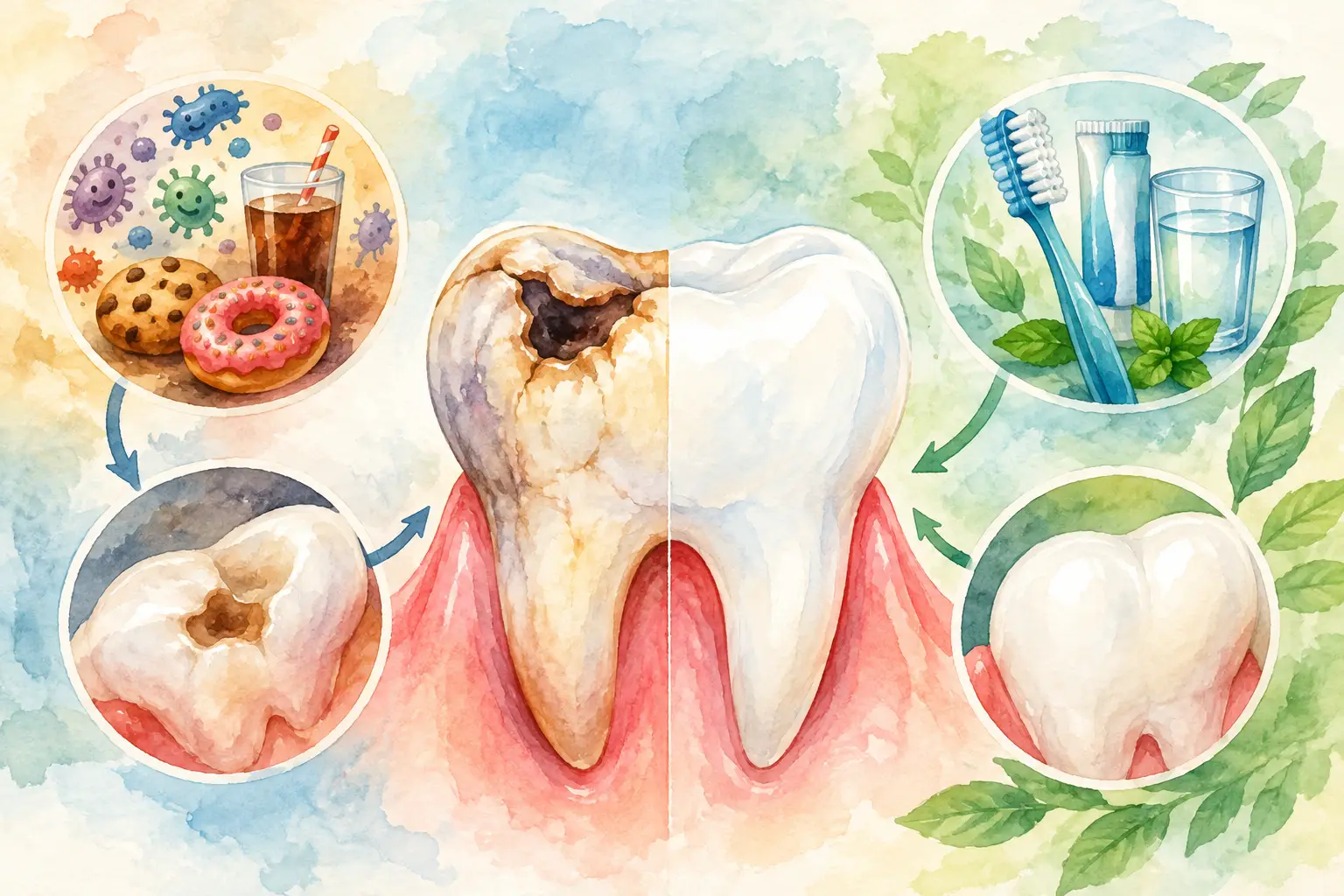
A cavity rarely starts with a dramatic toothache. More often, it begins as a small area of mineral loss that may cause no discomfort at all. Understanding how cavities form can help you and your family act before decay reaches the deeper, more sensitive parts of a tooth.
Cavities are common, but they are not simply the result of eating sugar or forgetting to brush once or twice. They develop through a repeated cycle involving oral bacteria, food and drinks, tooth surfaces, saliva, and time. That is why prevention is less about perfection and more about creating daily habits that consistently shift the balance in favour of your teeth.
How cavities form inside a tooth
Your mouth naturally contains bacteria. Many are harmless, but some feed on carbohydrates left behind after meals and snacks. This includes obvious sugars in candy, pop, and desserts, as well as carbohydrates in crackers, bread, cereal, dried fruit, and sweetened beverages.
When these bacteria feed, they produce acids. The acids soften and pull minerals from enamel, the hard protective outer layer of the tooth. This process is called demineralization. After you eat or drink, the mouth becomes more acidic for a period of time, making enamel temporarily more vulnerable.
Saliva helps reverse some of this effect. It rinses away food particles, reduces acidity, and supplies minerals that can strengthen enamel again. Fluoride from toothpaste, drinking water, or professional dental treatments also supports this repair process. When repair keeps up with acid attacks, a cavity may never develop.
The problem occurs when acid attacks happen too often or are strong enough that the tooth cannot recover between them. Over time, the enamel weakens. An early cavity may appear as a dull white or chalky spot. At this stage, it can sometimes be managed without drilling, depending on its location and activity. Once enamel breaks down and a hole forms, however, the tooth cannot rebuild that lost structure on its own.
Why frequent snacking matters as much as sugar
The amount of sugar in a food matters, but frequency often matters just as much. Sipping sweetened coffee, juice, sports drinks, or pop over several hours repeatedly exposes teeth to acid. Grazing on crackers or dried fruit throughout the day can do the same.
A dessert eaten with a meal is often less harmful than sweet snacks consumed many times between meals. During a meal, saliva production rises and helps clear the mouth. That does not make sugary foods harmless, but it explains why timing can make a meaningful difference.
Sticky foods deserve extra attention because they can cling to grooves and spaces between teeth. Fruit snacks, caramel, toffee, and some granola bars may remain on tooth surfaces longer than foods that rinse away easily. Starchy snacks can also become trapped in the chewing surfaces of molars, where toothbrush bristles may not reach effectively.
For young children, frequent use of a bottle or sippy cup containing milk, juice, sweetened drinks, or other carbohydrate-containing liquids can increase risk, particularly when used at bedtime. Saliva flow naturally decreases during sleep, so the mouth has less protection overnight. Water is the safest choice for sipping between meals and before bed after teeth have been cleaned.
Where cavities are most likely to begin
Cavities do not form randomly. They often begin in places where plaque, a sticky film of bacteria, can remain undisturbed. The deep grooves on back teeth are common sites, especially in children and teens. Cavities also frequently develop between teeth, where a toothbrush alone cannot clean effectively.
The gumline is another vulnerable area. Receding gums can expose root surfaces, which are softer than enamel and more prone to decay. This is particularly relevant for older adults, people with gum disease, and anyone experiencing dry mouth.
Dental work does not make a tooth immune to future decay. A tooth with a filling, crown, or bridge can still develop cavities at an edge where plaque accumulates. Regular examinations help identify these areas before a restoration becomes loose, painful, or more difficult to repair.
Dry mouth can change the risk quickly
Saliva is one of the mouth’s strongest natural defences. A dry mouth means less cleansing, less neutralization of acids, and less mineral support for enamel. Some medications can reduce saliva flow, including certain treatments for allergies, blood pressure, anxiety, pain, and depression. Medical conditions, dehydration, mouth breathing, smoking, and some cancer therapies may also contribute.
If your mouth often feels sticky, dry, sore, or thirsty, mention it at your dental appointment. The right approach depends on the cause. It may include more frequent fluoride use, dietary adjustments, saliva-supporting products, extra preventive visits, or a discussion with your physician or pharmacist when medication is involved.
The signs are not always obvious
Early decay may not hurt. That is one reason routine checkups and diagnostic imaging are valuable: they can reveal cavities between teeth or below existing restorations before they become visible or painful.
As a cavity progresses, you may notice sensitivity to cold, sweets, or biting pressure. Food may begin catching in one area. A visible brown, black, or white spot can appear, although colour alone does not confirm the stage of decay. Persistent toothache, swelling, a bad taste, or pain that interrupts sleep can signal that decay has reached the nerve or that an infection is developing. These symptoms deserve prompt dental assessment.
A deeper cavity may require more than a filling. If decay reaches the pulp, the soft tissue containing the tooth’s nerve and blood supply, root canal treatment may be needed to save the tooth. In some cases, extensive damage means a crown or tooth replacement is the healthier long-term option. Early care is usually simpler, more comfortable, and more conservative.
Everyday habits that interrupt the cavity cycle
Cavity prevention works best when it addresses plaque removal, fluoride exposure, and eating patterns together. Brush twice daily for two minutes with a fluoride toothpaste, including before bed. Spit out excess toothpaste afterward rather than rinsing thoroughly, so fluoride remains on the teeth longer.
Clean between teeth once a day with floss or another interdental cleaner suited to your spacing and dental work. This step matters because many cavities begin where toothbrushes cannot reach. For children, an adult should help with brushing until the child has the coordination to do it thoroughly, which is often later than families expect.
Choose water most often between meals. Limit sweetened drinks and acidic beverages, and avoid making them a slow, all-day habit. If you have something sugary or acidic, having it with a meal and following with water is generally kinder to teeth than repeated sipping or snacking.
Fluoride varnish, prescription-strength products, and dental sealants can provide additional protection for patients at higher risk. Sealants are thin protective coatings placed in the grooves of back teeth. They are particularly useful for children and teenagers, though some adults with deep grooves and no existing decay may also benefit.
Professional care makes prevention more personal
There is no single cavity-prevention plan that fits every patient. Risk can change with age, diet, orthodontic appliances, pregnancy, medications, gum recession, dry mouth, previous cavities, and access to fluoride. A person who has had several cavities in recent years may benefit from a more focused preventive plan than someone with a consistently low risk.
At ORIS Dental Clinics, examinations can assess not only whether a cavity is present, but why it may be forming. This allows for practical recommendations that fit your life, whether that means improving cleaning around braces, protecting a child’s newly erupted molars, managing dry mouth, or monitoring an early area of enamel weakening.
For many patients, cost and coverage are also part of the decision. Direct insurance billing and support for eligible Canadian Dental Care Plan patients can help make preventive visits and necessary treatment easier to manage. It is always worth asking what options are appropriate for your needs before a small concern becomes a larger one.
When to book an appointment
Book a dental visit if you notice new sensitivity, pain when chewing, a rough spot, food repeatedly trapping around one tooth, a visible change in colour, or a broken filling. Do not wait for severe pain. Cavities can progress quietly, and a comfortable tooth is not always a healthy one.
For children, regular visits help create familiarity with dental care while allowing the team to watch how teeth are erupting, identify early decay, and guide parents on brushing, fluoride, and diet. For adults, preventive appointments provide a chance to catch changes around existing fillings, crowns, implants, and gumlines.
A cavity is not a personal failure. It is a biological process influenced by daily routines, saliva, diet, and individual risk factors. The most helpful next step is simply to address the earliest sign you notice and build a prevention plan that feels realistic enough to maintain.