
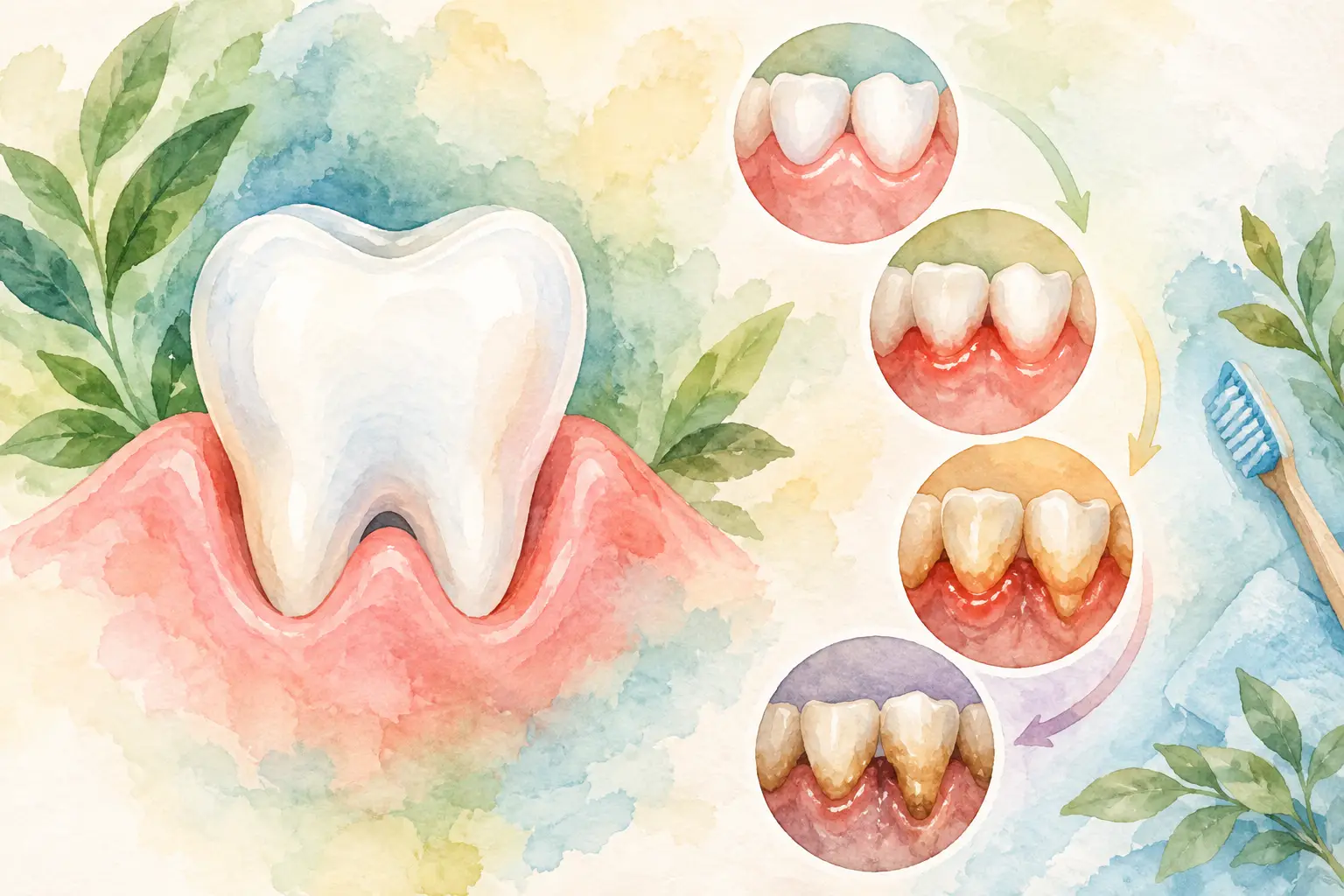
Bleeding when you brush is easy to dismiss, especially when it stops quickly. But healthy gums generally do not bleed during routine brushing or flossing. Understanding the gum disease stages can help you act before a manageable concern becomes a threat to the bone and tissues that keep your teeth stable.
Gum disease, also called periodontal disease, is an infection and inflammation of the gums and supporting structures around the teeth. It usually develops gradually, often with little pain. That is why regular dental visits matter: early changes can be found and treated before you notice serious discomfort or tooth movement.
How gum disease develops
A sticky layer of bacteria called plaque forms on teeth every day. When it is not thoroughly removed at the gumline, the body responds with inflammation. Over time, plaque can harden into tartar, also called calculus. Tartar cannot be removed with a toothbrush or floss and gives bacteria a rough surface where they can continue to collect.
Not everyone progresses through gum disease at the same pace. Smoking or vaping, diabetes, certain medications, dry mouth, stress, genetics, hormonal changes, crowded teeth and inconsistent home care can all affect risk. A person may have very little visible plaque yet still develop significant periodontal problems because of how their body responds to bacteria.
Gum disease stages: from gingivitis to periodontitis
Gingivitis: the early, reversible stage
Gingivitis affects the gum tissue but has not yet caused permanent loss of the bone supporting the teeth. Common signs include red or puffy gums, bleeding while brushing or flossing, tenderness, persistent bad breath or a change in the way the gums look around the teeth.
Gingivitis is often reversible with a professional cleaning and more consistent care at home. A dental team may recommend brushing twice daily with a soft toothbrush, cleaning between teeth every day and reviewing areas that are easy to miss. If tartar is present, a professional hygiene appointment is needed to remove it.
It is possible to have gingivitis without pain. In fact, the absence of pain is one reason people postpone care. Bleeding gums should not be treated as a normal consequence of flossing. They are a reason to improve cleaning technique and arrange an assessment if the bleeding continues.
Mild periodontitis: early loss of support
When gum inflammation is left untreated, it can progress to periodontitis. At this stage, bacteria and inflammation begin to affect the connective fibres and bone that support the teeth. The gums may pull away from the teeth, creating spaces called periodontal pockets where bacteria can collect below the gumline.
You may notice that gums look lower, teeth appear longer, or food gets trapped more often. Bad breath may persist despite brushing. Some people also experience mild sensitivity as exposed root surfaces become more vulnerable.
Unlike gingivitis, periodontitis-related bone loss cannot simply grow back through brushing and flossing. However, professional periodontal treatment can control infection, reduce inflammation and help prevent further damage.
Moderate periodontitis: deeper pockets and increasing instability
With moderate periodontitis, pockets become deeper and more bone support has been lost. Teeth may start to feel different when biting, shift slightly, or develop spaces that were not there before. Gum recession, root sensitivity and recurrent gum swelling can also become more noticeable.
This stage requires more than a routine cleaning. Treatment commonly includes scaling and root planing, sometimes called deep cleaning. This procedure removes tartar and bacterial deposits from beneath the gumline and smooths root surfaces so the gums can heal more effectively. Local anaesthetic may be used to keep you comfortable.
After treatment, reassessment is essential. Gum measurements, bleeding and home-care habits help determine whether the condition is responding or whether further periodontal care is needed.
Severe periodontitis: a risk to tooth survival
In severe periodontitis, substantial bone loss and deep pockets can compromise the stability of one or more teeth. Teeth may become loose, drift, feel painful when chewing or develop recurring infections. Changes in bite, pus around the gums and pronounced recession are signs that should be assessed promptly.
Treatment may involve non-surgical periodontal therapy, targeted medication in selected cases, periodontal surgery or procedures to improve access for cleaning and reduce pockets. When a tooth cannot be predictably saved, a carefully planned extraction and tooth-replacement discussion may be necessary. Dental implants, bridges or other restorative options may be considered only after gum infection is controlled and long-term maintenance is realistic.
How dentists identify the stage
Gum disease cannot be accurately staged by looking in a mirror. During a periodontal assessment, a dentist or hygienist checks for bleeding, gum recession, plaque and tartar. They measure the depth of the spaces between the gum and tooth with a small instrument called a periodontal probe.
Dental X-rays may also be needed to assess bone levels around the teeth. These findings help identify the extent of disease and guide treatment. Dentists may also consider how quickly the condition appears to be progressing, along with factors such as smoking status and diabetes control.
This detailed assessment matters because similar symptoms can have different causes. Bleeding gums may be linked to gingivitis, but tenderness or swelling can also occur around a cracked tooth, an abscess or an ill-fitting restoration. The right treatment depends on the cause.
Treatment is a partnership, not a one-time fix
Professional treatment removes deposits that home care cannot reach, but daily plaque control is what helps protect the results. Your care plan may include periodontal cleanings at intervals based on your gum condition. For some people, this means visits more often than the usual six-month checkup schedule.
At home, use a soft toothbrush and fluoride toothpaste, clean between teeth daily with floss, interdental brushes or another tool recommended for your spaces, and follow any instructions for medicated rinses. Technique is more valuable than brushing aggressively. Scrubbing hard can irritate gums and wear away exposed root surfaces.
If dental anxiety has kept you from seeking care, say so early. Comfort-focused options, including sedation for appropriate treatments, can make more involved periodontal appointments feel manageable. At ORIS Dental Clinics, coordinated care can also be useful when gum treatment needs to be planned alongside restorative work, surgery or tooth replacement.
When to book an appointment
Arrange a dental assessment if your gums bleed regularly, your breath remains unpleasant despite cleaning, gums are receding, teeth feel loose, or you have swelling or pain. Do not wait for symptoms if you have diabetes, smoke or vape, have a history of gum disease, or have been told you need periodontal maintenance.
Gum disease is common, but losing teeth to it is not inevitable. A timely examination can turn uncertainty into a clear plan, whether that means improving daily cleaning, treating active infection or protecting the dental work you already have.