
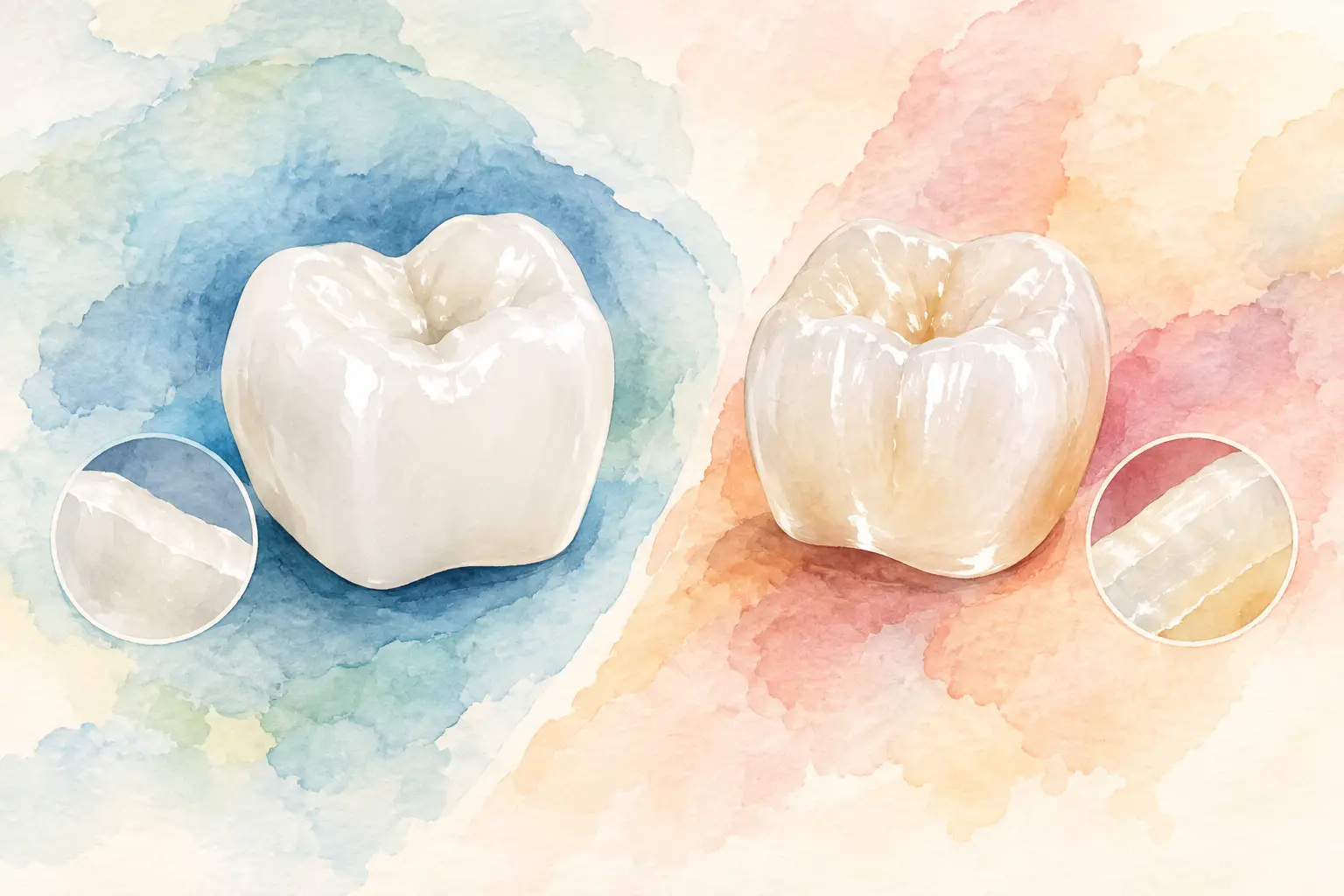
A crown has to do more than cover a damaged tooth. It needs to handle your bite, blend with your smile, protect the remaining tooth structure, and feel comfortable every day. When patients ask about zirconia crowns versus porcelain, they are usually asking a practical question: which material will look natural and hold up best in my situation?
The answer depends on the tooth being restored, how much bite pressure it receives, your cosmetic goals, and the condition of the teeth around it. Both materials can produce excellent results when they are carefully planned, designed, and fitted.
What a Dental Crown Is Designed to Do
A dental crown is a custom-made cover placed over a tooth that has been weakened by decay, fracture, a large filling, root canal treatment, or wear. Crowns can also improve the shape, colour, or alignment of a tooth when a more conservative cosmetic option is not suitable.
Your dentist prepares the tooth conservatively, takes a digital or physical impression, and designs a crown that works with your bite and neighbouring teeth. The material matters, but so do the preparation, fit, cementation, gum health, and your habits. Even the strongest crown needs a stable foundation.
Zirconia Crowns: Built for Strength
Zirconia is a high-strength ceramic material used widely in modern restorative dentistry. It is especially valued for its resistance to fracture and wear, making it a common choice for back teeth, bridges, and patients who place significant pressure on their teeth.
A zirconia crown is often recommended for a molar that has a large filling, a crack, or extensive loss of natural tooth structure. Molars manage much of the force involved in chewing, so durability is a central concern. Zirconia can also be helpful for people who clench or grind their teeth, although a night guard may still be recommended to protect both the crown and natural teeth.
Earlier zirconia materials could appear more opaque than other ceramics. Modern multilayer and high-translucency zirconia options have improved considerably, allowing for more natural shading and light reflection. Still, zirconia may not always replicate the delicate translucency of a natural front tooth as closely as certain porcelain ceramics can.
When Zirconia May Be a Good Fit
Zirconia is often worth considering when the restoration is on a back tooth, when strength is the overriding priority, or when there is limited room between the upper and lower teeth. Its strength can allow for a thinner restoration in selected cases, helping preserve more healthy tooth structure.
It can also be an appropriate option for patients who want a metal-free crown. Because zirconia is ceramic, it does not create the dark edge at the gumline that may sometimes be associated with older porcelain-fused-to-metal crowns.
Porcelain Crowns: Designed With Aesthetics in Mind
The word “porcelain” can describe more than one type of dental material. It may refer to an all-ceramic crown, such as a glass ceramic, or to porcelain layered over a metal framework. Each option has different properties, so it is useful to ask your dentist which specific ceramic is being considered.
All-ceramic porcelain crowns are widely appreciated for their ability to reflect light in a way that can closely resemble natural enamel. This makes them especially appealing for front teeth, where colour, translucency, and subtle surface texture are highly visible when you smile or speak.
A skilled dental team can customize porcelain with layers of colour and characterization to match adjacent teeth. For a visible front tooth with enough supporting enamel and manageable bite forces, this aesthetic control may be the deciding advantage.
Porcelain can be very durable, but some porcelain materials are more prone to chipping or fracture than zirconia under heavy biting forces. That does not mean porcelain is a poor choice for all back teeth. It means the material should be matched to the clinical demands of the tooth.
Zirconia Crowns Versus Porcelain: Key Differences
The most meaningful comparison is not simply “strong versus beautiful.” Both zirconia and porcelain can look excellent, and both can function well for many years. The difference lies in where each material tends to offer its greatest advantage.
Zirconia generally leads in fracture resistance. It is often selected for molars, implant crowns in high-pressure areas, full-mouth rehabilitation cases, and patients with clenching or grinding habits. A well-polished zirconia crown can also be gentle on opposing teeth, but its surface should be properly finished and checked over time.
Porcelain, particularly highly aesthetic glass ceramic options, often offers more lifelike translucency. It may be preferred for front teeth where the crown needs to disappear into the smile rather than simply withstand heavy chewing. However, a patient with a deep overbite, aggressive bite pattern, or frequent grinding may need a stronger material even in the front of the mouth.
Porcelain-fused-to-metal crowns remain a functional option in certain restorative situations, particularly where a metal framework is beneficial. Their trade-off is aesthetic: the metal may limit light transmission and, if gums recede over time, may become more noticeable near the crown edge.
The Tooth Location Changes the Decision
A crown does not exist in isolation. A front tooth crown is visible at conversation distance and usually experiences different forces than a molar. A back tooth crown must tolerate repeated chewing pressure but is less noticeable cosmetically.
For a front tooth, your dentist may prioritize colour matching, translucency, gumline aesthetics, and the shade of the underlying tooth. A porcelain material may be ideal, but high-translucency zirconia can also be a strong aesthetic option in the right case.
For a molar, strength, bite space, and the condition of the tooth often carry more weight. Zirconia is frequently recommended, particularly if the tooth has been heavily restored or you have a history of broken fillings and crowns.
The teeth opposing the crown matter as well. An upper crown that bites against a natural lower tooth, another crown, or an implant restoration may require adjustments to the material choice and crown design.
Your Bite and Habits Matter as Much as the Material
If you wake with jaw soreness, experience frequent headaches, notice flattened teeth, or have broken dental work in the past, you may be clenching or grinding. These habits can shorten the life of any restoration.
Your dental team may assess your bite, jaw movement, signs of wear, and the way your teeth meet before recommending a crown material. In some cases, a stronger crown material is appropriate. In others, bite adjustment or a custom night guard is part of protecting the investment in your dental treatment.
It is also worth discussing habits such as chewing ice, opening packaging with your teeth, or biting hard objects. Crowns are durable restorations, not indestructible replacements for natural teeth.
Appearance Is More Than Shade Matching
A crown can be the right colour and still look unnatural if its shape, contours, or surface texture do not match the surrounding teeth. The most successful result considers the full smile, including gum levels, tooth proportions, lip movement, and the colour of neighbouring teeth.
Digital imaging and modern shade-matching methods can support detailed planning, particularly for visible restorations. If you are replacing an old front crown, your dentist may also discuss whether adjacent teeth need whitening before the final shade is selected. Crowns do not respond to whitening products after they are placed.
Cost, Insurance, and Long-Term Value
The cost of a crown can vary based on the material, the complexity of the case, laboratory work, and whether other treatment is needed first. For example, a tooth may require a root canal, build-up, gum treatment, or removal of an existing failing crown before a new restoration can be placed.
Insurance coverage depends on your specific plan and its annual limits. A treatment coordinator can help you understand estimates, direct billing options, and any available Canadian Dental Care Plan support before treatment begins. The lowest upfront cost is not always the best long-term value if a material does not suit your bite or cosmetic expectations.
How to Make a Confident Crown Decision
The best crown is the one selected for your tooth, your bite, and your goals rather than the one that is simply most popular. Ask why a specific material is being recommended, what aesthetic result is realistic, how it will perform in that location, and whether grinding or gum health could affect the outcome.
At ORIS Dental Clinics, crown planning can be coordinated with restorative, gum, root canal, implant, and cosmetic care when a case involves more than one concern. That coordinated approach helps ensure the crown supports not only the tooth being treated, but the health and function of your overall smile.
A well-planned crown should let you eat, speak, and smile without thinking about it. A thoughtful conversation with your dentist now can help you choose a restoration that continues to feel right long after the appointment is over.