
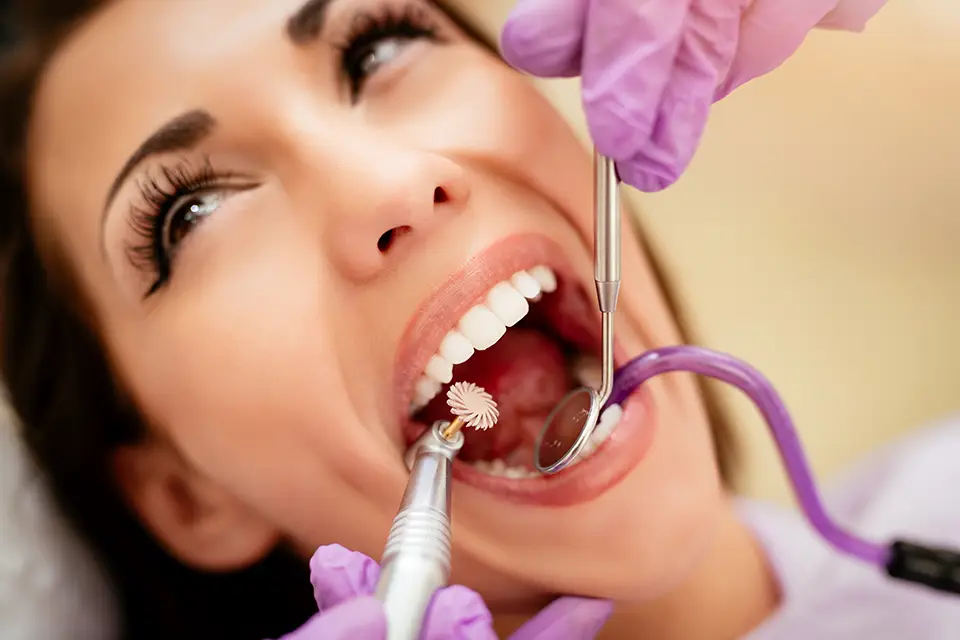
Gums don’t usually shout for attention—until they bleed, swell, or start receding. The good news? With the right plan, most issues can be stabilized or reversed before they threaten teeth or bone. At ORIS Dental Clinics in Richmond Hill, Ontario, we build care around biology, habits, and precise techniques—not quick fixes. In this guide, you’ll see periodontal treatment options explained step by step, from diagnostics to maintenance, with clear notes on timelines, comfort, and costs. You’ll also learn how periodontal treatment options shift based on pocket depth, bleeding, recession, and bone changes, so you know what to expect and why we recommend specific therapies.
Lorem ipsum dolor sit amet, consectetur adipiscing elit. Ut elit tellus, luctus nec ullamcorper mattis, pulvinar dapibus leo.
What Periodontal Disease Is—and Why It Matters
Gum disease is an inflammatory response to biofilm (plaque) and calculus that sits below the gumline. Early gingivitis shows up as redness and bleeding; periodontitis goes deeper, affecting the ligament and bone that hold your teeth. Left alone, pockets deepen, gums recede, and teeth loosen. Systemic health can be part of the picture too—diabetes, smoking, and dry mouth all change risk. A precise diagnosis (bleeding sites, pocket charting, X-rays, and lifestyle factors) lets us match periodontal treatment options to your specific mouth, not a generic plan.
Periodontal Treatment Options: Comprehensive Assessment & Diagnosis
Getting the first visit right sets up everything that follows.
- Charting & Baseline Photos: We record pocket depths, bleeding, plaque levels, recession, and mobility.
- Radiographs (Targeted): Bitewings and select periapicals pinpoint calculus, vertical defects, and furcation involvement.
- Risk Review: Smoking/vaping, diabetes control, medications that dry the mouth, and clenching all influence outcomes.
- Personal Plan: Your results drive a customized sequence of periodontal treatment options, plus home-care changes that actually fit your routine.
This isn’t busywork—it’s how we decide what will work quickly and safely for you.
Non-Surgical Periodontal Treatment Options: Scaling & Root Planing
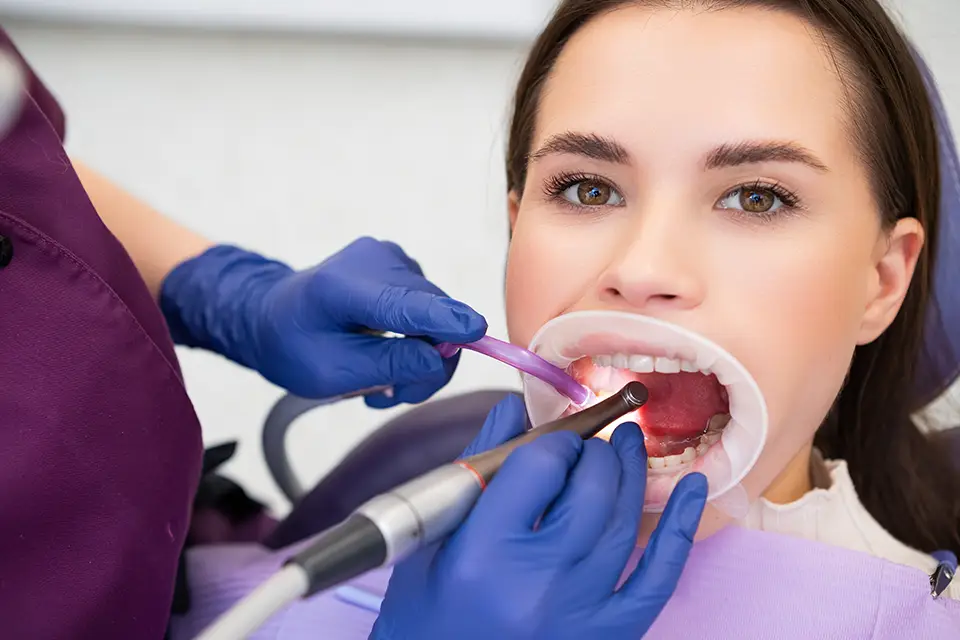
For many patients, thorough debridement is the highest-yield step. Scaling and root planing (SRP) removes biofilm and tartar above and below the gumline and smooths root surfaces so the gum can reattach.
- Comfort: We numb the areas we’re treating; most people return to normal the same day.
- Phasing: Often done in two to four quadrants over one or two visits.
- Healing Pattern: Expect less bleeding within two weeks; full tissue maturation takes 6–8 weeks.
- Re-Evaluation: We re-measure pockets and bleeding sites to see exactly how you responded and which periodontal treatment options are next.
SRP succeeds when it’s paired with simple, sustainable home care—small daily wins compound.
Adjuncts That Help: Antimicrobials, Lasers, and Host Support
Adjuncts are chosen to assist debridement, not replace it.
- Local Antibiotics: Placed into specific pockets to reduce bacterial load during healing; used selectively after SRP.
- Antimicrobial Rinses: Short, targeted courses can tame inflammation while you master new hygiene routines.
- Low-Energy Laser Decontamination: Used by some clinicians to reduce bacterial counts; we present current evidence and place it appropriately within your periodontal treatment options.
- Host Modulation: Where indicated, short courses of certain medications may help temper the inflammatory response.
We recommend these only when they add a measurable benefit for your case.
Surgical Periodontal Treatment Options: When Deep Pockets Persist
If pockets remain ≥5–6 mm with bleeding after non-surgical care, surgical access can be the predictable path to stability.
- Flap Surgery (Access Surgery): Gently reflects the gum to remove stubborn calculus and reshape the bone for shallower, cleanable contours.
- Osseous Recontouring: Smooths irregular bone that traps plaque; the goal is easier hygiene, not “more surgery.”
- Furcation Management: For multi-rooted teeth, specialized techniques improve access and cleaning.
Surgery sounds intimidating, but patients are often surprised by how manageable the recovery is—and how clean and comfortable the gums feel afterward. It’s one of the most effective periodontal treatment options for sites that won’t respond to debridement alone.
Regenerative Periodontal Treatment Options for Lost Bone
When we find well-defined vertical defects, regeneration may rebuild some of the support around a tooth.
- Guided Tissue Regeneration (GTR): A membrane helps the right cells repopulate the defect.
- Enamel Matrix Derivatives (EMD): Proteins placed on the root can encourage new attachment in select defects.
- Bone Grafts (Autogenous/Allograft/Xenograft): Used to fill and support the defect while healing progresses.
- Platelet-Rich Fibrin (PRF): Concentrated growth factors from your blood can support soft-tissue healing.
We offer these periodontal treatment options only when the defect shape, tooth stability, and hygiene make a good outcome likely; not every site is a candidate.
Soft-Tissue Grafting and Recession Care
Recession exposes root surfaces that are sensitive and prone to wear. Soft-tissue grafting thickens and repositions gum to protect the area and improve comfort.
- Connective Tissue Grafts or Alternatives: Reinforce thin tissue; improve coverage on susceptible roots.
- Frenum or Muscle Pulls: If tension contributes to recession, we address it to protect the result.
- Aftercare: A soft diet and gentle rinses while the graft matures.
Grafting is not about “perfect pink triangles”; it’s a functional solution that protects teeth long-term within a broader set of periodontal treatment options.
Periodontal Treatment Options: Home Care That Actually Works
No therapy succeeds without habits you can keep at home.
- Brush Choice & Technique: A soft brush, light pressure, and small circles; electric brushes help with consistency.
- Interdental Cleaning: Super-floss, interdental brushes, or water flossers—matched to your spaces so you’ll use them.
- Targeted Toothpaste & Varnish: Fluoride and desensitizing agents where needed.
- Lifestyle Levers: Tobacco cessation, diabetes control, and a plan for dry mouth make every other step more effective.
We keep it realistic: a 5-minute routine, once or twice daily, tailored to your mouth.
Periodontal Treatment Options: Maintenance, Timelines, and Costs
After active therapy, periodontal treatment options shift to maintenance—the step patients credit most with staying healthy.
- Maintenance Interval: Typically every 3–4 months at first, then lengthened if pockets stay stable and bleeding is minimal.
- Timelines: Non-surgical care improves within weeks; surgical and regenerative sites remodel over months.
- Costs: Fees vary by factors—number of sites, need for adjuncts, surgical complexity, and maintenance frequency. We provide written estimates and phase care sensibly. The most economical path is early diagnosis plus maintenance that prevents relapse.
Think of maintenance as insurance for your gums—and for the investment you’ve made.
Why ORIS Dental Clinics (Richmond Hill)
We pair meticulous diagnostics with a calm, stepwise plan. You’ll see your measurements, photos, and X-rays explained in plain language. We prioritize the least invasive approach that will work for your mouth, and we’ll only escalate when it adds predictable value. Most of all, we coach the routine you can keep—because the best periodontal treatment options succeed or fail at the bathroom sink.
Conclusion
Healthy gums are built in layers: precise cleaning, tailored adjuncts, targeted surgery when needed, and simple maintenance you’ll actually do. With the right sequence of periodontal treatment options, bleeding calms, breath improves, and teeth feel firmly “yours” again. If you’re ready for a plan mapped to your pockets, habits, and goals, book a periodontal assessment at ORIS Dental Clinics in Richmond Hill. We’ll chart your baseline, outline options with timelines and costs, and guide you to stable, comfortable gums for the long term.
FAQs — Periodontal Treatment Options
Will non-surgical cleaning be enough for me?
Often, yes—especially when pockets are ≤5 mm, and you commit to daily interdental cleaning. We reassess 6–8 weeks after SRP; if sites still bleed or stay deep, we’ll discuss further periodontal treatment options.
Are surgical treatments painful?
We use local anesthesia and clear after-care instructions. Most patients report manageable soreness for a few days, helped by over-the-counter medication and a soft diet. The gain in cleanliness and comfort usually arrives quickly.
Can bone really grow back?
In certain defect shapes, regenerative techniques can recover some lost support. Success depends on defect anatomy, tooth stability, and excellent plaque control—your dentist will explain candidacy before recommending these periodontal treatment options.