
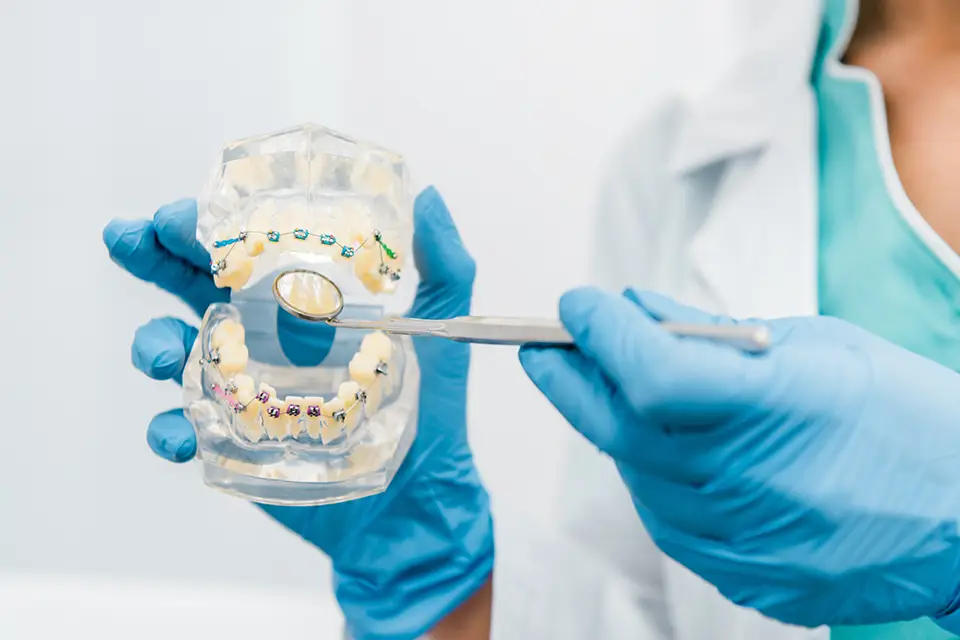
Choosing how to straighten your teeth isn’t only about looks—it’s about comfort, precision, daily life, and long-term stability. At ORIS Dental Clinics in Richmond Hill, Ontario, we guide patients through Invisalign vs braces decisions with clear, practical criteria so there’s no guesswork. In this guide, you’ll see Invisalign vs braces compared step by step—how each moves teeth, what daily life feels like, typical timelines and costs, and who benefits most from each option. You’ll also learn how bite health, gum condition, and lifestyle shape the recommendation. No hype—just a candid roadmap you can trust.
Invisalign vs Braces: How Each Method Actually Moves Teeth
Both systems move teeth by applying gentle, continuous forces that stimulate bone remodelling around tooth roots. Fixed braces do this through brackets, archwires, and elastics attached to teeth. Invisalign uses a series of custom, removable aligners that nudge teeth in small increments. The core biology is the same; the difference lies in how forces are delivered and controlled. This is the foundation of any Invisalign vs braces conversation: both can be highly effective when planned and followed precisely.
Treatment Complexity: When Precision Matters Most
Some movements are straightforward—closing small gaps, relieving mild crowding, or improving alignment. Others are more demanding—rotating canines or premolars, correcting deep or open bites, coordinating upper and lower arches, or intruding/extruding specific teeth. Modern aligners handle far more than they did a decade ago, especially with attachments and targeted auxiliaries. That said, for complex mechanics, traditional braces can offer direct, granular control. In Invisalign vs braces planning sessions, we review your scans and bite measurements to choose the approach that reaches the goal with the fewest detours.
Daily Life with Each System
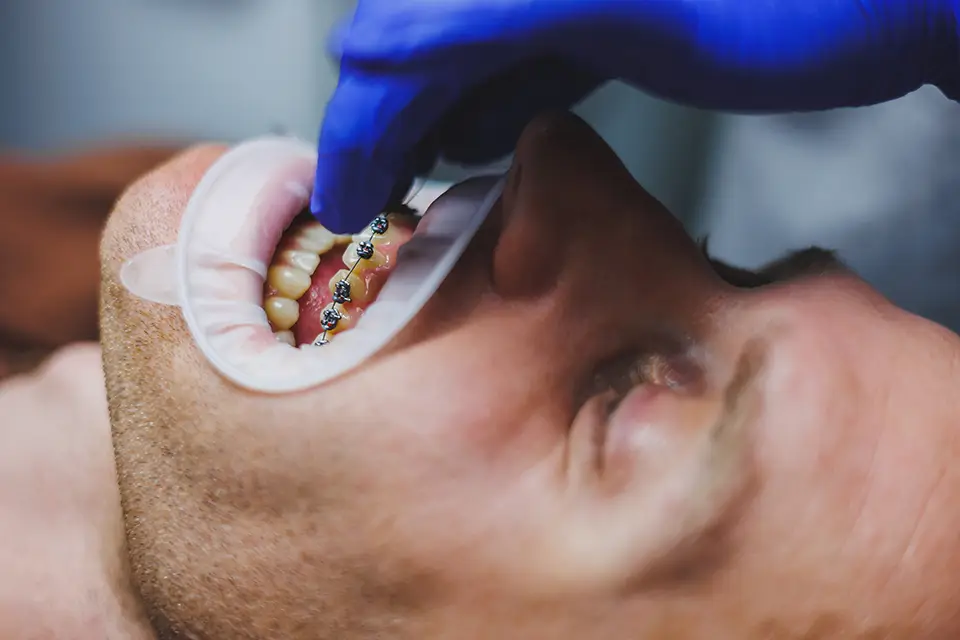
Removability is the biggest lifestyle difference. Aligners come out for meals and brushing, making hygiene simple and diet unrestricted—but only if you wear them 20–22 hours daily. Braces are fixed: you don’t misplace them, and they work 24/7, but you’ll modify your diet (no hard or sticky foods) and spend a bit longer cleaning around brackets. When weighing Invisalign vs braces, ask: which routine will I follow perfectly for months on end?
Invisalign vs Braces: Comfort, Speech, and Adaptation
Most patients report mild pressure for a day or two after a new aligner stage or a wire adjustment—both are normal. Aligners are smooth against cheeks and lips; braces may cause brief irritation until the mouth adapts (wax helps). Speech usually normalizes quickly with either option. If you give presentations or play wind instruments, you might find aligners easier early on, but many musicians do well with braces after a short adjustment period. Comfort is seldom the deciding factor in Invisalign vs braces, but it can influence the first few weeks.
Oral Hygiene and Gum Health
Cleanliness is where habits show up in results:
- Aligners:
- Easy Brushing/Flossing: Remove trays; brush and floss normally.
- Tray Care: Rinse with cool water; brush gently; avoid hot water that can warp plastic.
- Braces:
- Targeted Tools: Interdental brushes and water flossers reach around brackets.
- Appointment Coaching: We fine-tune technique as your appliances change.
- In Invisalign vs braces outcomes, good hygiene consistently shortens treatment and keeps gums calm.
Invisalign vs Braces: Timelines, Check-Ins, and Compliance
Typical treatment spans range from about 6–10 months for mild alignment to 12–18 months for moderate cases and 18–24+ months for bite corrections. With aligners, you’ll change trays on a schedule and attend periodic check-ins (in person or virtual). With braces, adjustments occur in-clinic. The biggest time variable isn’t the tool—it’s consistency. Wearing aligners as prescribed or attending wire adjustments on time often matters more than choosing aligners or brackets in the Invisalign vs braces decision.
Aesthetics and Professional Settings
Aligners are nearly invisible at conversational distance, which many adults prefer in client-facing roles. Ceramic (tooth-coloured) brackets are a discreet braces option, though wires are still visible. If you want minimal visual change at work, aligners typically win the Invisalign vs braces aesthetics category, provided you can keep them in during the workday.
Cost Ranges and What Affects Them (They Vary by Factors)
Fees reflect complexity, appointment time, and materials—not just the appliance type. Broadly:
- Invisalign: Often comparable to braces for similar cases; costs rise with refinements or longer plans.
- Braces (Metal or Ceramic): Similar overall ranges; ceramic may be higher due to materials and visit time.
- We’ll give you a written estimate with options (e.g., staged care or combined hygiene visits). In Invisalign vs braces cost comparisons, the best value is the plan that reaches the goal predictably, not the lowest sticker price.
Invisalign vs Braces: Who Is a Better Candidate for Each?
- Favour Aligners When:
- You have mild to moderate crowding or spacing with stable gums.
- You can reliably wear trays 20–22 hours daily and keep track of them.
- You prefer minimal visual change during treatment.
- Favour Braces When:
- You need complex rotations, multiple bite corrections, or extensive arch coordination.
- You’d benefit from a 24/7, non-removable system to remove compliance risk.
- You have habits (tray loss, frequent snacking) that make aligner wear unrealistic.
- Matching habits to mechanics is central to honest Invisalign vs braces planning.
Sports, Travel, and Real-World Logistics
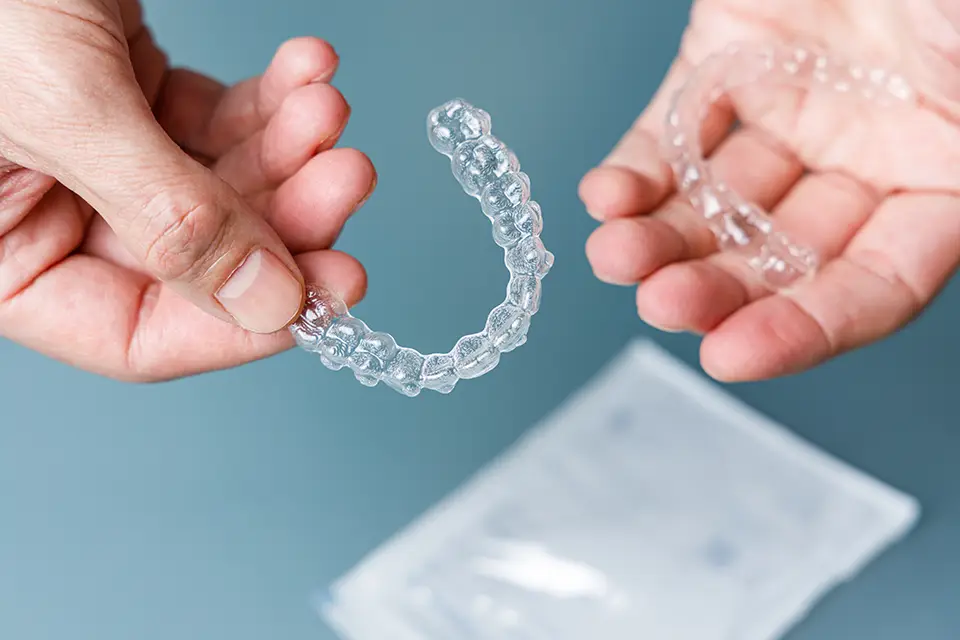
For contact sports, both options require protection: aligners with a sports mouthguard (remove trays for play if using a custom guard), or braces with a braces-compatible guard. Travellers often like aligners because you can carry the next sets and stay on schedule; just clean after meals and store trays safely. With braces, we provide a travel kit and wax; if a bracket loosens, we’ll advise by phone and schedule a quick fix. In day-to-day Invisalign vs braces logistics, planning beats improvisation.
Retention: The Part Everyone Forgets
Teeth have memory. After movement, fibres and bone need time to stabilize. You’ll receive a custom retention plan—clear removable retainers, a fixed bonded retainer, or a combination—plus a wear schedule. Long-term retention is identical whether you choose Invisalign or braces. In other words, Invisalign vs braces debates end at the same destination: retainers protect your investment.
Invisalign vs Braces: The ORIS Dental Clinics Approach (Richmond Hill)
We start with diagnostics: photos, digital scans, and bite analysis to set a clear baseline. Then we model scenarios—Invisalign vs braces pathways with timelines, check-ins, and estimated costs—so you can compare the entire journey, not just the appliance. Throughout treatment, we monitor gum health, adjust mechanics as needed, and keep communication plain and direct. The goal is a stable bite and a smile that feels as good as it looks.
Conclusion
Both systems can deliver excellent results; the right choice is the one you’ll follow perfectly, and that fits the biology of your bite. Use the differences in mechanics, lifestyle, hygiene, and compliance to guide your decision on Invisalign vs braces—then commit to the plan. Ready to see what your case looks like on a timeline you can trust? Book a consultation at ORIS Dental Clinics in Richmond Hill, Ontario. We’ll record your baseline, compare routes side by side, and map a treatment you can live with day to day—so your confident smile arrives on schedule.
FAQs — Invisalign vs Braces
Which is faster—Invisalign or braces?
For mild to moderate cases, timelines can be similar. For complex bite changes, braces may offer tighter control. In practical Invisalign vs braces terms, consistency (tray wear or on-time adjustments) is the biggest speed factor.
Are aligners as precise as braces?
With proper planning, attachments, and occasional auxiliaries, aligners can be highly precise. Braces still excel in certain complex rotations or vertical movements. We’ll match your goals to the system that controls those movements best in the Invisalign vs braces plan.
Will I talk or eat differently?
Aligners are removed for meals and may cause a brief lisp that fades quickly. Braces require diet modifications (no hard or sticky foods). Either way, adaptation is usually fast and smooth.