
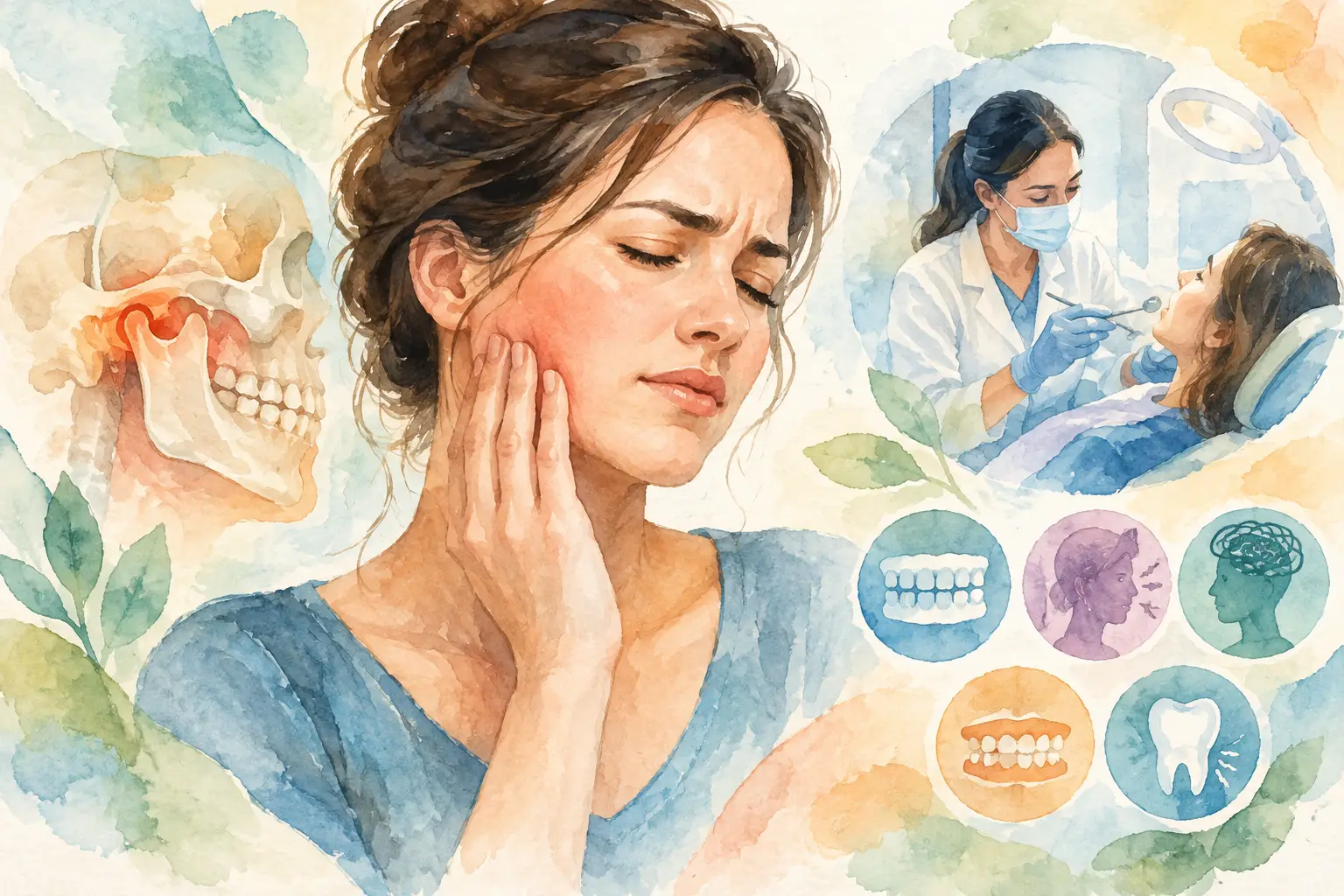
A sore jaw can make ordinary things – eating, speaking, yawning, or brushing your teeth – unexpectedly difficult. Jaw pain causes are not always obvious: a problem that feels like a tight jaw joint may begin in a tooth, while pain near the ear may be related to the muscles used for chewing. The location, timing, and accompanying symptoms all help point to the right next step.
For some people, jaw discomfort settles after avoiding tough foods and resting the area. For others, it is a warning sign of infection, tooth damage, gum disease, or a joint condition that needs professional care. Knowing the difference can protect both your comfort and your long-term oral health.
Common jaw pain causes
Tooth decay, cracks, and dental infection
A decayed, cracked, or severely worn tooth can cause pain that spreads into the jaw. The tooth itself may be sensitive to hot, cold, sweets, or biting pressure, but not always. When the nerve inside a tooth becomes inflamed or infected, pain can feel deep, throbbing, and difficult to pinpoint.
An abscess is an infection that forms around a tooth root or in the gum tissue. It may cause swelling of the face or jaw, a bad taste in the mouth, fever, or a small bump on the gums. Dental infections do not resolve simply by waiting for the pain to fade. In some cases, the nerve stops responding and the pain briefly improves while the infection continues to spread. Treatment may involve drainage, root canal treatment, or removal of a tooth that cannot be saved.
Gum disease and gum infections
Inflamed gums can be tender, swollen, or prone to bleeding when brushing. More advanced periodontal disease can affect the bone and tissues supporting the teeth, causing soreness, loose teeth, or discomfort when chewing. Food and bacteria can also become trapped around a partially erupted wisdom tooth, leading to a painful gum infection called pericoronitis.
This type of pain often occurs at the back of the jaw and may make it hard to open the mouth fully. A dental examination can determine whether cleaning, gum treatment, medication, or wisdom tooth treatment is appropriate.
Temporomandibular joint and muscle strain
The temporomandibular joints, often called TMJ, connect the lower jaw to the skull. They work with several muscles every time you chew, speak, and swallow. Clenching or grinding teeth, stress-related muscle tension, chewing gum frequently, biting nails, or opening widely for long periods can overload these structures.
TMJ-related discomfort may feel like aching in front of the ear, tightness in the cheeks or temples, clicking or popping, headaches, or pain when opening and closing. Clicking alone is not always a problem, particularly when it is painless and the jaw moves normally. Pain, locking, limited opening, or a bite that suddenly feels different deserves an assessment.
Treatment depends on the cause. A carefully fitted night guard may protect teeth from grinding, while exercises, lifestyle changes, restorative treatment, or further investigation may be needed in other cases. A generic store-bought guard is not the right solution for everyone, since an ill-fitting appliance can worsen bite or joint symptoms.
Sinus pressure, ear problems, and referred pain
The upper back teeth sit close to the maxillary sinuses. Sinus inflammation can create pressure that feels like toothache or pain in the upper jaw, especially when bending forward. Ear conditions can also cause discomfort that seems to travel into the jaw.
Conversely, a dental problem or TMJ muscle tension can be felt near the ear even when the ear is healthy. This overlap is why a focused dental examination is useful when jaw pain persists or comes with tooth sensitivity, gum swelling, or difficulty chewing. If no dental source is found, the dentist may recommend follow-up with a physician or another health professional.
Injury, arthritis, and bite changes
A blow to the face, a sports injury, or a fall can bruise the jaw muscles, damage teeth, or fracture the jaw. Pain after trauma, particularly with swelling, numbness, loose teeth, or a bite that no longer comes together properly, should be assessed promptly.
Arthritis can affect the jaw joint as well. It may cause morning stiffness, tenderness, grinding sensations, or gradual limitations in movement. Missing teeth, shifting teeth, and uneven tooth wear can also change how forces are distributed during chewing. Restorative options, orthodontic planning, and replacement of missing teeth may help restore a more stable bite where clinically appropriate.
Symptoms that should not wait
A painful jaw is not automatically an emergency, but certain symptoms call for prompt professional attention. Contact a dentist urgently if you have facial swelling, fever, pus or a bad taste, severe tooth pain, uncontrolled bleeding, or difficulty swallowing. These signs can indicate an infection or complication that requires timely treatment.
Seek emergency medical care right away if swelling is affecting breathing, if you cannot swallow saliva, or if you have jaw pain with chest pressure, shortness of breath, sweating, nausea, or pain spreading to the arm, shoulder, neck, or back. Although less common, jaw pain can be associated with a heart-related emergency, particularly when it occurs with these symptoms.
After a facial injury, urgent assessment is also warranted if the jaw appears uneven, you cannot close your teeth together normally, your mouth will not open or close, or you have persistent numbness in the lower lip or chin.
What you can do before your appointment
If the pain is mild and there are no warning signs, temporary measures can reduce strain while you arrange care. Choose soft foods for a few days, avoid gum and hard or chewy foods, and do not force the jaw open. A warm compress may help tight jaw muscles, while a cold pack wrapped in cloth can be useful for fresh swelling after an injury.
Over-the-counter pain relief may be appropriate for some adults when used exactly as directed on the label. It is not suitable for everyone, especially people with certain medical conditions, allergies, stomach ulcers, kidney disease, or those taking specific medications. A pharmacist or healthcare provider can help if you are unsure. Do not place aspirin or other pain medicines directly on gums or teeth, as this can burn the tissue.
Try to notice patterns before your visit. Does the pain worsen with chewing, cold drinks, waking in the morning, or stressful days? Is there clicking, swelling, sensitivity, headaches, or a recent dental treatment or injury? These details help narrow down the source.
How a dental assessment identifies the source
Because several conditions can produce similar symptoms, treatment should begin with a clear diagnosis rather than guesswork. Your dental team may examine the teeth and gums, check jaw movement and bite alignment, gently feel the muscles and joints, and take digital X-rays when needed. If a complex jaw joint, wisdom tooth, infection, or surgical concern is identified, coordinated care can prevent you from having to manage separate, disconnected treatment plans.
At ORIS Dental Clinics, patients can be assessed for routine dental concerns as well as more complex needs involving root canal treatment, gum care, oral surgery, restorative treatment, and comfort-focused sedation options. Direct insurance billing and support for eligible Canadian Dental Care Plan patients can also make it easier to move forward with recommended care.
Jaw pain is your body asking for attention, not a symptom you need to manage alone. If it is recurring, worsening, or interfering with eating and sleep, arranging a dental assessment can bring clarity and help you return to comfortable daily life.