A loose lower denture can turn ordinary moments – enjoying a meal, speaking in a meeting, laughing with family – into situations that require constant caution. For people replacing a full arch of missing teeth, the choice between implant dentures versus overdentures often comes down to one practical question: how secure do you want your teeth to feel, and what level of treatment suits your health, goals, and budget?
Both options use dental implants to improve support for replacement teeth. They can restore confidence, chewing ability, and facial support more effectively than a conventional removable denture alone. However, they are not interchangeable treatments. The way they attach, how they are cleaned, the number of implants involved, and the long-term investment can differ considerably.
Implant Dentures Versus Overdentures: The Main Difference
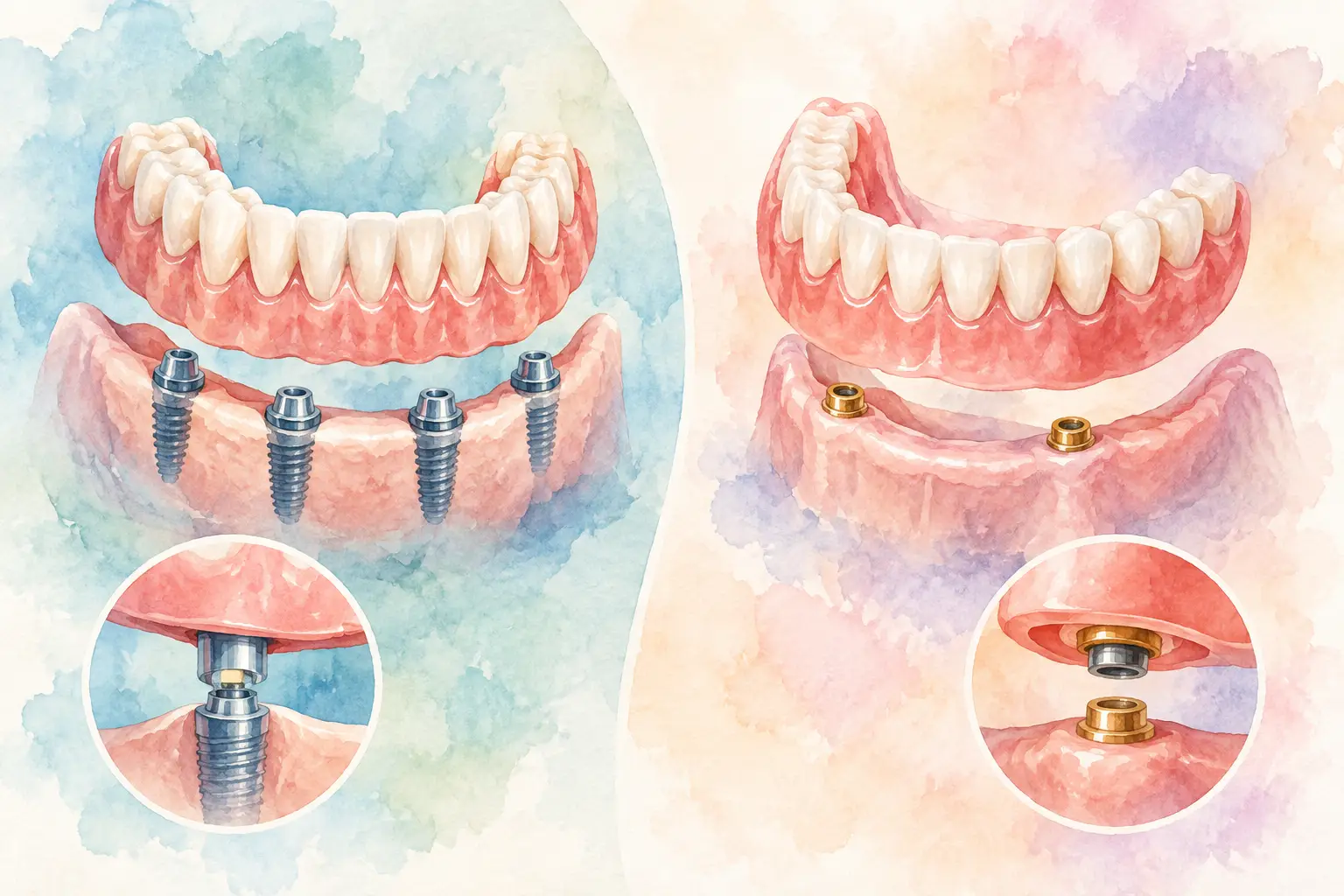
The terminology can be confusing because people sometimes use “implant dentures” to describe any denture supported by implants. In a clinical conversation, however, implant dentures often refer to a fixed full-arch prosthesis: a complete set of replacement teeth secured to implants and removed only by a dental professional.
An overdenture is removable. It fits over dental implants and attaches using carefully designed connectors, such as locator attachments or a supporting bar. The denture stays far more stable than a traditional denture, but you take it out at home for cleaning and overnight care when recommended.
Neither option is automatically better. A fixed implant denture may provide the closest experience to having natural teeth, while an overdenture can offer meaningful stability with a simpler removable design. Your dentist will consider the condition of your jawbone and gums, your bite, medical history, dexterity, aesthetic preferences, and the kind of daily maintenance you are comfortable managing.
Fixed Implant Dentures: Stability Without Daily Removal
A fixed implant denture is attached to several implants placed in the jaw. Once healing and final restoration are complete, it remains in place day and night. The restoration is usually designed as a full arch of natural-looking teeth with gum-coloured material where needed to replace lost soft tissue volume.
For many patients, the greatest benefit is security. Fixed teeth do not lift when speaking or shift while chewing as a conventional denture can. They can make it easier to eat a wider range of foods, although even fixed restorations should not be treated like tools for opening packages or biting extremely hard items.
A fixed option may also feel emotionally easier for someone who strongly dislikes the thought of removing their teeth. It can be particularly appealing for patients who have struggled for years with denture adhesive, sore spots, or fear of a denture moving in social settings.
There are trade-offs. Fixed implant dentures usually require more implants, more planning, and a higher initial investment. They also require excellent hygiene. You will need to clean around and beneath the prosthesis using tools such as an implant-safe brush, floss threader, interdental brush, or water flosser, based on your dentist’s instructions. Professional maintenance visits are essential because the restoration needs periodic inspection and cleaning in areas that are difficult to reach at home.
Implant-Supported Overdentures: Secure and Removable
An overdenture uses implants to hold a removable denture firmly in place. For a lower jaw, even two implants can make a substantial difference in stability for many suitable candidates. More implants or a bar attachment may be recommended when added support, retention, or bite distribution is needed.
The denture snaps or clicks into place, reducing the rocking and sliding that can make conventional dentures frustrating. Because it remains removable, you can take it out to clean both the denture and the implant attachments directly. This can be a practical advantage for patients who prefer a straightforward hygiene routine or have limited ability to clean under a fixed bridge.
An overdenture is not the same as a loose denture. It should feel secure during normal eating and speaking, though it may have a slightly different sensation from permanently fixed teeth. Attachments can wear over time and may need replacement or adjustment as part of ongoing care. That is normal maintenance, not necessarily a sign that the implants have failed.
For some patients, an overdenture is a sensible middle ground: significantly better comfort and function than a conventional denture, with a lower treatment cost and less complex design than many fixed full-arch solutions.
How Bone, Gum Health, and Medical History Affect Your Options
Dental implants need healthy bone for support. When teeth have been missing for a long time, the jawbone can gradually shrink. This does not always rule out implants, but it may change the treatment approach. Digital imaging and a comprehensive examination help determine implant position, bone volume, and whether procedures such as bone grafting may be beneficial.
Gum disease also needs careful attention. Implants can develop inflammation around their supporting tissues, particularly when plaque accumulates or regular maintenance is missed. Treating active periodontal concerns and establishing a sustainable home-care routine are important before and after implant treatment.
Certain health conditions, medications, smoking or vaping habits, and previous radiation therapy can affect healing. A detailed medical review is not a barrier designed to delay treatment. It is how your dental team plans safely and gives you a realistic understanding of expected outcomes.
Comparing Daily Life With Each Option
Fixed implant dentures are often chosen for their natural, always-in-place feel. They may be well suited to someone who wants maximum stability and is committed to detailed cleaning beneath the restoration. They require no adhesives and do not need to be removed at night, but they still need careful cleaning every day.
Overdentures are often easier to access and clean because they come out. They can be an excellent choice for patients who value implant stability but prefer a removable appliance, want to limit surgery, or are working within a more modest budget. Some people also appreciate that the denture can be repaired or relined outside the mouth when needed.
Comfort is personal. A fixed restoration can feel less bulky because it may not cover the roof of the mouth in the same way as an upper removable denture. On the other hand, some patients find the ability to remove an overdenture reassuring, especially during the adjustment period. The best choice is the one that fits your anatomy and your habits, not simply the one with the most implants.
What About Cost and Coverage?
The cost of implant treatment reflects several parts of care: diagnostic imaging, surgical planning, implant placement, possible extractions or grafting, healing components, and the final restoration. Fixed implant dentures generally cost more than overdentures because they often involve additional implants and a more complex final prosthesis.
It is also helpful to think beyond the initial fee. Ongoing maintenance is part of protecting either option. Overdentures may need attachment components replaced periodically, while fixed restorations require professional hygiene visits and occasional repairs or adjustments. A written treatment plan should explain what is included, what future maintenance may involve, and the expected timeline.
Dental insurance and Canadian Dental Care Plan coverage can vary by plan, treatment category, eligibility, and preauthorization requirements. A clinic that offers direct billing can help you understand available benefits, but coverage should be confirmed before treatment begins.
A Coordinated Plan Makes the Decision Easier
Full-arch tooth replacement is not just a prosthetic decision. It may involve extractions, gum treatment, bone preservation, implant surgery, bite planning, and the design of your final smile. Receiving this care through a coordinated team can make the process easier to understand and reduce the need to manage separate providers.
At ORIS Dental Clinics, implant treatment planning can be approached with a full view of your oral health, comfort needs, and long-term goals. For patients who feel anxious about surgery or have avoided dentistry because of past experiences, comfort-focused options and clear step-by-step explanations can make treatment feel more manageable.
The right restoration should support more than your smile. It should let you eat, speak, clean, and live with greater confidence – in a way you can realistically maintain for years to come.