
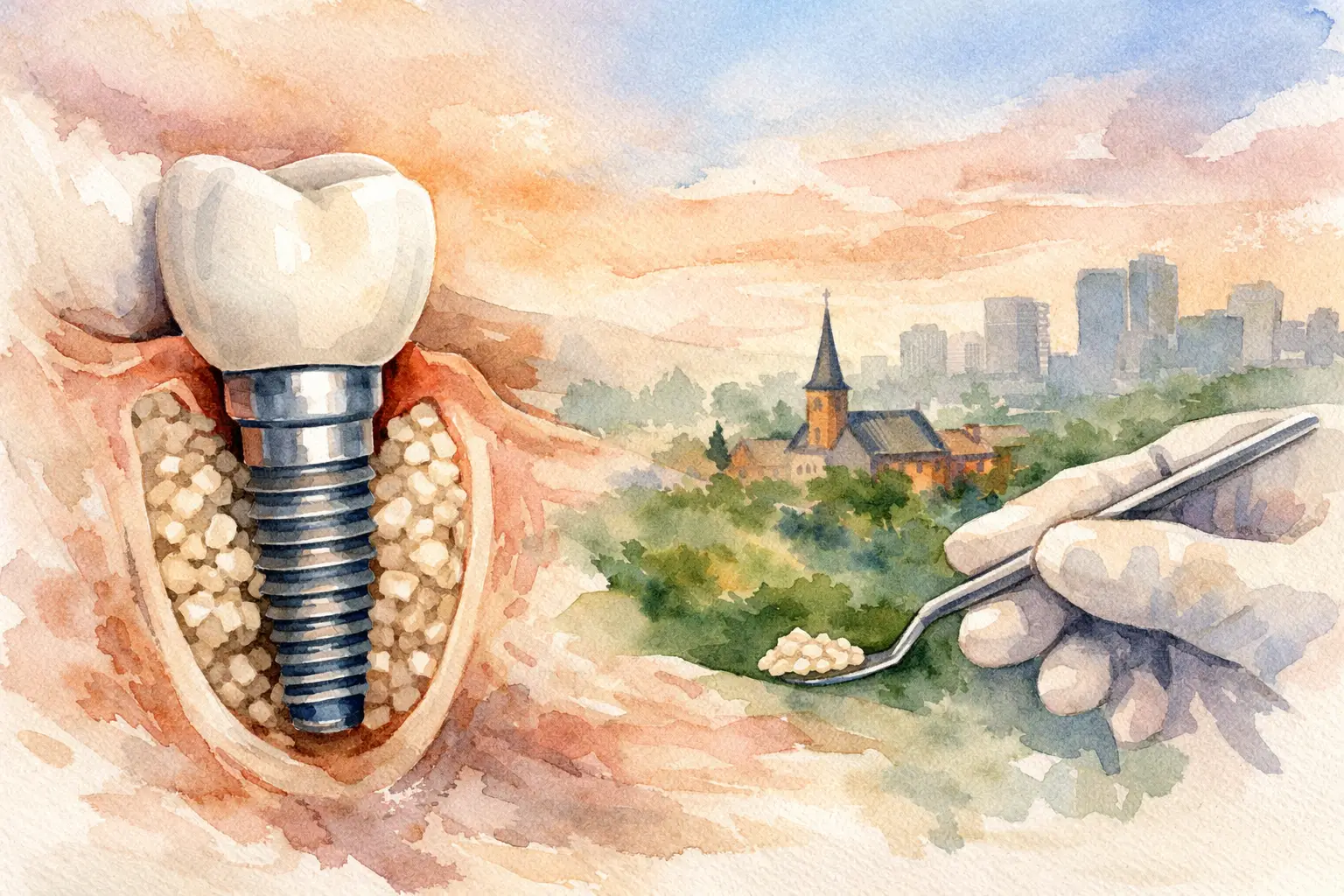
A missing tooth does not only leave a visible space. Over time, the jawbone beneath that tooth can lose the stimulation it needs to maintain its shape and density. For patients looking for a bone grafting dentist Richmond Hill residents can rely on, the goal is usually clear: rebuild enough healthy bone to support a stable dental implant and protect the long-term function of the smile.
Bone grafting can sound like a major step, particularly if you have already been through an extraction, infection, or years of living with a missing tooth. In many cases, however, it is a carefully planned procedure that makes implant treatment possible, more predictable, and better suited to your facial structure.
What Does Bone Grafting Do?
A dental implant needs a solid foundation. The titanium implant post is placed in the jawbone, where it gradually bonds with surrounding bone. If the available bone is too thin, too short, or weakened by disease, an implant may not have the support it needs to function well over time.
A bone graft adds material to an area where bone has been lost or where additional volume is needed. Your body then gradually incorporates the graft, building a stronger base for future treatment. The graft material may come from your own bone, a screened donor source, an animal-derived source, or a biocompatible synthetic material. The right option depends on the treatment area, the amount of bone required, your health history, and the clinical plan.
This is not solely an implant procedure. Bone grafting may also help preserve the jaw after an extraction, support gum and periodontal treatment, or prepare an area for a bridge or other restorative solution. Still, implant preparation is the reason most patients first hear about it.
When a Bone Grafting Dentist in Richmond Hill May Recommend Treatment
Bone loss is common after a tooth is removed. The jawbone begins to remodel because it no longer receives chewing forces through the tooth root. This process can be most noticeable during the first year after an extraction, but it can continue for years.
A graft may be recommended when an implant site does not have adequate bone volume, when an extraction has left a socket that would benefit from preservation, or when gum disease or infection has damaged the bone around a tooth. Trauma, a long-standing denture, and naturally thin jawbone anatomy can also affect whether grafting is needed.
The upper back jaw deserves special attention. The sinus cavity sits close to the roots of the upper molars, and bone in this region can be limited after tooth loss. In some cases, a sinus lift is used to create sufficient height for an implant. This is a more specialized type of grafting procedure and requires detailed planning.
Not every missing tooth requires a graft. A clinical examination and 3D imaging show the actual condition of the bone. This matters because the decision should be based on your anatomy, not on a one-size-fits-all treatment plan.
How the Planning Process Works
Before recommending grafting, your dental team reviews your medical and dental history, examines your gums and bite, and assesses the site with digital X-rays or cone beam CT imaging. These images help measure bone height, width, and density while showing the location of nerves, sinus spaces, and nearby teeth.
If gum disease, active infection, or an untreated tooth problem is present, those concerns may need to be addressed first. Healthy gums and good home care create better conditions for healing. Smoking, uncontrolled diabetes, certain medications, and conditions that affect bone metabolism can also influence the timing or type of treatment recommended.
At ORIS Dental Clinics, coordinated care under one roof can be particularly valuable for complex cases. A patient may need an extraction, periodontal assessment, grafting, and implant restoration, but the plan should feel connected from the first consultation through the final crown.
What Happens During a Bone Graft?
The procedure is usually completed with local freezing. For patients with dental anxiety or a more involved surgical plan, sedation options may be discussed following an individual health assessment.
After the area is numbed, the dentist or surgical provider gently prepares the treatment site and places the graft material. A protective membrane may be used to help guide healing and keep soft tissue from growing into the space where bone is needed. The site is then closed with sutures.
For a socket preservation graft, treatment may happen at the same appointment as a tooth extraction. This can reduce bone shrinkage while the area heals. For larger deficiencies, grafting may take place before implant placement. In select cases with enough existing bone for initial implant stability, the implant and graft may be completed together.
There is a trade-off between speed and predictability. Immediate implant placement can reduce the number of surgical visits for the right candidate, but it is not always the best choice. Where infection, significant bone loss, or poor stability is present, allowing a graft to heal first may offer a more reliable result.
Healing Time and Recovery Expectations
Most patients manage recovery with a few days of modified activity, soft foods, and prescribed or recommended pain relief. Mild swelling, tenderness, and minor bruising can occur. Following post-operative instructions closely is essential, especially avoiding smoking, vigorous rinsing, or pressure on the surgical area.
Initial soft-tissue healing often occurs within one to two weeks, while the graft itself generally needs several months to mature. Many implant sites require about three to six months of healing before the next stage, although timelines vary. A smaller graft may heal faster, while a larger graft or sinus lift may need more time.
During follow-up visits, the site is checked for healthy healing. Once the bone is ready, implant placement can be planned. The implant then needs its own healing period before the final crown, bridge, or implant-supported denture is attached. This longer timeline can feel frustrating, but it is designed to protect the stability of the final result.
Questions About Comfort, Cost, and Coverage
A clear treatment estimate should explain the proposed procedure, imaging, graft material, sedation if applicable, and the future implant and restoration stages. Costs vary significantly based on the complexity of the site and whether additional surgical treatment is needed.
Dental insurance plans differ widely in how they cover bone grafting and implant-related care. Direct billing can help reduce administrative stress where benefits are available, but coverage should be confirmed before treatment begins. Patients eligible for the Canadian Dental Care Plan should also ask which portions of their recommended care may be covered and whether preauthorization is required.
Comfort deserves the same attention as clinical planning. Let your dental team know if past experiences have made you nervous, if you have a strong gag reflex, or if you are concerned about pain control. A good surgical plan includes time for questions, practical recovery guidance, and options that help you feel prepared.
A Foundation Worth Planning Carefully
Bone grafting is often the step that turns an uncertain implant site into a stable, functional solution. If you have been told there is not enough bone for an implant, or you are considering an extraction and want to preserve future options, an assessment can clarify what your jaw needs now and what may be possible later.