A crown that feels too high, an impression that triggers a gag reflex, or uncertainty about how an implant will look can make dental treatment feel more stressful than it needs to be. Digital dentistry changes many of these moments by replacing much of the guesswork with detailed scans, visual planning, and more precise communication between your dental team and the lab.
For patients and families in Richmond Hill, the value is not technology for its own sake. It is better information before treatment begins, care that can often be planned more accurately, and a clearer understanding of what is happening in your mouth. Digital tools can support everything from a child’s first examination to a full-mouth rehabilitation, but they remain tools. The experience and judgment of the dental professionals using them still matter most.
What is digital dentistry?
Digital dentistry is the use of computer-based tools to diagnose, plan, design, and deliver dental care. It may include digital X-rays, intraoral scanners, 3D cone beam CT imaging, digital photographs, computer-guided implant planning, and software that helps design restorations or preview cosmetic changes.
Traditional methods are still appropriate in certain situations, and not every appointment requires advanced scanning. However, digital records can give your dental team a more complete and detailed view of your teeth, gums, bite, jawbone, and facial features. This is particularly useful when treatment involves several steps or more than one area of dentistry.
At a comprehensive practice such as ORIS Dental Clinics, these records can also help different members of the care team coordinate treatment. For example, a patient who needs gum treatment, an extraction, an implant, and a final crown benefits when each stage is planned around the same set of accurate records.
How digital tools can improve your dental experience
More comfortable impressions
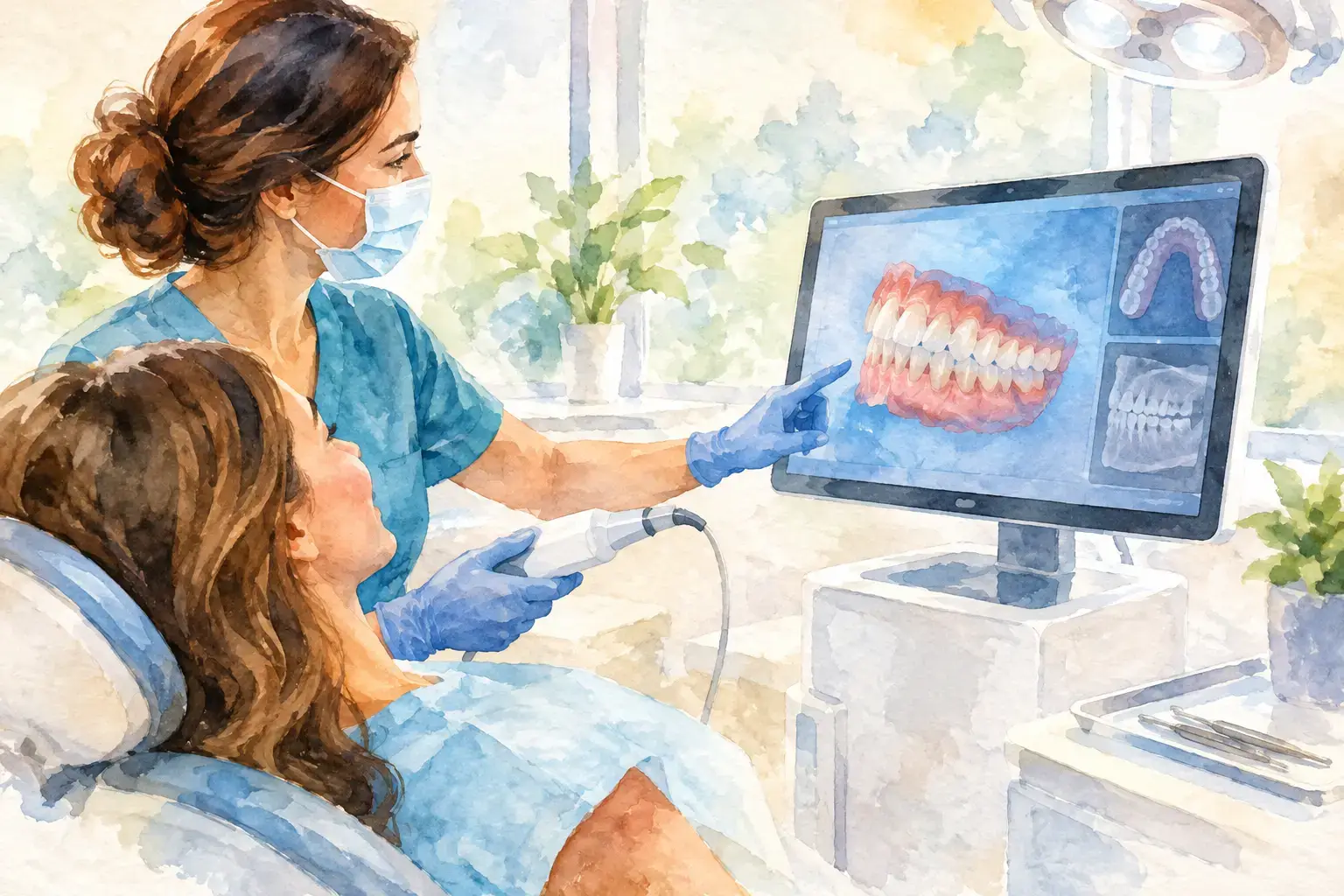
For many patients, one of the most noticeable changes is the intraoral scanner. Rather than placing a tray of impression material in the mouth, the dentist or dental hygienist uses a small camera to capture a detailed digital model of the teeth and gums.
This can be especially helpful for patients with a strong gag reflex, children, and people who find conventional impressions uncomfortable. The scan can be reviewed immediately, so missing information may be captured during the same visit rather than discovered later by a dental laboratory.
Digital impressions are commonly used when planning crowns, bridges, veneers, clear aligners, night guards, and certain implant restorations. They are not always the best choice for every clinical situation, but they have become an effective option for many restorative and orthodontic cases.
Clearer diagnostic images
Digital X-rays provide detailed images with efficient image capture and can be displayed immediately on a chairside screen. Your dentist can point out areas of decay between teeth, changes around an existing filling or crown, bone levels around the teeth, or signs of infection near a tooth root.
For more complex needs, 3D cone beam CT imaging may be recommended. A conventional X-ray provides a flat image, while a CBCT scan creates a three-dimensional view of the jaw, teeth, roots, sinuses, nerves, and available bone. This additional detail can be valuable when planning dental implants, wisdom tooth removal, bone grafting, root canal treatment, or certain orthodontic cases.
A 3D scan is not necessary for every patient or procedure. Your dental team should recommend it when the information it provides will meaningfully support a safer or more predictable treatment decision.
Better planning for implants and surgical care
Dental implants require careful planning because placement depends on the quality and quantity of jawbone, the location of nearby nerves and sinuses, and the desired position of the final tooth. Digital planning software can combine a 3D scan with a digital model of your mouth to help map the implant position before surgery.
In suitable cases, a surgical guide may be created to support the planned placement. This can improve precision, but it does not make implant treatment automatic or risk-free. Healing capacity, gum health, bone condition, bite forces, smoking, medical history, and home care all affect the final result.
The same principle applies to oral surgery and endodontic treatment. Digital imaging helps the dentist assess anatomy and plan with greater confidence, while clinical examination and professional expertise determine whether treatment is appropriate.
Digital dentistry and smile design
Aesthetic dental care involves more than making teeth look whiter or straighter. The shape, proportion, position, and colour of teeth should work with your bite, gums, lips, and facial features. Digital Smile Design uses photographs, scans, and planning software to help assess these details before treatment begins.
For patients considering veneers, crowns, implant-supported teeth, orthodontics, or a more extensive smile makeover, a digital plan can make the conversation much more concrete. You may be able to see proposed changes, discuss what looks natural to you, and understand where compromises may be needed.
A preview is not a guarantee of an identical final result. Teeth and gums respond biologically, materials have practical limits, and a healthy bite must take priority over a purely cosmetic goal. Still, digital planning gives patients a more useful starting point for informed decisions than trying to imagine an outcome from verbal descriptions alone.
Why digital records matter for long-term care
Your mouth changes over time. Teeth can shift, fillings wear down, gum recession can progress, and bite patterns can change. High-quality digital records give your dental team a baseline that can be compared with later examinations.
This is useful in preventive care as well as complex treatment. A series of digital photographs or scans can help document tooth wear, monitor a cracked tooth, assess recession, or track changes during orthodontic treatment. For families, records can also support continuity as children grow and their dental needs evolve.
Digital communication can reduce delays when a dental laboratory or specialist needs precise information. That does not necessarily mean every procedure will be completed in one appointment. Crowns, implant restorations, orthodontic appliances, and complex rehabilitations still require careful fabrication, fitting, and adjustment. A faster workflow is helpful only when it does not compromise quality.
What digital dentistry cannot replace
Technology does not eliminate the need for a thorough examination. A scan cannot tell the whole story about pain, sensitivity, anxiety, habits such as clenching, or your personal goals for treatment. Nor can software replace the dentist’s ability to assess soft tissues, test a tooth, evaluate your bite, and discuss the benefits and limitations of each option.
Patients should also be cautious about promises of perfect results, instant transformations, or one-size-fits-all treatment plans. The right approach depends on your oral health, budget, timeline, medical needs, and priorities. In some cases, a straightforward restoration or preventive plan is the most sensible choice. In others, digital planning supports a more involved treatment that protects function and preserves remaining healthy teeth.
Cost is another consideration. Advanced imaging and digital design may add value when they improve planning or reduce the likelihood of complications, but they are not automatically needed. Ask why a particular scan or digital service is being recommended, what information it provides, and whether it affects the treatment plan. If you have dental insurance or are eligible for the Canadian Dental Care Plan, your clinic can also help clarify billing and coverage questions before proceeding.
Choosing care that feels understandable
The best use of digital dentistry is practical: it helps you see what your dentist sees, understand the choices in front of you, and move through treatment with fewer surprises. Whether you need a routine checkup, a replacement tooth, support for dental anxiety, or a detailed plan for restoring your smile, you deserve explanations that are clear and recommendations that fit your needs.
When technology is paired with attentive care, it can make a complicated dental decision feel more manageable – one informed step at a time.