
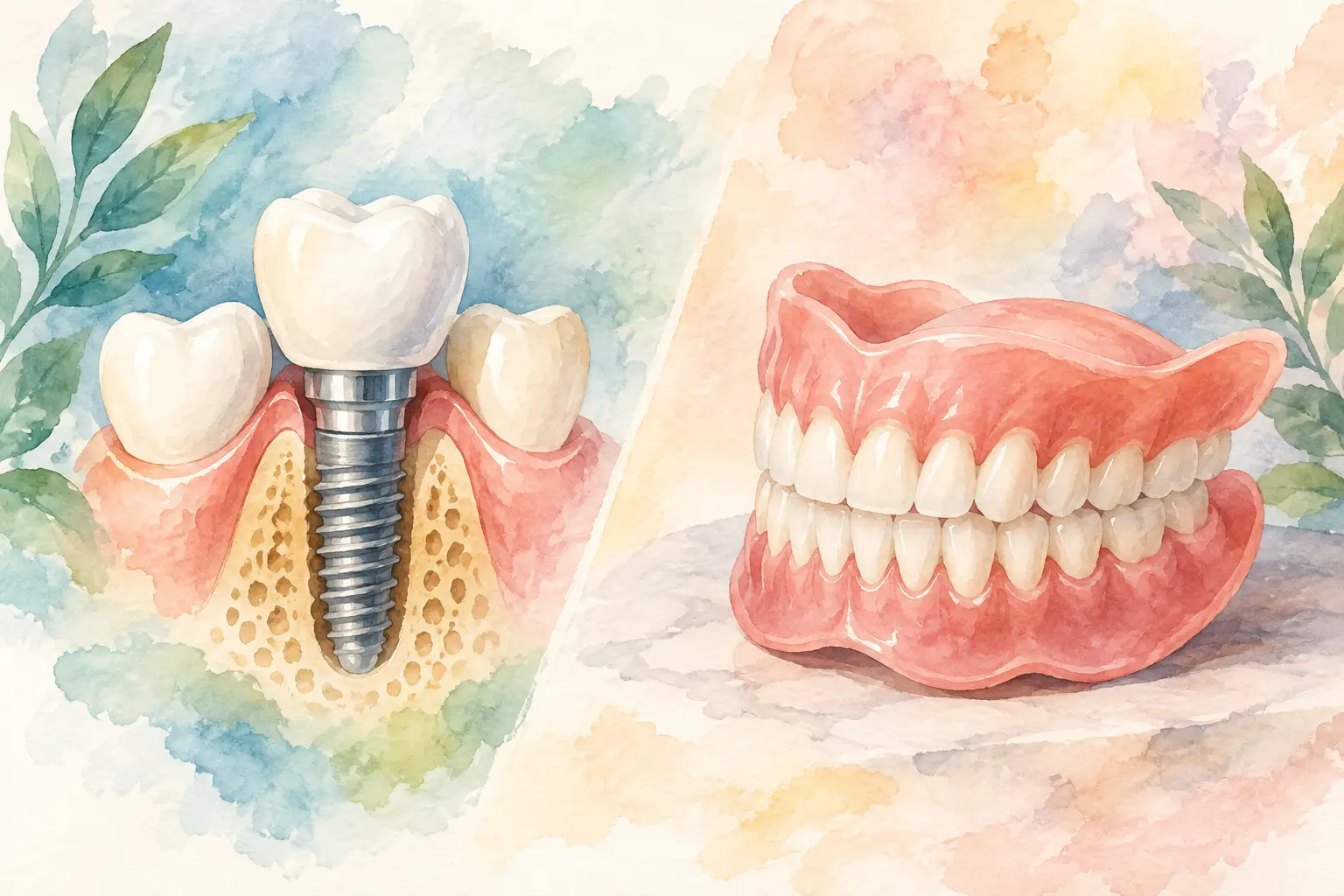
A missing tooth can change more than a smile. It may make it harder to chew, affect speech, cause neighbouring teeth to shift, or leave you reluctant to laugh in photos. When considering a dental implant versus denture, the right choice depends on the number of teeth missing, the health of your gums and jawbone, your budget, and what daily comfort means to you.
Both treatments can restore function and appearance. The difference is in how they are supported, how they feel in the mouth, and how they protect your oral health over time. A personal assessment is the best way to make a confident decision, especially if you have existing dental work, gum disease, bone loss, or dental anxiety.
Dental Implant Versus Denture: The Main Difference
A dental implant replaces the root of a missing tooth. A small titanium post is placed in the jawbone, where it gradually integrates with the bone. Once healed, it can support a custom crown for one missing tooth, a bridge for several teeth, or a full-arch restoration for many missing teeth.
A denture is a removable appliance that replaces some or all missing teeth. Partial dentures fit around remaining natural teeth, while full dentures rest on the gums after all teeth in an arch have been removed. Modern dentures are designed to look natural, but they do not replace tooth roots.
This distinction matters because tooth roots stimulate the jawbone when you chew. After tooth loss, the bone in that area can gradually shrink. Implants help maintain that stimulation. Conventional dentures restore the visible teeth and much of the ability to eat and speak, but they cannot prevent bone changes on their own.
How Each Option Feels Day to Day
For many patients, comfort is the deciding factor. A single implant crown is fixed in place and generally feels very close to a natural tooth. There is no need to remove it at night, use adhesive, or avoid certain foods once treatment is complete and healing has progressed.
Dentures can be an effective solution, particularly when replacing many teeth without surgery. However, they may take time to get used to. Some people experience minor movement while eating or speaking, pressure points on the gums, or changes in fit over time. Denture adhesives and periodic adjustments can help, but they are part of ongoing denture care.
Lower dentures are often more challenging than upper dentures because there is less surface area for suction and support. If a lower denture moves frequently, implant-supported dentures may offer a useful middle ground. Two or more implants can secure a removable denture, improving stability while keeping the restoration easier to remove for cleaning.
Appearance, Speech, and Eating
Both options can be made to complement your facial features and natural tooth colour. With either treatment, careful planning matters. The shape of the teeth, gum support, bite, and position of the lips all influence the final result.
Implants are usually the closest match to the feeling and biting force of natural teeth. They can make it easier to eat a broader range of foods, including firmer fruits, vegetables, and proteins. That can be especially valuable for people who have struggled to maintain a balanced diet with loose or uncomfortable dentures.
Dentures can still provide a meaningful improvement in speech, confidence, and chewing ability. During the adjustment period, though, some words may feel unfamiliar and certain sticky or hard foods may require extra care. Reading aloud and practising with smaller bites can help patients adapt.
Treatment Time and What the Process Involves
A denture can often be completed more quickly than an implant restoration, although timing depends on whether extractions or gum healing are needed first. Immediate dentures may be placed on the day teeth are removed in suitable cases. Because the gums and bone change while healing, adjustments or a replacement denture may later be necessary.
Implant treatment takes longer because the jawbone needs time to heal around the implant. Some patients may be candidates for immediate implant placement after extraction, while others need several months of healing first. If there is not enough healthy bone to support an implant, bone grafting may be recommended before or during treatment.
Digital imaging and detailed planning help determine whether implants are appropriate and where they can be safely placed. For people who feel nervous about dental procedures, comfort-focused care and sedation options can make surgical treatment more manageable.
Cost: Looking Beyond the Initial Fee
Dentures usually have a lower upfront cost than implants. This makes them a practical choice for many people, particularly when several teeth need replacement or when surgery is not preferred.
Dental implants generally cost more initially because treatment includes surgical placement, healing appointments, imaging, and the final restoration. Yet an implant may last many years with good oral hygiene and regular dental care. It can also reduce the need to alter neighbouring healthy teeth when replacing one missing tooth.
The long-term cost of dentures may include relines, repairs, adhesives, adjustments, and eventual replacement as the shape of the gums and jaw changes. There is no single answer that fits every budget or clinical situation. A written treatment plan should explain the recommended option, alternatives, expected future maintenance, and fees before treatment begins.
Insurance coverage varies widely. Some plans contribute toward dentures but provide limited implant coverage, while others offer benefits for certain stages of implant treatment. Patients eligible for the Canadian Dental Care Plan should also ask which services may be covered and whether any out-of-pocket costs apply.
Oral Health Considerations
Implants require healthy gums and a commitment to daily cleaning. Although an implant cannot develop a cavity, the surrounding gums and bone can become inflamed if plaque is not removed effectively. Brushing, cleaning around the implant as instructed, and regular hygiene visits are essential.
Dentures must also be cleaned every day. They should be removed as directed, brushed with an appropriate denture cleanser, and soaked when recommended. The gums, tongue, palate, and any remaining natural teeth still need daily care. Wearing a denture continuously without cleaning can increase the risk of irritation, infection, and unpleasant odour.
If gum disease is present, it should be treated and stabilized before implant treatment. Smoking, uncontrolled diabetes, teeth grinding, certain medications, and reduced bone volume can also affect implant planning and long-term success. These factors do not automatically rule out implants, but they require an individualized approach.
When Dentures May Be the Better Choice
Dentures are not a lesser solution. They can be the most appropriate option for someone who wants to avoid surgery, needs a faster replacement after multiple extractions, has significant medical considerations, or prefers a lower initial investment. They may also be recommended temporarily while gums heal or while a longer-term implant plan is being considered.
A well-designed denture should be comfortable, functional, and natural-looking. If yours slips, causes sore spots, clicks while speaking, or no longer feels secure, it may need an adjustment, reline, or replacement rather than simply more adhesive.
When Implants May Be the Better Choice
Implants may be particularly appealing when replacing one missing tooth, when you want a fixed option, or when loose dentures limit your ability to eat and speak comfortably. They can also support a bridge without relying on adjacent teeth, or stabilize a full denture for greater confidence.
The best candidates have sufficient bone and healthy gums, but modern implant care can often address concerns such as bone loss through grafting and careful surgical planning. A consultation can clarify what is possible before you assume implants are out of reach.
A Choice That Should Fit Your Life
The decision is not simply dental implant versus denture. It is a decision about comfort, health, finances, lifestyle, and the care you can realistically maintain. At ORIS Dental Clinics, a comprehensive assessment can bring the surgical, restorative, periodontal, and comfort considerations into one coordinated plan.
If you are living with missing teeth or an uncomfortable denture, start by discussing what is bothering you most. Whether your priority is a stable bite, a natural-looking smile, a quicker solution, or a treatment plan that works with your budget, a clear conversation can turn uncertainty into a practical next step.