
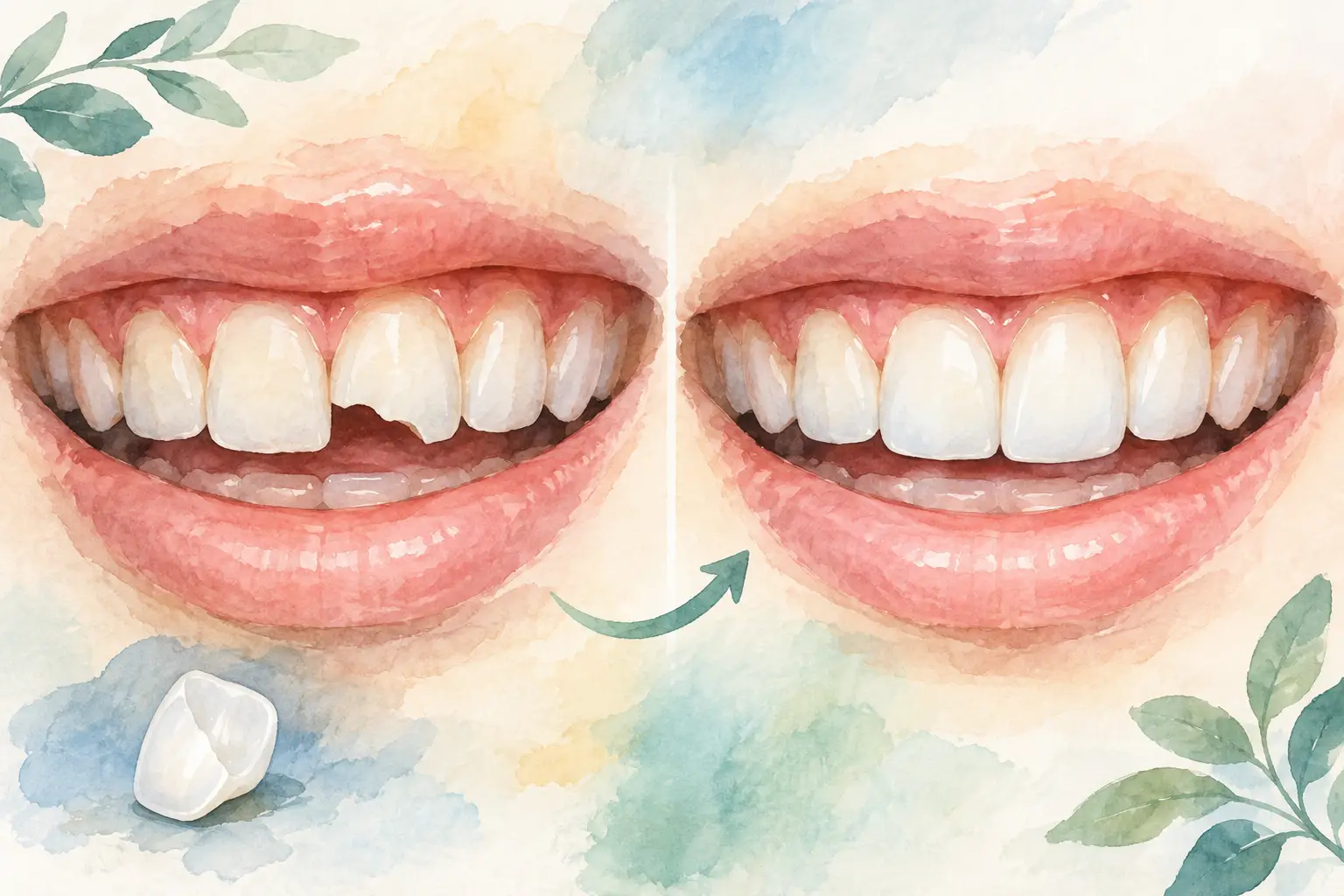
A broken tooth can change more than your smile. It can make chewing uncomfortable, expose sensitive inner tooth structure, catch on your tongue, or leave you worried that the damage will worsen. Looking at broken tooth restoration before after results helps explain what dental treatment can accomplish: protecting the remaining tooth, restoring comfortable function, and creating an appearance that fits naturally with your smile.
The right solution is not determined by how noticeable the break looks alone. A small chip on a front tooth and a cracked molar may appear similarly minor at first, yet require very different treatment. A prompt assessment helps determine whether the tooth can be repaired, whether the nerve is affected, and how to prevent further damage.
What Changes Before and After Broken Tooth Restoration
Before treatment, a damaged tooth may have a sharp edge, visible missing enamel, a dark fracture line, temperature sensitivity, pain on biting, or an old filling that has broken away with part of the tooth. In some cases, there is little discomfort at all. That does not necessarily mean the problem is minor. Cracks can deepen under normal chewing pressure, particularly in back teeth that absorb more force.
After restoration, the goal is not simply to make the tooth look whole again. A well-planned restoration should rebuild the tooth so it can function predictably, protect vulnerable areas from bacteria and further fracture, and feel comfortable when you bite. For visible teeth, shade, shape, translucency, and symmetry also matter.
The before-and-after difference can be dramatic when a tooth has lost a visible corner or has discoloured after trauma. In other situations, the result is deliberately subtle. A repaired molar may look very similar to the surrounding teeth, but its greatest benefit is the ability to chew without pain or concern.
The First Step: Assessing How Deep the Damage Goes
A dentist will examine the tooth, surrounding gums, bite, and neighbouring teeth. Dental X-rays may be needed to check the root, bone, existing fillings, and signs of infection. If a crack is suspected, additional tests can help identify whether it extends toward the pulp, the soft tissue containing the tooth’s nerve and blood supply.
This assessment is why two patients with a “broken tooth” may receive different recommendations. A chipped edge limited to enamel may be repaired conservatively in one appointment. A large fractured tooth with decay underneath may need a crown. If the pulp has been exposed or infected, root canal treatment may be necessary before the tooth is restored.
If a tooth has broken at or below the gumline, the treatment decision becomes more complex. Depending on the fracture, a dentist may be able to expose more healthy tooth structure, rebuild the tooth, and place a crown. In other cases, extraction and tooth replacement may provide the more predictable long-term option.
When a broken tooth needs urgent care
Seek prompt dental care if you have severe pain, facial swelling, bleeding that will not stop, a loose tooth, fever, or an injury affecting multiple teeth. A broken tooth with a sharp edge or exposed inner tissue should also be assessed quickly.
Until your appointment, rinse gently with warm water and avoid chewing on that side. If you have the broken piece, keep it in a clean container and bring it with you. Do not use household glue to reattach it. A temporary dental repair product may occasionally help cover a sharp edge, but it does not replace professional treatment.
Treatment Options for a Broken Tooth
The restoration chosen depends on the tooth location, the amount of healthy structure remaining, your bite, and the health of the nerve and gums. The most conservative option is usually preferred when it can provide a durable result.
Dental bonding for small chips and corners
Composite bonding uses tooth-coloured resin to rebuild small areas of lost enamel. It is often a practical choice for minor chips, worn edges, and small fractures on front teeth. The dentist shapes and polishes the material to blend with the surrounding tooth.
Bonding is generally completed in one visit and preserves healthy tooth structure. The trade-off is that composite can stain, chip, or wear over time, particularly for people who bite their nails, chew ice, or grind their teeth. It may need repair or replacement in the future.
Fillings and inlays for moderate damage
When a piece of a back tooth breaks around an existing filling or decay, a new filling may be appropriate if enough strong tooth structure remains. For larger areas, an inlay or onlay can restore the missing section while covering vulnerable cusps, the raised points used for chewing.
These restorations can be made from durable tooth-coloured materials and are designed to fit precisely. They may offer more support than a direct filling while requiring less tooth coverage than a full crown.
Crowns for significant fractures
A dental crown covers the visible portion of a tooth and is commonly recommended when a large part of the tooth is missing, cracked, heavily filled, or weakened after root canal treatment. It is custom-made to match the shape, shade, and bite of your natural teeth.
The before-and-after benefit of a crown is often both functional and aesthetic. It can restore the contour of a broken tooth while distributing chewing forces more evenly. A crown does require preparation of the tooth, so it is not usually the first choice for a very small chip. When a tooth is structurally compromised, however, it can be the option most likely to prevent a more serious break.
Root canal treatment when the nerve is involved
A break that reaches the pulp can lead to significant sensitivity, spontaneous pain, or infection. Root canal treatment removes infected or damaged pulp tissue, cleans the inside of the tooth, and seals it. The tooth is then restored, often with a crown when substantial structure has been lost.
Patients are often concerned that root canal treatment will be uncomfortable. Modern local anesthesia and careful treatment techniques are designed to keep patients comfortable. For those with dental anxiety, sedation options may also be discussed when appropriate.
Extraction and replacement when repair is not possible
Not every broken tooth can be saved. A vertical root fracture, extensive decay below the gumline, or insufficient remaining tooth structure can make extraction the healthier choice. Tooth replacement may involve a dental implant, bridge, or removable option, depending on your oral health, bone support, adjacent teeth, timeline, and preferences.
Replacing a missing tooth can help maintain chewing ability and reduce the risk of neighbouring teeth shifting. Implant treatment may involve several stages, especially if bone grafting or healing time is required, but it can provide a stable, independent replacement that does not rely on adjacent teeth.
What Affects the Final Appearance?
The most natural broken tooth restoration before after results come from planning for more than colour. Dentists consider the way light reflects from the tooth, the length and shape of nearby teeth, gum contours, your facial features, and how your teeth meet when you close your mouth.
For a front tooth, even a tiny mismatch can be noticeable. Digital imaging and aesthetic planning can help communicate the intended result before more involved treatment begins. For back teeth, strength and bite balance may take priority, though modern restorative materials can still create a natural-looking result.
No restoration is completely maintenance-free. Brushing twice daily with fluoride toothpaste, cleaning between teeth, attending regular examinations, and avoiding hard objects such as ice can protect both natural teeth and restorations. If you clench or grind your teeth, a custom nightguard may reduce the risk of future chipping or crown damage.
Planning Care That Feels Manageable
A broken tooth can feel urgent and overwhelming, especially when it affects your appearance or causes pain. At ORIS Dental Clinics, assessment and treatment planning can bring the situation into focus, whether you need a simple repair, root canal treatment, a crown, or coordinated surgical and replacement care.
If cost is a concern, ask about treatment stages, insurance coordination, direct billing, and Canadian Dental Care Plan eligibility where applicable. The best plan is one that addresses the immediate problem while making sense for your long-term oral health.
A broken tooth rarely improves on its own. Getting it examined early gives you more options and a better chance of preserving what is healthy, so you can return to eating, speaking, and smiling with greater comfort.