
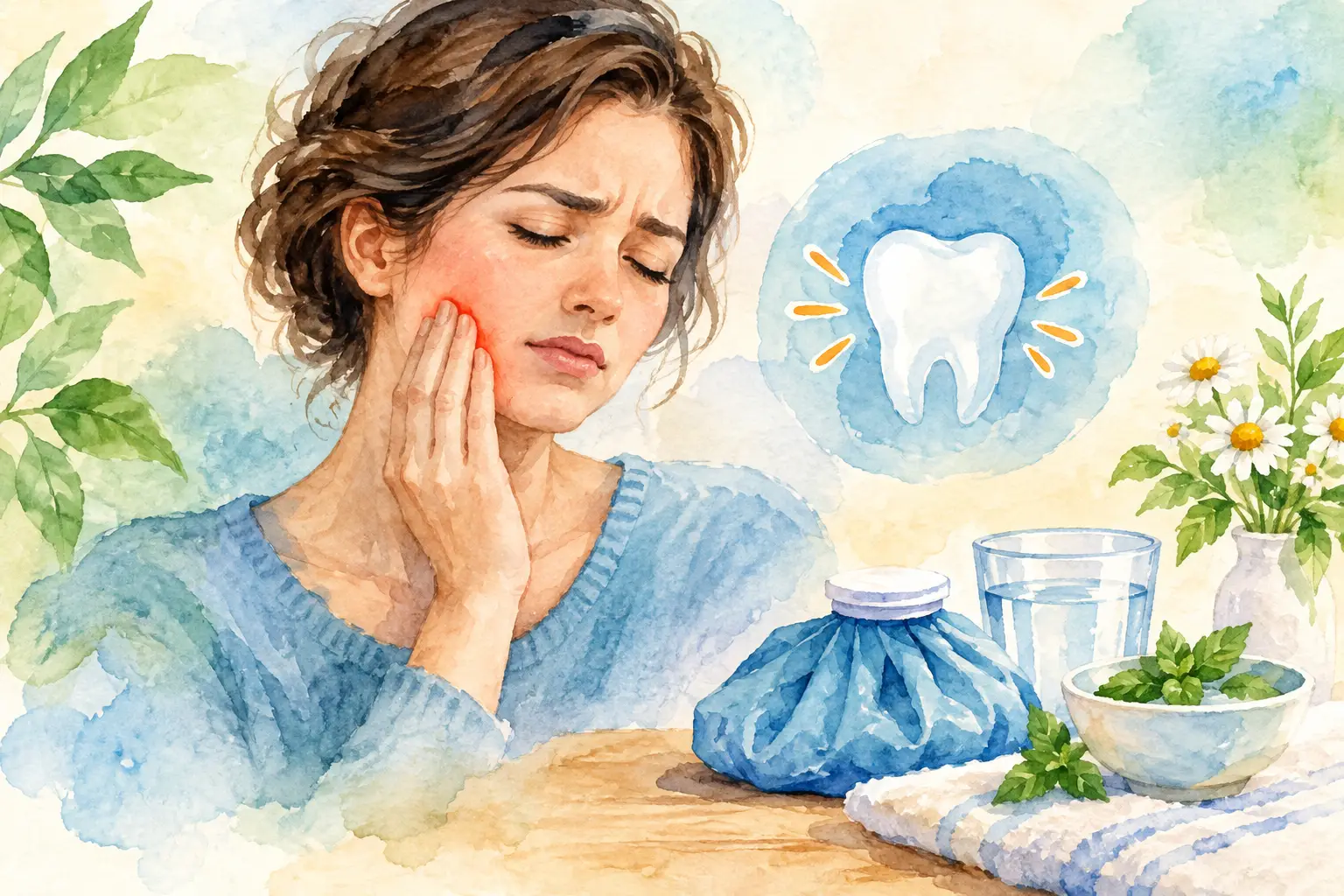
A toothache has a way of taking over the day. A dull ache may become sharp when you chew, a cracked tooth can react to cold air, or throbbing pain can make sleep difficult. This toothache relief guide explains what you can safely do at home while arranging dental care – and the warning signs that mean you should not wait.
Pain relief can make you more comfortable, but it does not remove the cause of a toothache. Tooth decay, a loose or damaged filling, gum infection, a cracked tooth, an exposed root, teeth grinding, and an infection inside the tooth can all feel similar at first. A dental examination and X-rays help identify the problem and protect the tooth whenever possible.
Toothache Relief Guide: What to Do First
Start by gently rinsing your mouth with warm water. This can clear food particles from around a tooth or gumline and may ease irritation. Floss carefully between the painful tooth and the teeth beside it, especially if the discomfort began after eating. Do not force floss into an area that is very swollen or painful.
If there is visible swelling on the outside of your face, place a cold compress against the cheek for 15 to 20 minutes at a time. Wrap the cold pack in a cloth rather than putting ice directly on the skin. Cold can reduce swelling and temporarily dull pain, while heat may worsen swelling when infection is involved.
Over-the-counter pain medicine may help while you wait for your appointment. Acetaminophen or ibuprofen can be effective when used exactly as directed on the package. The right option depends on your health history, allergies, other medications, pregnancy status, and conditions such as stomach ulcers, kidney disease, liver disease, or blood-thinning treatment. If you are unsure what is safe for you or your child, ask a pharmacist or healthcare professional.
Avoid putting aspirin, alcohol, clove oil, or crushed medication directly on the tooth or gums. These home remedies can burn soft tissue and may create a new problem without treating the dental cause. Antibiotics left over from a previous illness are not a safe substitute for dental care either. They may not address the source of pain and should only be prescribed when clinically appropriate.
For the next day or two, choose soft foods and chew on the other side of your mouth. Avoid very hot, cold, sweet, or acidic foods if they trigger pain. Keeping your head slightly elevated at night can also reduce the pulsing sensation some people notice when lying flat.
When Tooth Pain Needs Urgent Dental Care
Many toothaches should be assessed promptly, even if the pain comes and goes. A cavity can reach the inner nerve of a tooth without causing constant pain at first. Likewise, a small crack or failing filling can allow bacteria deeper into the tooth over time.
Book an urgent dental appointment if your pain lasts longer than a day, wakes you from sleep, makes chewing difficult, or returns after pain medication wears off. You should also be seen quickly if you have a broken tooth, a lost filling or crown, a pimple-like bump on the gum, sensitivity that lingers after hot or cold foods, or swelling around a tooth.
Some symptoms require same-day attention. Facial swelling, fever, a bad taste or drainage in the mouth, swollen lymph nodes, or pain that is rapidly getting worse can signal a spreading dental infection. Dental infections can become serious when they are left untreated.
Seek emergency medical care immediately if swelling affects your eye, jaw, neck, or throat, or if you have difficulty breathing, swallowing, or opening your mouth. These signs should not wait for a routine dental visit.
A knocked-out or injured tooth
A toothache can also follow an accident. If a permanent tooth is knocked out, hold it by the crown, not the root, and gently rinse it with clean water if it is dirty. Do not scrub it. If possible, place it back into the socket and bite gently on clean gauze to hold it in place. If that is not possible, keep it moist in milk or inside the cheek of a cooperative adult or older child who will not swallow it. Get emergency dental care as soon as possible.
For a chipped, cracked, or loosened tooth, rinse with warm water, use a cold compress for swelling, and save any broken pieces if you can find them. Even a small fracture may expose sensitive inner layers or weaken the tooth further.
Why a Toothache May Come and Go
Intermittent pain is easy to dismiss, particularly when a busy week, family responsibilities, or dental anxiety make appointments feel difficult to schedule. But pain that disappears is not always a sign that the issue has resolved.
For example, early decay may only hurt with sweets or cold drinks. A crack may hurt when biting down and then release when you lift your teeth apart. Gum disease can cause tenderness, bleeding, or a sense of pressure around teeth. In some cases, severe pain stops because the nerve inside a badly infected tooth has died. The infection may still remain and continue to damage surrounding bone.
The treatment depends on what your dentist finds. A small cavity may need a filling, while a deeper infection may require root canal treatment to clean and preserve the tooth. A fractured tooth may need a protective crown, and an infection that cannot be resolved may require removal and a discussion about replacement options. Addressing the problem early usually offers more conservative choices.
What to Expect at a Toothache Appointment
A focused dental visit begins with questions about your symptoms: when they started, what triggers them, whether the pain lingers, and whether you have noticed swelling or fever. The dentist will examine your teeth, gums, bite, and surrounding tissues. Digital X-rays may be recommended to check for decay between teeth, infection around roots, bone changes, cracks, or problems beneath an existing restoration.
You should not have to guess what happens next. Your dentist can explain the likely cause, whether the situation is urgent, and which treatment options are appropriate. If pain, anxiety, or a complex procedure is a concern, ask about comfort measures and sedation options. For families, it can also be helpful to tell the team in advance if a child is nervous, has sensory needs, or has had a difficult dental experience before.
At ORIS Dental Clinics, patients can receive preventive, restorative, endodontic, surgical, periodontal, and child-focused care within one coordinated practice. That matters when a toothache needs more than a simple filling, because diagnosis, pain management, and longer-term treatment planning can be coordinated without sending patients between disconnected offices.
Can You Prevent the Next Toothache?
Not every toothache is preventable. Accidents happen, old restorations can wear down, and cracks may develop in teeth that have been under years of chewing pressure. Still, daily fluoride toothpaste, cleaning between teeth, regular professional examinations, and prompt attention to small changes can greatly reduce the chance of severe dental pain.
If you clench or grind your teeth, mention jaw soreness, headaches, worn tooth edges, or cracked restorations at your checkup. A custom night guard may help protect teeth in the right situation. If dry mouth is a concern because of medication or a health condition, your dental team can suggest ways to lower your risk of decay.
A toothache rarely improves by being ignored. Use home measures to stay comfortable, but let persistent pain guide you toward a timely assessment. The earlier the cause is identified, the better the chance of relieving pain and preserving your natural tooth.