
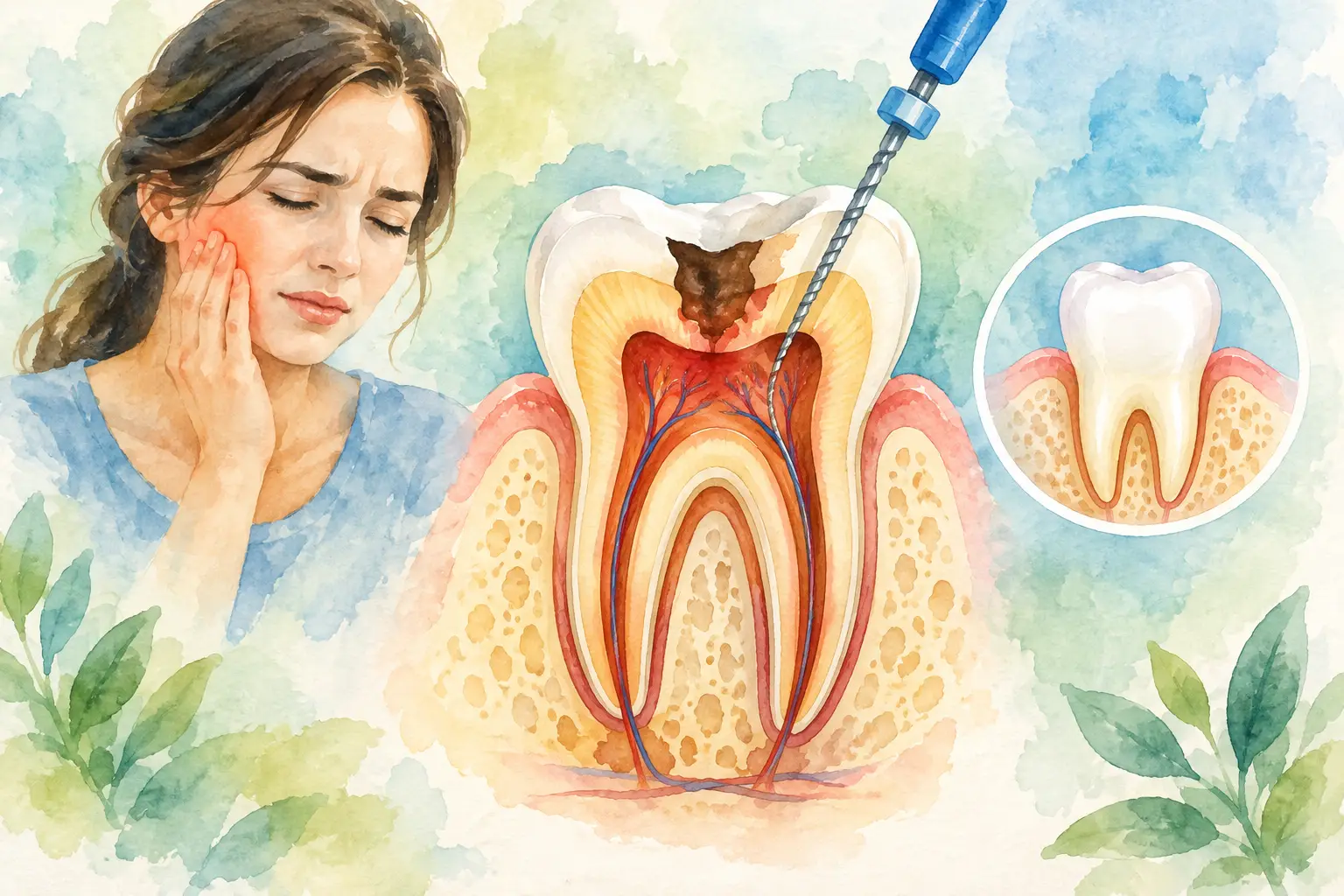
A toothache that wakes you at night, lingers after a sip of coffee, or makes it difficult to chew is not something to simply push through. Knowing when you need a root canal can help you seek care before an infection becomes more painful, more complex, or puts the tooth at greater risk of being lost.
Root canal treatment is designed to save a natural tooth whose inner tissue has become inflamed, injured, or infected. It has a reputation for being intimidating, but modern endodontic treatment is a precise procedure focused on removing the source of pain and helping you keep your smile functioning comfortably.
What a root canal treats
Inside every tooth is a small chamber containing dental pulp – soft tissue made up of nerves, blood vessels, and connective tissue. The pulp helps a tooth develop, but a fully formed tooth can continue to function without it.
When decay, a crack, repeated dental work, or an injury creates a pathway into this inner chamber, bacteria can reach the pulp. The result may be inflammation, infection, or an abscess near the root tip. Left untreated, the infection can spread into the surrounding bone and tissues.
During root canal treatment, the dentist removes the damaged or infected pulp, cleans and disinfects the narrow canals inside the roots, then seals the space. In many cases, the tooth is restored with a filling or crown to protect it from future fracture and restore normal chewing function.
When do you need root canal treatment?
Only a dental examination and X-rays can confirm whether root canal treatment is the right option. Still, certain symptoms are strong reasons to arrange an appointment promptly.
Pain that lingers after hot or cold foods
Brief sensitivity to a cold drink can happen for many reasons, including minor enamel wear or exposed root surfaces. Pain that continues for 30 seconds or longer after the hot or cold source is gone is more concerning. It can indicate that the pulp is inflamed and may not be able to heal on its own.
Heat sensitivity can be especially noticeable with an infected tooth. Some people find that cool water temporarily relieves the discomfort, while hot food or drinks trigger a deep, persistent ache.
Spontaneous, throbbing tooth pain
A tooth with severe pulp inflammation may hurt without any obvious trigger. The pain can feel sharp, throbbing, or like pressure inside the tooth. It may worsen when lying down, interrupt sleep, or radiate toward the jaw, ear, or neighbouring teeth.
Not every tooth requiring a root canal is painful, however. In some cases, the nerve has already died, and the infection develops quietly. This is one reason regular examinations remain valuable even when you feel fine.
Pain or pressure when biting
Pain when chewing can be caused by a cracked tooth, a deep cavity, gum inflammation, or an infection around the root. If a particular tooth feels tender, high when you bite, or painful when you release your bite, it deserves assessment.
A root canal may be recommended if the pain is linked to inflammation or infection within the tooth. If the problem is a crack that extends too far below the gumline, saving the tooth may not be predictable. Your dentist will explain what can reasonably be restored and what alternative options may be needed.
Swelling, a pimple on the gums, or a bad taste
Swelling in the gums, cheek, or jaw can signal an active infection. You may also notice a small bump on the gum near a tooth that drains occasionally, sometimes leaving an unpleasant taste. This can be a dental abscess, even if discomfort comes and goes.
Do not wait for a draining bump to disappear on its own. The pressure may reduce temporarily, but the infection inside the tooth remains. Contact a dentist as soon as possible, particularly if swelling is increasing.
A darkened or injured tooth
A tooth that turns grey, brown, or darker than the teeth around it may have suffered trauma to its nerve. This can happen after a sports injury, a fall, or a blow to the face – sometimes years earlier. A tooth does not have to crack visibly to sustain internal damage.
After an injury, prompt assessment is worthwhile even if pain is mild or absent. Monitoring, X-rays, and pulp testing help determine whether the tooth is healing or whether treatment is required.
Symptoms that need urgent dental attention
Call a dental office promptly if you have facial swelling, fever, worsening pain, or difficulty opening your mouth. Seek urgent medical care if swelling affects breathing or swallowing, spreads toward the eye or neck, or is accompanied by significant fever or feeling unwell.
Antibiotics may be appropriate when an infection is spreading or causing systemic symptoms, but they do not remove the source of infection inside a tooth. Definitive treatment usually involves root canal therapy, drainage where needed, or extraction if the tooth cannot be saved.
How dentists decide whether a root canal is necessary
A diagnosis is more involved than identifying a sore tooth. Pain can travel, and a problem in one tooth may be felt elsewhere in the mouth. Your dentist will review your symptoms, examine the teeth and gums, test your response to cold or pressure, and take digital X-rays when appropriate.
X-rays can show deep decay, changes around the root, prior treatment, or bone loss associated with infection. They do not reveal every crack or early pulp problem, so your history and clinical findings matter as well.
The goal is not to recommend a root canal for every sensitive tooth. Some teeth can be treated with a filling, crown, desensitizing care, or monitoring. When the pulp has irreversible inflammation or infection, root canal treatment is often the most conservative way to retain the natural tooth.
What treatment feels like today
Most patients are relieved to learn that root canal treatment is typically similar in comfort to having a filling once the tooth is properly numbed. Local anesthetic is used to keep you comfortable throughout the procedure. For people who feel anxious about dental treatment, comfort-focused options, including sedation where appropriate, can make care more manageable.
The number of visits depends on the tooth, the complexity of its roots, the degree of infection, and whether emergency pain relief is needed first. Front teeth often have simpler anatomy than molars, while molars may have several narrow canals requiring more detailed treatment.
After treatment, mild tenderness for a few days is common, especially if there was infection around the root. Follow the aftercare instructions, avoid chewing hard foods on a temporary restoration, and contact the clinic if pain or swelling is increasing rather than improving.
Why restoring the tooth matters
A root canal removes the infected tissue but can leave a tooth more brittle, particularly when a large amount of tooth structure has already been lost to decay or fracture. A crown is frequently recommended for back teeth because they absorb substantial chewing forces. In other situations, a bonded filling may provide sufficient protection.
The right restoration depends on how much healthy tooth remains, where the tooth is located, your bite, and whether you grind or clench. Protecting the treated tooth helps prevent a future fracture that could make it impossible to save.
Keeping a natural tooth can preserve chewing ability, support the surrounding bone, and prevent nearby teeth from shifting. Extraction is sometimes necessary, but it also creates a decision about replacement with an implant, bridge, or removable option. When a tooth has a sound long-term outlook, saving it is often preferable.
Do not wait for pain to become unbearable
Dental pain has a habit of changing on its own schedule. A severe toothache may fade if the nerve dies, but that does not mean the problem has resolved. It can mean the infection has moved beyond the tooth and is continuing without the same warning signal.
At ORIS Dental Clinics, patients can receive assessment, restorative planning, and advanced dental care in one coordinated setting. If you are experiencing lingering sensitivity, swelling, biting pain, or an unexplained dark tooth, arranging an examination now can provide clarity, relief, and the best chance of preserving your natural tooth.