
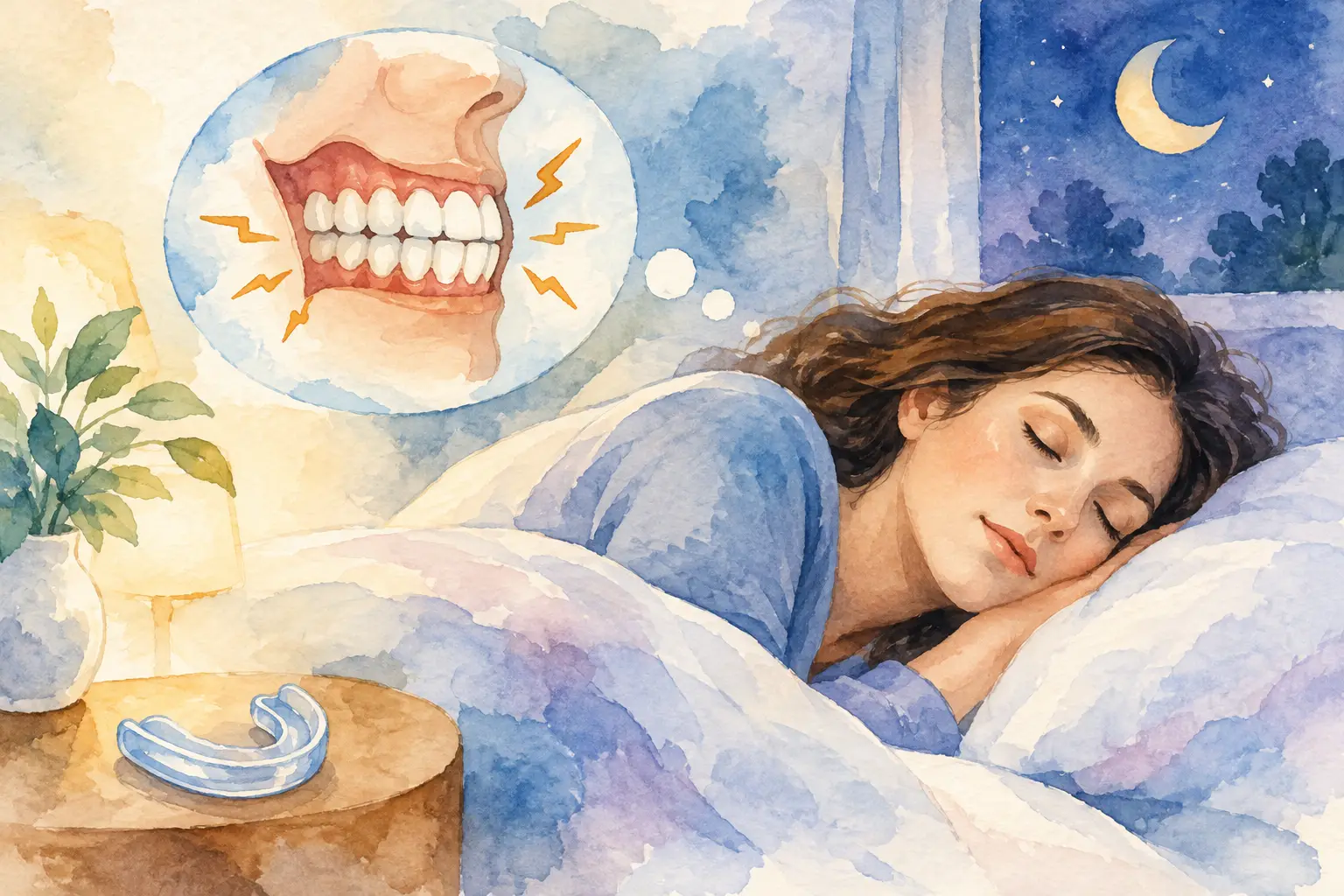
Waking with a tight jaw, temple headache, or teeth that suddenly feel sensitive can be more than an uncomfortable start to the day. If you want to stop nighttime tooth grinding, the first step is understanding that sleep bruxism is not simply a bad habit you can switch off. It is a sleep-related pattern of clenching or grinding that may be influenced by stress, bite and tooth conditions, certain medications, and sleep quality.
Grinding does not always make noise. Some people only discover it when a partner hears it, while others learn about it during a dental exam after enamel wear, small fractures, or changes in their bite have appeared. The good news is that there are practical ways to reduce the strain on your teeth and jaw while your dental team looks for contributing factors.
Why nighttime grinding deserves attention
Occasional clenching during a demanding week may not cause lasting damage. Frequent or forceful grinding, however, can place significant pressure on teeth, fillings, crowns, implants, and jaw joints. Over time, that pressure may flatten biting surfaces, chip teeth, loosen restorations, or expose the inner layer of a tooth, making it more sensitive to cold or sweets.
The jaw muscles can also become overworked. This may lead to morning facial soreness, headaches around the temples, ear-area discomfort, or a jaw that clicks, catches, or feels tired when chewing. Grinding is not always the sole cause of these symptoms, so an assessment matters. Treating the wrong problem with a store-bought solution can delay appropriate care.
Start by identifying the pattern
A dental visit can help distinguish nighttime grinding from other sources of tooth wear or jaw pain. Your dentist may look for polished enamel, cracks, gum recession, worn restorations, cheek or tongue marks, and tenderness in the chewing muscles. They will also ask about symptoms, sleep habits, stress, and medical history.
It is helpful to keep a brief record for one or two weeks before your appointment. Note when jaw pain or headaches occur, whether you wake during the night, what seems to make symptoms worse, and whether someone has heard grinding. Bring up any new medications or changes in dose, including antidepressants and stimulants. Do not stop prescribed medication on your own, but ask the prescribing clinician whether it could be contributing.
For some people, the most important clue is poor sleep. Loud snoring, waking up gasping, observed pauses in breathing, daytime sleepiness, or morning headaches can point to obstructive sleep apnea. Bruxism may occur alongside sleep-disordered breathing. A dentist can identify concerns and coordinate a referral to a physician or sleep specialist when needed.
Protect teeth while you work to stop nighttime tooth grinding
A professionally made night guard is often one of the most valuable parts of care. This custom appliance fits over the teeth and creates a protective barrier, helping reduce wear and lessen the load placed directly on teeth and restorations. It may also improve comfort for some patients with jaw-muscle tension.
A night guard does not necessarily stop the grinding muscle activity itself. Its primary role is protection, which is why it is usually combined with efforts to address the factors behind the behaviour. A dentist can select the right design, check your bite, and adjust the appliance as your teeth and dental work change.
Over-the-counter guards can be useful as a very short-term option for some adults, but they are not a substitute for a fitted appliance or an exam. Bulky or poorly fitted guards may be uncomfortable, affect how your teeth meet, or be unsuitable when there are loose teeth, extensive restorative work, gum concerns, or jaw-joint symptoms. Do not use a sports mouthguard as a night guard.
If a tooth is cracked, painful, or already heavily worn, it may need restorative care as well as protection. Repairing damage without addressing ongoing grinding can put the new filling, crown, or veneer under the same excessive forces.
Reduce daytime jaw tension
Nighttime bruxism is involuntary, but daytime habits can keep the jaw muscles in a constant state of tension. A useful resting position is simple: lips together gently, teeth apart, and tongue relaxed against the roof of the mouth. Your teeth should only touch when chewing or swallowing.
Set a few quiet reminders on your phone during the day to check for clenching, especially while driving, working at a computer, or concentrating. If you notice your teeth touching, let the jaw drop slightly and take a slow breath. This small reset can reduce the muscle fatigue that carries into the evening.
Caffeine, alcohol, nicotine, and recreational substances may worsen sleep quality or clenching for some people. There is no universal rule that everyone must avoid them completely, but it is reasonable to notice whether symptoms are worse after evening coffee, alcohol, or nicotine use. Reducing late-day caffeine and avoiding alcohol close to bedtime are sensible trials, particularly when sleep is already disrupted.
Build a calmer pre-sleep routine
Stress does not explain every case of bruxism, but many people notice more jaw tension during stressful periods. The goal is not to eliminate stress perfectly. It is to give your nervous system a more consistent transition into sleep.
For the hour before bed, choose activities that lower stimulation rather than add to it. A warm shower, gentle neck and shoulder stretches, quiet reading, breathing exercises, or listening to calm audio can help. Avoid chewing gum in the evening and choose softer foods if your jaw is sore. Gum and very chewy foods can overwork the same muscles that are clenching overnight.
Sleep regularity also matters. Aim for a consistent bedtime and wake time, keep the room cool and dark, and limit bright screens just before bed if they interfere with falling asleep. These measures may not cure grinding on their own, but better sleep can reduce the conditions that make it harder to manage.
When jaw symptoms need more than a guard
Persistent jaw pain, locking, limited opening, or regular headaches may call for a broader plan. Depending on the findings, treatment may include bite adjustments only when clearly indicated, muscle-focused strategies, physiotherapy, restorative treatment, or referral for assessment of temporomandibular joint concerns. Irreversible changes to teeth should never be the first response to vague jaw symptoms without a careful diagnosis.
In selected cases, a clinician may discuss medication approaches or other therapies. These are not routine first-line answers for every person, and they require an individual review of benefits, risks, medical history, and the source of the grinding. The right plan depends on whether the main issue is tooth damage, muscle pain, sleep disruption, a medication effect, or several factors at once.
Children can grind too, especially while primary teeth are changing. Many children outgrow it without damage, but parents should mention it at routine visits. An exam is especially worthwhile if a child has tooth wear, pain, poor sleep, snoring, frequent waking, or developmental and airway concerns.
Know when to book promptly
Book a dental assessment soon if you notice a chipped or cracked tooth, new sensitivity, a change in how your teeth fit together, recurring morning headaches, or pain when biting. Seek urgent dental advice for facial swelling, severe pain, or a tooth that has fractured significantly. If breathing pauses or gasping are occurring during sleep, contact a physician promptly as well.
At ORIS Dental Clinics, a comprehensive assessment can look beyond the worn surface of a tooth to help determine what is placing it under pressure. With preventive care, restorative options when damage has occurred, and coordinated support for complex concerns, treatment can be tailored to your comfort and long-term oral health.
You do not need to wait until a tooth breaks to address grinding. A conversation about your sleep, jaw comfort, and tooth wear can turn an exhausting morning routine into a clear, manageable plan for protecting your smile.