
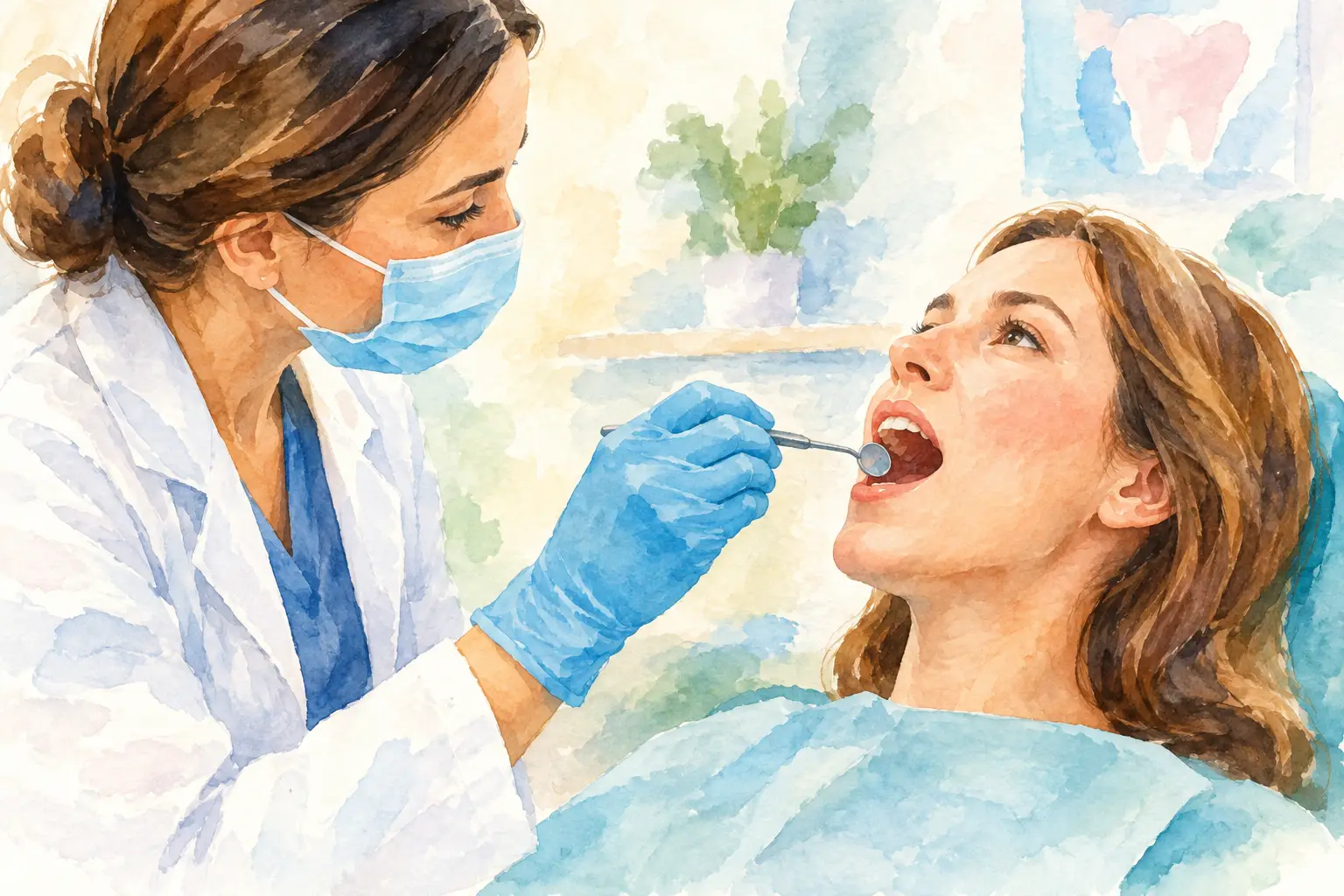
A dental checkup is about more than teeth, gums, and polishing. An oral cancer screening is a brief but meaningful part of preventive care that looks for unusual changes in the mouth, lips, throat area, and nearby tissues. It is designed to identify concerns early, often before they are painful or obvious.
For many people, this screening happens naturally during a routine dental visit. You may not notice every step, but your dentist is trained to look beyond cavities and gum inflammation. If something needs a closer look, the next step is usually clear and manageable: monitoring, diagnostic imaging, or a referral for further assessment.
Why oral cancer screening is part of dental care
Oral cancer can affect the lips, tongue, cheeks, floor of the mouth, gums, palate, tonsils, and throat. Like many health conditions, it is generally easier to treat when found at an earlier stage. The challenge is that early changes may be small, painless, and easy to dismiss as an irritation, canker sore, or consequence of biting your cheek.
Dentists see the mouth regularly and know what healthy tissues should look and feel like. That makes routine appointments a useful opportunity to spot changes that may not be visible to you at home. Screening does not mean your dentist expects to find cancer. It means they are taking a careful, preventive approach to your overall health.
A screening examination cannot diagnose oral cancer on its own. Instead, it helps identify areas that may require observation or further testing. Most unusual spots are not cancer, but persistent changes deserve professional attention rather than guesswork.
What happens during an oral cancer screening?
The examination is usually quick, comfortable, and non-invasive. Your dentist will ask whether you have noticed symptoms such as a sore that will not heal, a lump, ongoing pain, numbness, trouble swallowing, or a change in your voice. They may also ask about tobacco use, alcohol consumption, sun exposure to the lips, and relevant medical history.
Next, your dentist visually examines the lips, gums, cheeks, tongue, roof and floor of the mouth, and the back of the throat where visible. They are looking for changes in colour, texture, symmetry, swelling, sores, thickened areas, or patches that do not look typical.
The exam also involves touch. Your dentist may gently feel under your jaw, along your neck, and around the tissues of your mouth to check for enlarged lymph nodes, lumps, or areas of tenderness. They may ask you to move your tongue in different directions or lift it so they can examine surfaces that are otherwise hard to see.
This process should not hurt. If you experience discomfort in a particular area, tell your dental team. That information can help guide the examination and any recommended follow-up.
Are lights, rinses, or other devices necessary?
Some practices use additional screening devices, such as specialized lights or tissue dyes, to help examine suspicious areas. These tools can sometimes provide more information, but they do not replace a thorough visual and physical examination or a biopsy when one is needed.
Whether an adjunctive device is appropriate depends on your symptoms, risk factors, and what your dentist observes. The most valuable step is not a particular tool. It is having a trained clinician assess a concern promptly and arrange the right next step when something appears unusual.
Changes you should not ignore
Many mouth sores heal within a week or two. A persistent symptom, especially one lasting longer than two weeks, should be assessed by a dentist or physician. This does not automatically indicate cancer, but it is a sensible point to stop waiting and get an expert opinion.
Contact your dental office if you notice a mouth sore that does not heal, a red or white patch, an unexplained lump or thickened area, persistent bleeding, or pain that does not improve. Difficulty chewing, swallowing, speaking, or moving the jaw or tongue also warrants attention. So do ongoing numbness, a feeling that something is caught in the throat, unexplained loose teeth, or swelling in the neck or jaw.
A sore caused by a sharp tooth, broken filling, denture edge, or accidental bite may have a straightforward explanation. Even then, the source should be corrected and the area should heal. If it remains after the irritation is addressed, a follow-up examination is appropriate.
Who may benefit from closer attention?
Everyone can benefit from regular oral examinations. Oral cancer is not limited to one age group or lifestyle, and people without obvious risk factors can develop it. Still, certain factors can increase risk and may lead your dentist to recommend especially careful monitoring.
Tobacco use, including cigarettes, cigars, pipes, and smokeless tobacco, raises the risk of oral cancer. Heavy or frequent alcohol use can also increase risk, particularly when combined with tobacco. Infection with certain strains of human papillomavirus, or HPV, is associated with cancers in the throat area. Significant sun exposure can increase the risk of lip cancer.
Age and a personal history of oral cancer or precancerous lesions can also matter. These factors are not reasons for alarm. They are reasons to be open with your dental team, keep regular appointments, and report changes early. Honest health information allows care to be tailored to you without judgment.
If your dentist finds an area of concern
An unexpected finding can feel worrying, but it is worth remembering that many oral changes are caused by infection, irritation, inflammation, trauma, or benign conditions. Your dentist will consider the appearance, location, duration, symptoms, and your health history before recommending next steps.
Sometimes the appropriate plan is to remove an irritant and recheck the area after a short healing period. In other cases, your dentist may take photographs or measurements, arrange imaging, or refer you to an oral and maxillofacial surgeon, oral medicine specialist, ear, nose, and throat physician, or another qualified provider.
A biopsy is the procedure that can determine whether suspicious tissue contains cancerous or precancerous cells. It involves taking a small tissue sample for laboratory examination. If a biopsy is recommended, it does not mean a diagnosis has been made. It means the area needs a definitive answer so that any necessary treatment can begin without unnecessary delay.
At a multidisciplinary practice, coordinated care can make this process less confusing. Your general dentist and relevant specialists can work from the same clinical information, explain what each step means, and help you understand where care will take place.
Making screenings part of your routine
There is no reliable home replacement for a professional examination, but being familiar with your mouth is helpful. When brushing or flossing, pay attention to changes that remain, worsen, or recur in the same place. If you wear dentures, remove them regularly to check the tissues beneath them and report any sore areas that do not resolve after an adjustment.
Keep routine dental visits even when your teeth feel fine. Preventive appointments give your dentist the chance to screen for concerns that may not cause symptoms yet, while also addressing decay, gum disease, worn restorations, and bite problems before they become more complex.
If dental anxiety has kept you from booking, let the office know before your visit. A comfort-focused team can explain the appointment in advance, move at a manageable pace, and discuss available options for anxious patients. If you have insurance or are eligible for the Canadian Dental Care Plan, staff can also help clarify administrative questions before treatment planning begins.
A small change in your mouth may be nothing serious, but persistent changes are worth checking. Booking a routine dental visit at ORIS Dental Clinics gives you a place to ask questions, receive a careful oral cancer screening, and make informed decisions about your next step.