
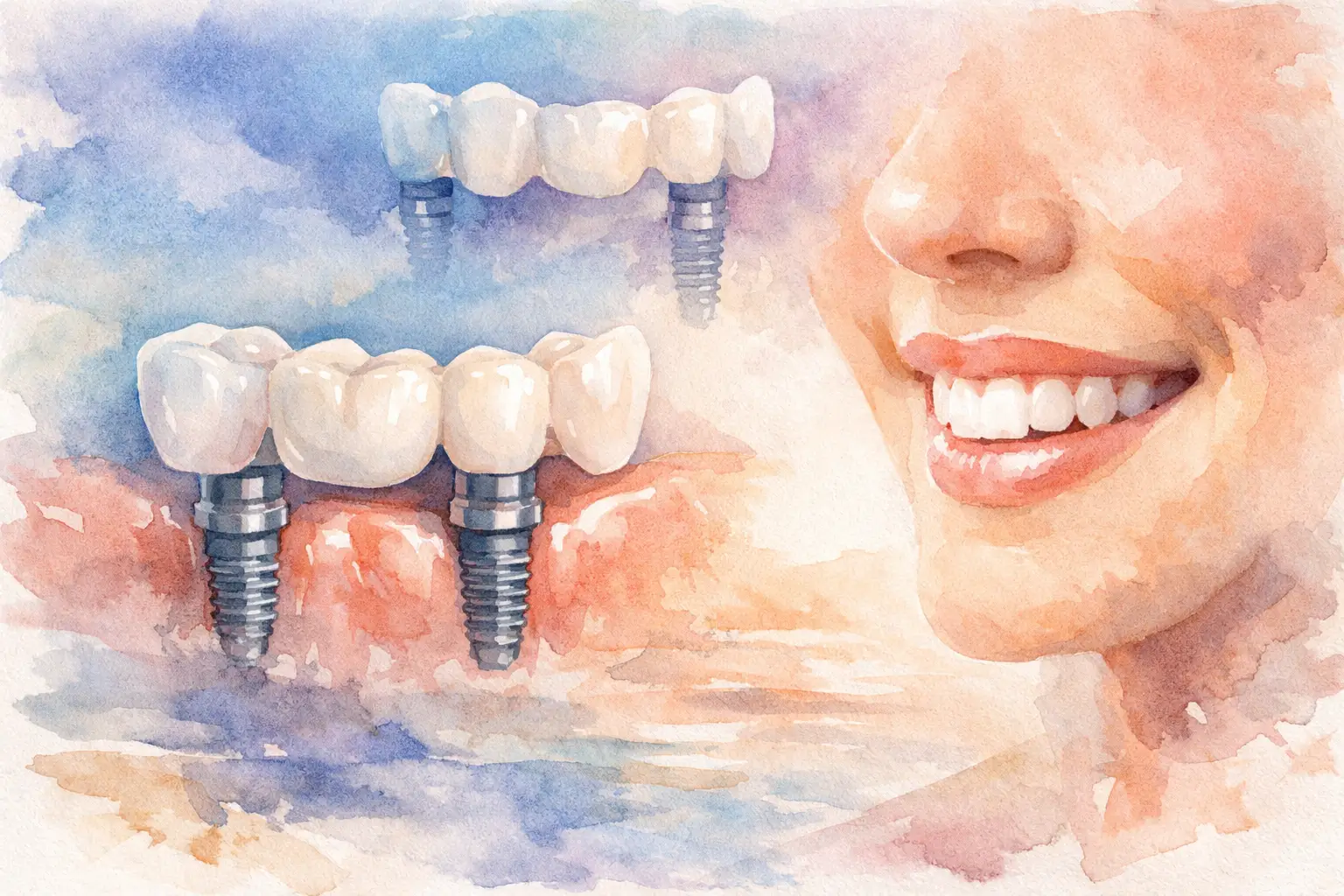
When several neighbouring teeth are missing, the change can be felt long before it is seen. Chewing becomes less reliable, speech may feel different, and the teeth beside the gap can begin to shift. Implant bridge results can restore much more than the appearance of a complete smile: they can provide stable biting function, help protect the jawbone, and make daily routines feel more natural again.
An implant-supported bridge is a fixed replacement for multiple missing teeth. Rather than relying on the natural teeth on either side of the gap, it is supported by dental implants placed in the jaw. The finished bridge is designed around your bite, gumline, facial features, and the colour and shape of surrounding teeth. Results can be highly natural-looking, but the best outcome begins with a plan that accounts for your oral health, healing needs, and long-term habits.
What implant bridge results can look like
A successful implant bridge should feel secure when you chew and speak. It should blend comfortably with your bite, support your lips and cheeks where teeth have been missing, and look proportionate beside your natural teeth. Many patients are pleasantly surprised by how quickly their new teeth become part of everyday life.
The goal is not simply to fill a space. A well-planned bridge helps distribute chewing forces across the implants and can prevent the inconvenience of a removable appliance. Because implants are anchored in bone, they also provide stimulation that a conventional denture cannot. This may help limit the bone loss that commonly follows tooth loss.
Aesthetic results depend on more than the bridge material. The contour of the gum tissue, the position of the implants, the amount of available bone, and the characteristics of adjacent teeth all matter. Front-tooth cases often require particularly detailed planning because small differences in gum height, tooth shape, or shade can be noticeable when you smile.
The treatment timeline behind a natural result
Implant bridges are usually completed in stages. At the consultation, the dental team examines your teeth and gums, reviews your medical history, and uses digital imaging to assess the jawbone and map safe implant positions. This planning stage helps determine how many implants are needed and whether supporting treatment, such as gum therapy, an extraction, or bone grafting, should come first.
After implant placement, the surrounding bone needs time to heal and integrate with the implant surface. This process is called osseointegration. For some patients, a temporary tooth replacement can be provided while healing takes place. In select situations, a temporary bridge may be placed sooner, but this depends on implant stability, bite forces, bone quality, and the location of the missing teeth.
Once healing is adequate, impressions or digital scans are used to create the final bridge. Your dentist will check the fit, bite, appearance, and ability to clean around it before it is secured. The timeline varies. Straightforward cases may move more quickly, while cases involving grafting, infection, complex bite concerns, or gum recession need more time to achieve a stable and attractive result.
What is normal during healing
Mild swelling, tenderness, and bruising can occur after implant surgery, particularly during the first few days. Your care team will provide instructions for pain management, eating, cleaning, and activity. Most people return to regular daily activities quickly, although the surgical area should be protected while it heals.
It is normal for the final result to take patience. The temporary phase is often about protecting the implants and maintaining appearance and function, while the final bridge is made after the tissues have settled. Allowing enough healing time is one of the ways a treatment plan supports predictable implant bridge results.
What influences implant bridge results
Dental implants have a strong long-term track record, but no treatment is identical for every patient. The health of the gums and jawbone has a major effect on healing. Untreated periodontal disease can compromise the tissues around implants, so gum care may need to be addressed before restorative work begins.
Your overall health and lifestyle also matter. Smoking and vaping can interfere with healing and increase the risk of complications. Diabetes that is not well controlled, certain medications, teeth grinding, and a history of radiation treatment in the jaw area may change the treatment approach. These factors do not automatically rule out implants, but they should be discussed openly so the plan can be adapted appropriately.
The design of the bridge is equally significant. A bridge replacing several teeth may be supported by two or more implants, depending on the area of the mouth, the length of the span, bone volume, and biting pressure. More implants are not always better, and fewer are not always suitable. The safest design is the one that gives the bridge appropriate support while respecting your anatomy and oral-health needs.
A night guard may be recommended for patients who clench or grind. It helps protect the bridge, implants, and remaining natural teeth from excessive force during sleep. Small adjustments to the bite after the bridge is fitted can also make a meaningful difference in comfort.
Function, appearance, and the trade-offs to consider
Compared with a traditional tooth-supported bridge, an implant-supported bridge does not usually require neighbouring healthy teeth to be shaped for crowns. That can preserve more natural tooth structure. It is also fixed in place, so there is no need to remove it for cleaning.
However, implants require surgery and a healing period, and the initial treatment process can be more involved. If bone grafting or gum treatment is necessary, both the timeline and cost may increase. A conventional bridge may be appropriate for some patients, especially where surgery is not advisable or where surrounding teeth already need crowns. A removable partial denture can be a lower-cost option, though it generally does not offer the same fixed feel or bone stimulation as implants.
Material selection can also affect the final appearance and durability. Modern ceramic options can create a lifelike finish, while the underlying structure is selected for strength and support. Your dentist can explain which option suits the location of the bridge, your bite, and your cosmetic goals.
Caring for an implant-supported bridge
Implants cannot develop cavities, but the gum tissue and bone around them still need consistent care. Plaque and inflammation around implants can lead to peri-implant disease, which may affect the stability of the implant if left untreated. A bridge should be easy for you to clean, and your dental team will show you the right technique for its design.
Daily brushing, cleaning under the bridge with the recommended interdental brush or floss threader, and regular professional hygiene visits are central to long-term success. Some bridge designs have specific areas beneath the replacement teeth where food debris can collect. Taking a few extra minutes to clean there can protect the investment you have made in your smile.
Regular examinations also allow your dentist to monitor the bite, gum health, bridge surface, and implant-supported tissues. Contact the clinic if you notice bleeding, swelling, a change in bite, persistent discomfort, a loose-feeling bridge, or clicking. These signs do not always mean the implant itself has failed, but prompt assessment can prevent a small issue from becoming more complex.
Planning care around your comfort and budget
For patients who feel anxious about dental surgery, comfort planning should be part of the conversation from the beginning. Sedation options may be available depending on your health history and the procedure involved. Knowing what will happen at each stage, how long visits may take, and how recovery is managed often makes treatment feel more manageable.
A written treatment plan should also explain the anticipated stages and fees, including any preparatory care that may be required. Insurance coverage varies by plan, and eligibility under the Canadian Dental Care Plan depends on individual program rules and treatment criteria. Direct billing, where available, can reduce paperwork, while a clinic team can help you understand estimates before treatment begins.
At ORIS Dental Clinics, implant bridge planning can be coordinated alongside gum care, oral surgery, restorative dentistry, and sedation support when needed. The value of coordinated care is not just convenience: it helps ensure each part of the treatment supports the next.
The right implant bridge is one that lets you eat, speak, smile, and clean comfortably while fitting realistically within your health needs and treatment goals. A detailed consultation gives you the clearest picture of what your own result can involve and the steps that will help protect it for years to come.