
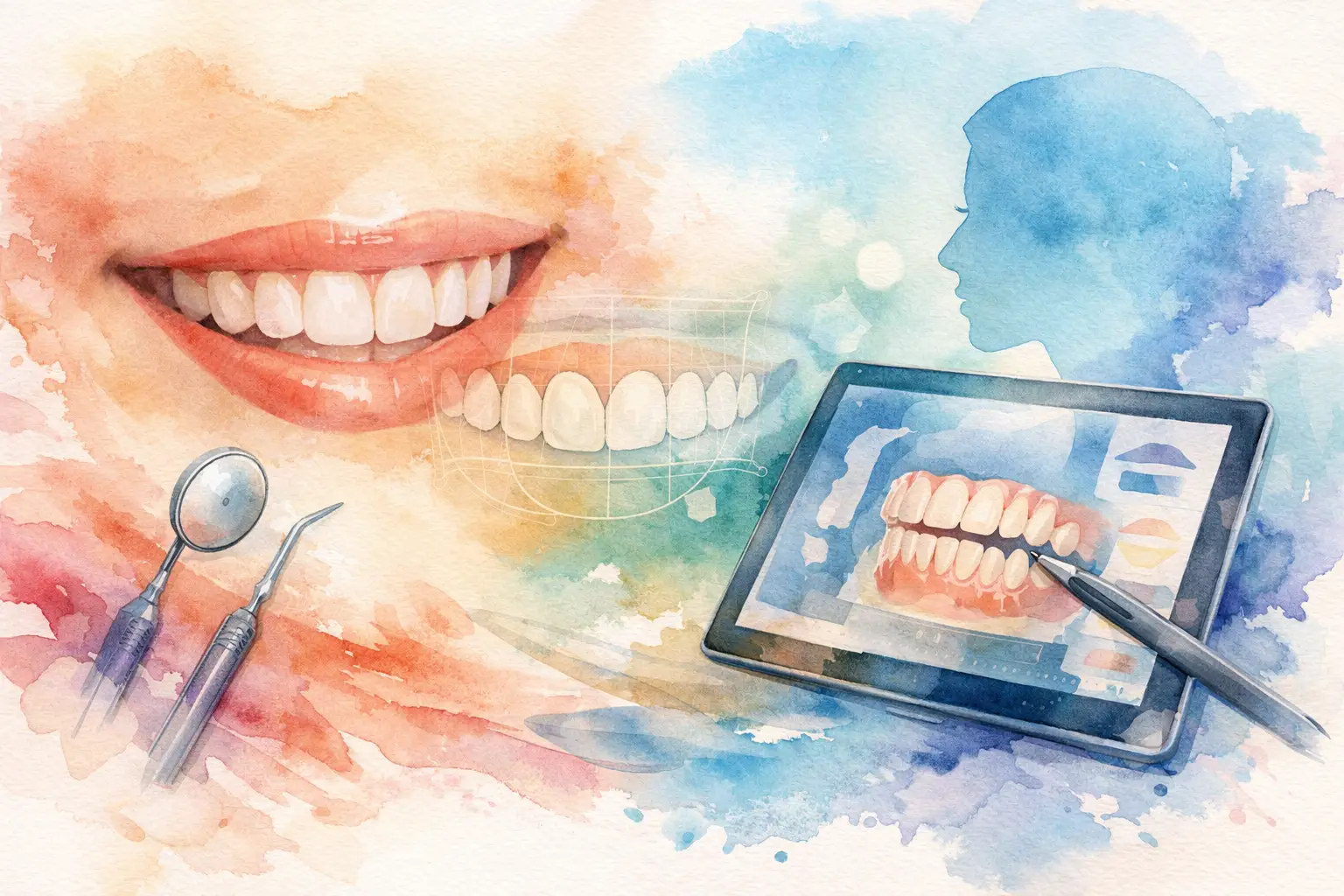
A smile makeover should not begin with a guess about how white or straight your teeth should look. A digital smile design dentist starts by studying how your teeth relate to your lips, facial features, gums, bite, and the way you naturally speak and smile. The result is a more informed conversation about what is possible, what is healthy, and what will look like you.
For patients in Richmond Hill, Digital Smile Design can make cosmetic and restorative dentistry feel less uncertain. Instead of choosing treatment based only on a mirror, you can review a visual plan before committing to changes such as veneers, crowns, implants, orthodontics, or gum contouring.
What is Digital Smile Design?
Digital Smile Design, often called DSD, is a planning process that uses digital photographs, videos, scans, and dental imaging to assess a smile in context. It is not a single procedure or a type of veneer. It is a structured way for a dental team to design and coordinate treatment.
Your dentist evaluates the size, shape, colour, and position of your teeth, but also the amount of gum tissue that shows, the symmetry of your smile, and the relationship between your teeth and facial proportions. Video can be especially useful because a smile changes when you talk, laugh, and move your lips. A tooth shape that appears attractive in a still photograph may not feel as balanced during natural expression.
The goal is not to create one standard “perfect” smile. Some patients prefer a soft, natural appearance with small individual details. Others want a brighter, more uniform result. A good plan accounts for your preferences while protecting function and oral health.
How a digital smile design dentist approaches treatment
The process usually begins with a consultation and a full oral-health assessment. Before any cosmetic work is planned, your dentist checks for concerns such as tooth decay, gum inflammation, worn enamel, loose teeth, bite problems, or untreated infection. A beautiful result needs a stable foundation.
Digital records may include intraoral scans, photographs, digital X-rays, and videos of you speaking and smiling. These records allow the dentist to assess your current smile carefully and show you the clinical factors behind their recommendations. You may be able to see proposed changes digitally or try a temporary mock-up in your mouth before final restorations are made.
That preview matters. It lets you comment on details that are difficult to communicate with words alone: whether teeth seem too long, whether a new shape feels too squared, or whether the brightness looks natural against your complexion. The plan can then be adjusted before treatment progresses.
For more involved cases, DSD also helps coordinate care between dental professionals. If your treatment involves orthodontics, gum therapy, root canal treatment, oral surgery, implants, or restorations, each stage can be planned toward the same final goal. This can reduce the risk of completing one procedure only to find it limits the next.
Which treatments can be part of the plan?
Digital Smile Design can support many types of dental care. For a patient with minor cosmetic concerns, the final plan may involve professional whitening and conservative bonding to repair chipped edges or close small gaps. For others, porcelain veneers or crowns may be recommended to address more significant discolouration, uneven tooth shape, old restorations, or wear.
When teeth are crowded, spaced, or positioned in a way that affects the bite, orthodontic treatment may be the most conservative route. Moving natural teeth before placing veneers or crowns can preserve more enamel and provide better long-term function.
If a tooth is missing, the plan may include an implant-supported crown, bridge, or another replacement option. Gum treatment or grafting may be needed first if gum disease or inadequate supporting bone would compromise the result. Patients with a gummy smile may benefit from periodontal assessment or gum contouring, but this depends on the cause. Sometimes the issue relates to tooth position, lip movement, or jaw structure rather than excess gum tissue.
This is why a cosmetic concern should not be treated as cosmetic alone. The most appropriate option depends on the condition of your teeth, gums, bite, and jaw support.
When Digital Smile Design is especially useful
DSD is valuable when several issues need to be addressed at once. For example, a patient may have worn front teeth, uneven gum levels, older crowns, and a missing back tooth. Treating each problem separately can produce an inconsistent appearance or bite. Planning the final smile first helps the dental team work backward in a logical sequence.
It can also help patients who feel unsure about cosmetic dentistry. Many people worry that veneers or crowns will look artificial, too large, or unlike their own teeth. A digital planning process creates a clearer opportunity to discuss those concerns early. You are not expected to choose a treatment plan without understanding the anticipated direction.
Patients preparing for a wedding, professional milestone, or major life event may appreciate the ability to plan timing. However, the healthiest treatment is not always the fastest treatment. Orthodontics, gum therapy, implant healing, and laboratory-made restorations take time. A responsible dental team will explain the sequence rather than promising an unrealistic deadline.
The trade-offs to consider before treatment
Digital planning improves communication, but it does not remove the need for clinical judgement. A simulation is a guide, not a guarantee that every detail will translate exactly to the final result. Natural tooth colour, gum healing, bite forces, and the properties of restorative materials all influence the outcome.
Some cosmetic treatments are irreversible. Veneers and crowns may require reshaping a portion of the tooth, while bonding is usually more conservative but can stain, chip, or require maintenance over time. Whitening can brighten natural teeth but will not change the shade of existing crowns, fillings, or veneers.
Your bite is another essential consideration. Teeth that look attractive in a digital preview still need to function comfortably when chewing and speaking. If you grind or clench your teeth, you may need a protective night guard after treatment. In certain cases, a more conservative plan is preferable to extensive cosmetic changes.
Cost also varies widely because DSD can be used for anything from a small bonding case to full-mouth rehabilitation. Ask for a phased treatment plan when appropriate. Addressing disease, pain, or unstable teeth first may be both clinically necessary and more manageable financially. Direct insurance billing and Canadian Dental Care Plan support may help with eligible dental services, although elective cosmetic treatment is often not covered.
Questions worth asking at your consultation
A productive consultation should leave you with more than a list of procedures. Ask what is causing the concern you see, whether there are conservative alternatives, and what must be treated before cosmetic work begins. You can also ask how long each phase will take, what maintenance is expected, and how the plan protects your bite and gums.
If you have dental anxiety, raise it early. Comfort measures and sedation options may be available depending on the procedure and your health history. Feeling comfortable during appointments is part of receiving care consistently, especially when treatment involves several visits.
At ORIS Dental Clinics, the benefit of a multidisciplinary setting is that preventive care, restorative treatment, orthodontics, periodontal care, oral surgery, and implant planning can be considered together. That coordinated perspective is particularly helpful when a smile concern has more than one cause.
A smile plan should still feel like your smile
The best digital smile plan does not simply chase a trend or copy someone else’s teeth. It gives you a clear view of your options and helps your dental team make decisions that respect your health, comfort, facial features, and goals. Start with an assessment, ask candid questions, and give yourself permission to choose a pace and treatment approach that feels right for you.