
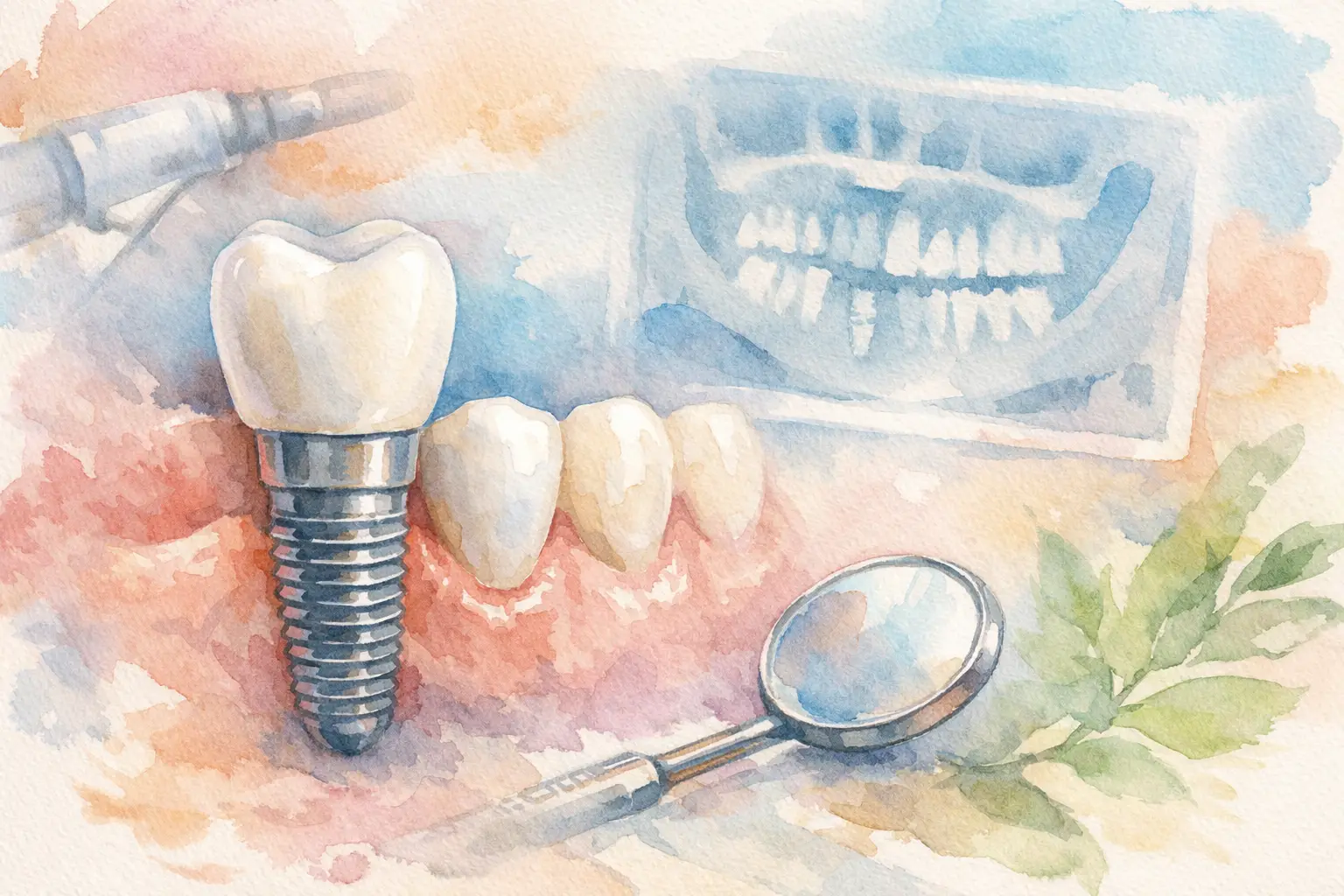
A dental implant is designed to feel like part of your smile for many years, but the first days and months after surgery play a meaningful role in that outcome. This complete dental implant recovery guide explains what healing commonly looks like, how to stay comfortable, and when to contact your dental team.
Recovery is not identical for every patient. Replacing one tooth with a straightforward implant may involve a shorter, easier recovery than treatment that includes an extraction, bone graft, sinus lift, or several implants. Your surgeon’s personal instructions should always take priority, because they reflect the details of your procedure, health history, medications, and healing needs.
The first 24 hours after implant surgery
Most patients go home the same day. If you have received sedation, arrange for a responsible adult to take you home and stay with you as instructed. Do not drive, use machinery, sign important documents, or drink alcohol for the period your dental team recommends.
Some oozing from the surgical area is normal during the first day. Bite gently but firmly on the gauze provided for the time recommended by your clinician. If bleeding continues, place fresh gauze over the area and maintain steady pressure. Avoid repeatedly checking the site, as this can disturb the clot that protects the healing tissue.
Swelling, tenderness, and minor bruising are also common. Apply a cold pack to the outside of your face in short intervals during the first day. Keep your head elevated when resting, particularly the first night. This can help limit swelling and make you more comfortable.
Take prescribed medication exactly as directed. If your dentist recommends an over-the-counter pain reliever, confirm that it is suitable for you, especially if you take blood thinners or have kidney, liver, stomach, or heart concerns. Do not place aspirin directly on the gum tissue. It can irritate the area rather than relieve pain.
Eating and drinking while your implant heals
Choose cool or lukewarm, soft foods after surgery. Yogurt, smoothies eaten with a spoon, eggs, oatmeal, mashed vegetables, soups that are not hot, and soft fish are often comfortable choices. Drink plenty of water, but avoid straws for the first several days or for as long as your surgeon advises. Suction can interfere with the surgical site.
Avoid very hot foods and drinks on the first day, as well as hard, sharp, chewy, or crumbly foods. Nuts, popcorn, chips, crusty bread, and seeds can irritate the area or become trapped near the incision. If the implant is on one side of your mouth, chew on the other side whenever possible.
As soreness improves, gradually return to a more normal diet. Do not test the implant by biting forcefully on it. If you have a temporary tooth or denture over the implant site, it may have specific food restrictions. Follow them carefully, even if the temporary restoration feels secure.
Your complete dental implant recovery guide by timeline
Days 2 to 7: swelling begins to settle
Swelling can peak around the second or third day before improving. Bruising may become more noticeable before it fades. Continue eating softer foods and take medication only as directed. If you were prescribed an antibiotic, finish the full course unless your prescriber tells you otherwise.
Beginning the day after surgery, your clinician may advise gentle warm salt-water rinses. Let the water move around your mouth rather than swishing aggressively. You may also receive a medicated mouth rinse. Use it exactly as prescribed, since excessive use can sometimes affect taste or stain teeth.
Brush your other teeth normally but carefully. Keep the toothbrush away from the incision until you are told it is safe to clean the area directly. Good oral hygiene lowers the risk of infection, but vigorous brushing near fresh sutures can cause irritation.
Weeks 1 to 2: early gum healing
At this stage, the gum tissue usually becomes less tender. Dissolving sutures may begin to loosen, or you may return to have non-dissolving sutures removed. A follow-up appointment allows your dental team to inspect the site, answer questions, and ensure the gums are healing as expected.
Many people feel ready to return to work within a day or two after a simple implant procedure. More extensive surgery can require additional rest. High-intensity exercise, heavy lifting, and contact sports should wait until your surgeon clears you. Increased blood pressure and physical strain can worsen swelling or bleeding in the early phase.
The next several months: bone integration
The part of recovery you cannot see is just as important as gum healing. The jawbone gradually grows around the implant surface in a process called osseointegration. This is what gives an implant its long-term stability.
Depending on your treatment plan, this phase can take several months. A final crown, bridge, or implant-supported denture may be placed once the implant and surrounding tissues are ready. In some cases, a temporary tooth can be attached earlier. The right timing depends on bone quality, implant stability, bite forces, gum health, and whether grafting was needed.
Habits that protect healing implants
Smoking and vaping can significantly compromise blood flow and healing around an implant. They also increase the risk of implant complications over time. If stopping completely feels difficult, speak openly with your dental team before surgery. Even a temporary pause is better than continuing through the healing period, but your clinician can explain the approach most appropriate for your care.
Alcohol can interact with certain medications and may delay healing, so avoid it for the period advised. Keep follow-up appointments, even if you feel fine. Implant care is planned in stages, and small concerns are easier to manage early.
Once the final restoration is in place, an implant still needs daily care. Brush twice daily, clean between teeth with the tools recommended for your restoration, and maintain regular professional hygiene visits. Implants do not decay, but the gums and bone around them can still develop inflammation or infection.
When to call your dental team
A mild ache and gradual improvement are generally expected. Pain that becomes more intense after initially improving, or swelling that continues to worsen after several days, deserves a call. Contact your dental provider promptly if you notice:
- heavy bleeding that does not ease with steady gauze pressure
- fever, chills, pus, or a persistent unpleasant taste or odour
- numbness that persists or changes after the expected anaesthetic period
- a loose implant, loose temporary tooth, or a sudden change in your bite
Do not wait for a routine appointment if something feels wrong. Early assessment can protect both your comfort and the outcome of treatment.
Coordinated care makes recovery easier
Dental implant treatment often involves more than placing the implant itself. Some patients need a tooth removed, treatment for gum disease, bone grafting, a temporary restoration, or a final custom crown. Receiving these services through a coordinated team can make each stage easier to understand and reduce the stress of managing multiple referrals.
At ORIS Dental Clinics, patients in Richmond Hill and nearby York Region communities can receive implant planning, surgical care, restorative treatment, and follow-up support in one clinic relationship. For patients who feel anxious about surgery, comfort-focused options, including sedation where appropriate, can also be discussed during planning.
Recovery is a period of patient, steady progress rather than something to rush. Follow the instructions designed for your procedure, give your body the time it needs, and let your dental team know about any concern early. Each careful choice you make after surgery supports the strong, comfortable smile you are working toward.