
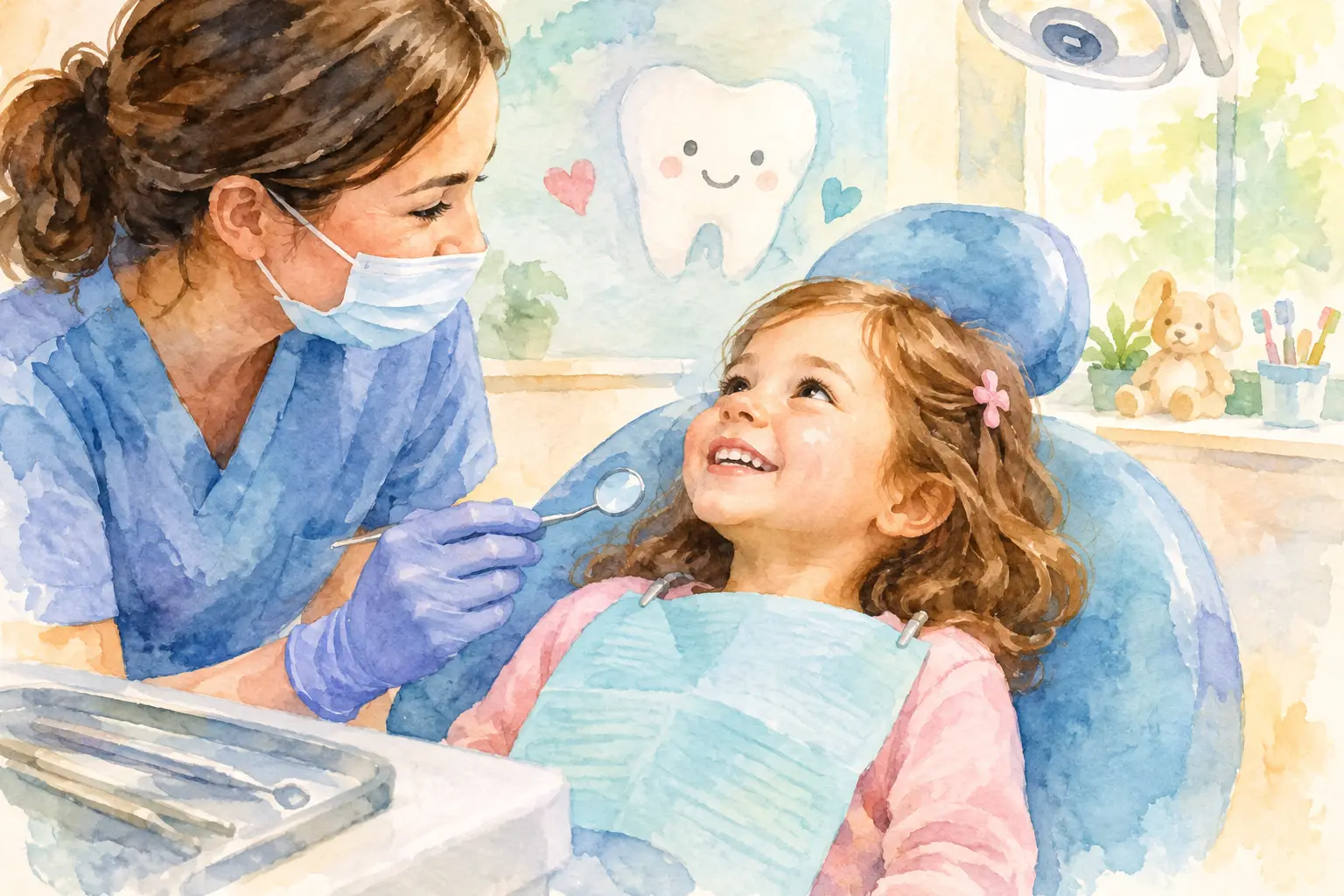
That first tiny tooth can arrive sooner than many parents expect – and it marks the start of oral health care, not just a photo opportunity. This guide to pediatric first visits explains what a child’s first dental appointment is really for: helping your child feel safe, giving parents practical prevention advice, and identifying concerns while they are still small and manageable.
For Richmond Hill families, the goal is not a perfect examination on the first try. It is a positive introduction to the dental setting and a clear plan for protecting a growing smile.
When should your child first see a dentist?
A child should generally have their first dental visit by their first birthday or within six months of the first tooth coming in, whichever happens first. This may feel early, particularly if your child only has one or two teeth, but baby teeth matter. They support chewing, speech development, jaw growth, and the space needed for permanent teeth.
Early visits also allow a dentist to assess how teeth are erupting, check the gums and soft tissues, and discuss habits that can affect oral development. Waiting until a child has pain, visible decay, or a dental injury can make the first appointment more stressful for everyone.
If your child is older and has not yet had a visit, there is no need to feel guilty or delay further. Book an appointment now. The right time to start is the next available time that works for your family.
What happens during a pediatric first visit?
A first visit is tailored to your child’s age, comfort level, and dental needs. With an infant or toddler, the appointment may begin with the child sitting on a parent’s lap or using a knee-to-knee position, where the dentist can gently look into the mouth while the child remains close to a familiar caregiver.
The dental team will usually review your child’s health history, medications, allergies, feeding habits, brushing routine, and any concerns you have noticed. Mention anything relevant, such as frequent night waking with a bottle, thumb or finger sucking, tooth grinding, mouth breathing, sensitivity to foods, a fall or blow to the mouth, or a family history of dental concerns.
The examination is often brief. The dentist checks the teeth, gums, tongue, cheeks, bite, and jaw development. They look for early signs of tooth decay, enamel weakness, gum irritation, crowding, unusual eruption patterns, and issues that may need monitoring.
For many very young children, a complete cleaning is not the central focus of the first visit. Depending on cooperation and need, the team may gently clean or polish the teeth, apply fluoride if appropriate, and demonstrate techniques for brushing at home. If a child is hesitant, crying, or simply done for the day, the team may keep the visit short and build confidence over more than one appointment. That is often the better long-term approach.
Dental X-rays are not automatically needed at every first visit. A dentist may recommend them if there is a clinical reason, such as suspected decay between teeth, an injury, delayed eruption, pain, swelling, or a developmental concern. When X-rays are needed, modern digital imaging uses a low radiation dose and is selected carefully based on your child’s individual situation.
How to prepare for your child’s first dental appointment
The most helpful preparation is usually simple. Tell your child they are going to meet a dentist who will count their teeth and help keep their smile healthy. Keep the explanation positive and brief. Children often take their emotional cues from the adults around them, so a calm, matter-of-fact tone goes a long way.
Avoid using words such as “needle,” “drill,” “shot,” or “it won’t hurt,” especially when there is no treatment planned. Even well-meant reassurance can introduce fears your child did not have. The dental team can use child-friendly language if a procedure needs to be explained.
Choose an appointment time when your child is usually rested and fed. For toddlers and preschoolers, that may mean avoiding a slot that overlaps with naptime or immediately follows a busy daycare day. Bring a favourite small comfort item if it helps, along with any insurance information, medical details, and a list of questions.
Try not to promise a reward that depends on “being good.” A child may be unable to sit still, open their mouth, or separate easily from a parent, particularly in a new setting. Instead, frame the visit as something they can practise. A visit that includes tears but ends with a gentle examination can still be a successful first experience.
Questions parents should ask at the first visit
A pediatric dental appointment should give parents more than a quick check of the teeth. It is a chance to get advice that fits your child’s actual routine. Ask whether the brushing technique and toothpaste amount are right for your child’s age, whether fluoride is recommended, and whether diet or feeding habits are raising the risk of decay.
You may also want to ask about pacifiers, thumb sucking, grinding, sports mouthguards, spacing between teeth, and what to do if your child has a dental emergency. If your child has special health-care needs, sensory sensitivities, significant anxiety, or difficulty with oral care at home, bring that up early. A child-centred dental team can adjust the pace, communication, and future visit plan accordingly.
For children under three, parents should do the brushing using a rice grain-sized smear of fluoride toothpaste. From ages three to six, a pea-sized amount is generally appropriate, with adult supervision to help children spit out excess toothpaste rather than swallow it. Your dentist can offer more specific guidance based on your child’s decay risk and ability to brush.
Building healthy habits between visits
The everyday routine at home has the greatest effect on your child’s dental health. Brush twice daily, including before bed, and help children until they have the coordination to brush effectively on their own. For many children, that means parental help well into the early school years.
Water is the best regular drink between meals. Juice, sweetened milk, pop, sports drinks, and frequent sugary snacks expose teeth to repeated acid attacks. The concern is not only how much sugar a child has, but how often teeth are exposed to it. Sipping a sweet drink over a long period is harder on teeth than having it occasionally with a meal.
Bedtime deserves extra attention. Once teeth are present, avoid putting a child to bed with a bottle containing milk, formula, juice, or any sweetened drink. During sleep, saliva flow decreases, giving sugars more time to remain on the tooth surfaces. If a bedtime drink is needed after brushing, water is the safer choice.
As more teeth touch each other, flossing becomes important because a toothbrush cannot clean the contact area between teeth. Your dentist can show you when to start and how to make it realistic in a busy family routine.
When a first visit should happen sooner
Do not wait for a scheduled checkup if your child has tooth pain, facial swelling, a loose or broken tooth after a fall, bleeding that does not stop, a darkening tooth after an injury, or a sore that does not heal. Call a dental office promptly for guidance. Facial swelling, trouble breathing or swallowing, or a significant facial injury requires urgent medical attention.
Early assessment is also worthwhile if you notice white, chalky marks near the gumline. These can be an early sign of enamel breakdown and may be addressed before a cavity develops. Small changes caught early can often mean simpler care for a child and less worry for a parent.
A comfortable start to lifelong dental care
At ORIS Dental Clinics, pediatric appointments are approached as part of a family’s long-term oral health plan, not as a one-time milestone. Some children happily hop into the chair on day one; others need time, a parent nearby, and a few short, encouraging visits. Both responses are normal.
The best first dental visit leaves your child with a sense that the dentist is a safe place to return to. Bring your questions, let the team meet your child where they are, and use the visit to make home care feel clearer and more achievable.