
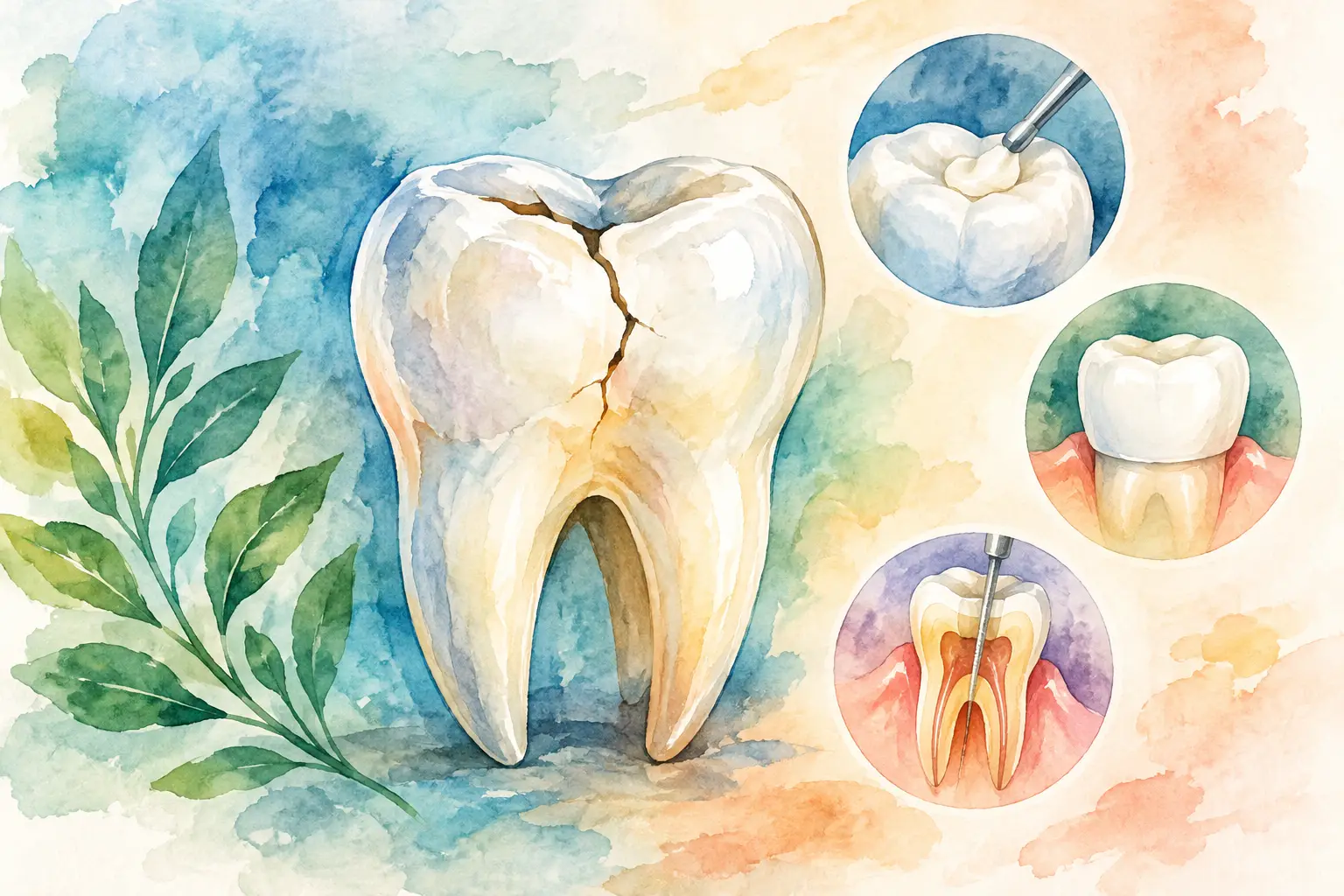
A tooth can crack while biting into a hard pretzel, chewing ice, clenching during sleep, or simply from years of wear. The question, “can cracked teeth be saved,” has no single answer, but prompt dental assessment gives many damaged teeth a strong chance of remaining functional for years. The key is finding out how deep the crack extends before bacteria, pressure, or further breakage creates a larger problem.
A cracked tooth does not always look dramatic. You may feel a sharp pain when releasing a bite, notice sensitivity to cold, or experience discomfort that comes and goes. Some cracks produce no symptoms at first. That is why a dentist should assess any new bite pain, chipped area, or tooth that feels different after an injury.
Can Cracked Teeth Be Saved? It Depends on the Crack
Teeth are layered structures. The visible outer enamel is exceptionally hard, but it can develop small fractures. Beneath it is dentin, a more sensitive layer, followed by the pulp, which contains nerves and blood vessels. A crack that stays in enamel may need little or no treatment, while one that reaches the pulp or travels below the gumline can require more complex care.
A dentist will examine the tooth, assess your bite, take digital X-rays when appropriate, and may use light or magnification to identify the fracture. Not every crack appears clearly on an X-ray, especially if it runs lengthwise. Your symptoms and clinical examination are equally valuable in determining what is happening.
Craze lines
Craze lines are tiny surface cracks in enamel. They are common in adult teeth and often develop through normal chewing forces, temperature changes, or long-term wear. They usually do not cause pain or threaten the tooth’s structure. If their appearance is a concern, cosmetic options may be discussed, but many craze lines simply need monitoring.
A fractured cusp
A cusp is the pointed chewing portion of a back tooth. It can break away around a large filling or weakened area, sometimes without affecting the nerve. Depending on how much healthy tooth remains, the dentist may restore it with a filling, an onlay, or a crown. Covering the tooth helps prevent the fracture from spreading under chewing pressure.
A crack extending into dentin or pulp
A deeper crack can cause sensitivity or pain when chewing because the two sides of the tooth move slightly apart under pressure. If bacteria enter the pulp, inflammation or infection may develop. Root canal treatment can remove infected tissue and preserve the tooth, followed by a crown to protect it from future fracture. A root canal does not weaken a tooth by itself; rather, the tooth needs restoration because it was already structurally compromised.
A split tooth or vertical root fracture
When a crack separates the tooth into distinct pieces, saving the entire tooth may not be possible. A vertical root fracture, which runs down the root below the gumline, also has a guarded prognosis. In selected cases, a specialist may be able to preserve part of a multi-rooted tooth. More often, extraction is the safest way to protect surrounding bone and prevent recurring infection. If removal is needed, replacing the tooth can restore chewing function and help limit shifting of nearby teeth.
Signs You Should Arrange a Dental Visit Soon
Cracked teeth can be unpredictable. A mild ache can become severe after the tooth fractures further, and an untreated crack may allow infection to develop without constant pain. Contact a dental clinic promptly if you have pain when biting, sensitivity that lingers after hot or cold foods, swelling near a tooth, a visible fracture, or a filling that has broken away.
Urgent care is especially important after a facial injury, if you have significant swelling, fever, uncontrolled bleeding, or difficulty swallowing or breathing. Do not place aspirin directly on a painful tooth or gum tissue, as it can cause a chemical burn.
Until your appointment, avoid chewing on that side and choose softer foods. If a sharp edge is irritating your tongue or cheek, dental wax may provide temporary protection. Over-the-counter pain medication may help when it is safe for you to take it, but it will not treat the source of the problem. Keep any broken piece of tooth or restoration and bring it with you if possible.
Treatment Is About Saving Structure, Not Just Stopping Pain
The best treatment preserves as much healthy natural tooth structure as possible while creating a dependable seal against bacteria and a stable chewing surface. For a small chip, composite bonding may rebuild the area in a single appointment. For more substantial damage, an inlay, onlay, or crown can wrap and support the remaining tooth.
When the pulp is affected, root canal treatment may be recommended before placing a crown. This approach often allows a painful or infected tooth to remain in place rather than being extracted. Modern local anesthetic and comfort-focused care make treatment manageable for most patients, including those who feel anxious about dentistry.
If a tooth cannot be predictably repaired, extraction is not a failure. It can be the healthiest option when a fracture extends too far below the gumline or into the root. After healing, replacement options may include a dental implant, a bridge, or a removable solution. The right choice depends on your bone and gum health, neighbouring teeth, bite, aesthetic goals, timeline, and budget.
Why Waiting Can Make a Cracked Tooth Harder to Save
A crack does not heal like a broken bone. Every bite can place force on it and allow it to progress. The longer a crack is exposed, the more likely bacteria can reach deeper portions of the tooth. What might have been managed with a protective restoration may eventually require root canal treatment or extraction.
That does not mean every minor enamel line requires immediate intervention. Your dentist may recommend monitoring a stable, painless craze line at regular checkups. The difference is a professional diagnosis: treating a tooth too aggressively is not ideal, but overlooking a deep crack can carry real consequences.
People who grind or clench their teeth may benefit from a custom night guard after treatment. A night guard does not repair an existing fracture, but it can reduce repeated forces that contribute to cracks, worn enamel, broken restorations, and jaw soreness. If your bite is uneven or a restoration is taking excessive force, adjusting it may also help protect the repaired tooth.
Protecting Your Teeth After Repair
After a crown, bonding, or other restoration, your tooth still needs routine care. Brush twice daily with fluoride toothpaste, clean between teeth daily, and attend recommended exams and hygiene appointments. Avoid using teeth to open packaging, cut fishing line, or crack nuts. Hard candies, ice, and unpopped popcorn kernels can also damage natural teeth and restorations.
For families, it is helpful to treat dental injuries seriously even when a child seems comfortable. A chipped or cracked baby tooth may affect eating and can irritate soft tissues, while an injured permanent tooth may need early stabilization or monitoring. A dental team can explain what is appropriate for your child’s age and stage of development.
At ORIS Dental Clinics, coordinated care can be especially useful when a cracked tooth needs more than a simple filling. General, restorative, endodontic, surgical, and tooth-replacement planning can be considered in one setting, so the recommendation reflects both the immediate concern and your long-term oral health.
If a tooth hurts when you bite or you have noticed a new crack, do not wait for it to become an emergency. An early examination can clarify whether the tooth needs simple protection, more advanced treatment, or careful monitoring – and can help you make a confident decision before the damage progresses.