
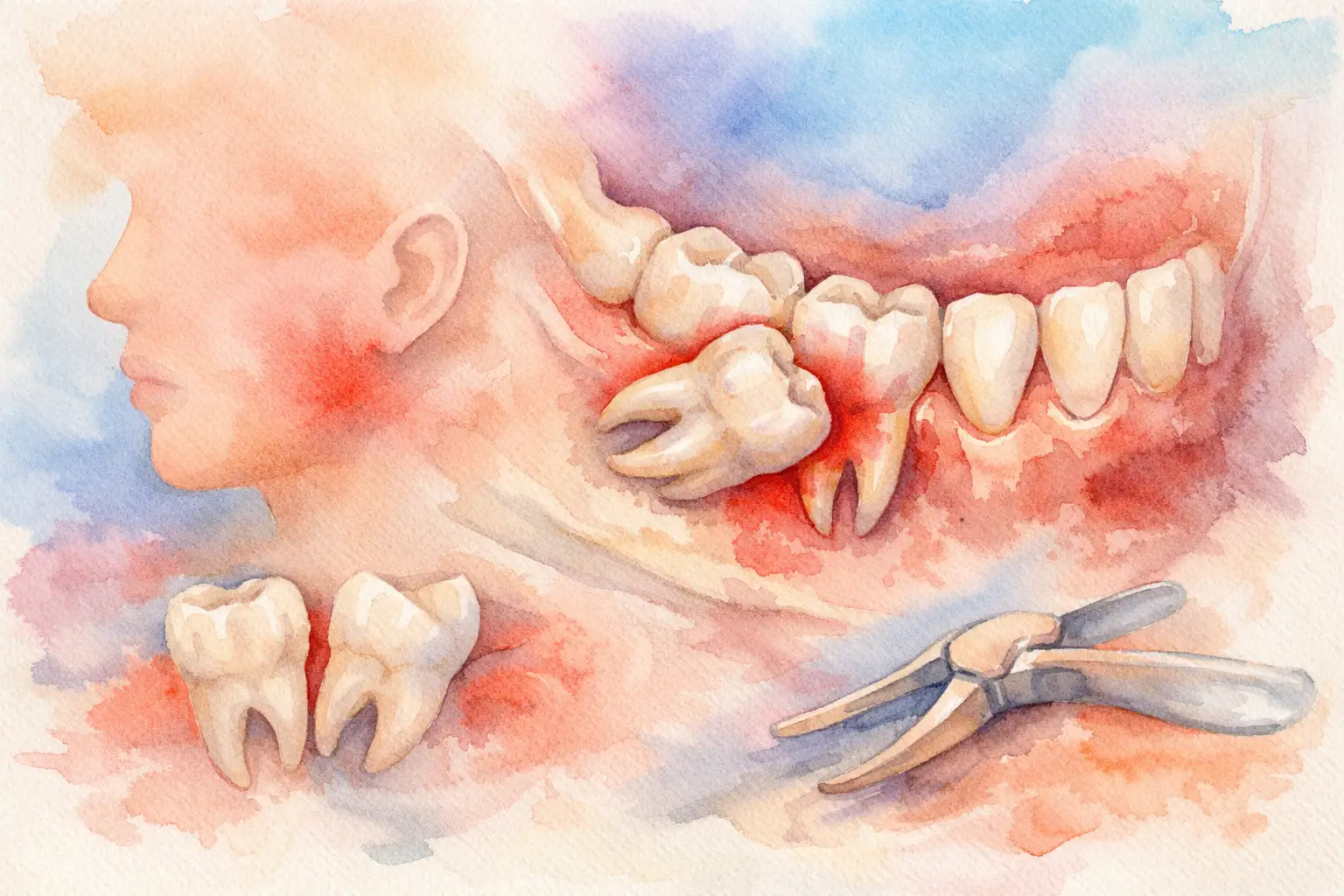
A sore spot at the very back of your jaw can be easy to dismiss, especially when it comes and goes. But the signs of impacted wisdom teeth may point to a problem that needs more than pain relief. Wisdom teeth can remain partly or fully trapped beneath the gums or bone, creating pressure, inflammation, and risks for the neighbouring teeth.
Wisdom teeth are the third molars, usually developing in the late teens or twenties. Some erupt normally and remain healthy. Others do not have enough room to come in, grow at an angle, or become stuck below the gumline. An examination and dental X-rays can show what is happening below the surface and help determine whether monitoring or treatment is the right next step.
What Does It Mean When a Wisdom Tooth Is Impacted?
An impacted wisdom tooth does not fully erupt into a functional position. It may be completely covered by gum tissue or bone, or it may partly break through the gum. Partially erupted teeth can be particularly difficult to keep clean because bacteria and food debris can collect under the gum flap around the tooth.
Impaction does not always cause immediate discomfort. Some people learn about it during a routine dental visit, while others experience sudden pain or swelling when inflammation develops. The position of the tooth matters. A wisdom tooth leaning toward the tooth in front of it, for example, may increase the risk of damage in an area that is difficult to see and brush properly.
Common Signs of Impacted Wisdom Teeth
Pain is a common reason people seek care, but it is not the only symptom. The discomfort may feel like a dull ache at the back of the jaw, pressure in the gum, or pain that flares when chewing. It can also travel toward the ear, temple, or throat, making the source less obvious.
Other signs of impacted wisdom teeth can include:
- Red, swollen, tender, or bleeding gum tissue behind the last visible molar
- A bad taste, persistent bad breath, or drainage from around the back tooth
- Difficulty opening the mouth fully or discomfort when swallowing
- Swelling in the cheek, jaw, or nearby lymph nodes
- Repeated food trapping behind the second molar
- Crowding or pressure around the back teeth
A partially erupted wisdom tooth may develop an infection in the surrounding gum tissue, often called pericoronitis. This can cause swelling, pain, and difficulty cleaning the area. Symptoms sometimes settle temporarily, but repeat episodes are a reason to arrange an assessment. Treating the immediate inflammation can provide relief, yet the underlying position of the tooth still needs consideration.
Not every headache, jaw ache, or tight feeling means a wisdom tooth is impacted. Clenching, temporomandibular joint concerns, sinus pressure, and other dental problems can cause similar symptoms. A professional assessment helps separate a wisdom tooth issue from other possible causes.
When a Wisdom Tooth Problem Needs Prompt Care
Contact a dental clinic promptly if you have worsening pain, facial swelling, pus or drainage, fever, or difficulty opening your mouth. These symptoms can indicate an infection that requires timely treatment. Do not rely on antibiotics alone as a permanent solution if the tooth remains a repeated source of infection. Your dental team will assess the cause and recommend the safest next step.
Seek urgent medical attention if swelling affects breathing or swallowing, spreads rapidly, or is accompanied by significant fever or feeling unwell. Dental infections can become serious when they spread beyond the tooth and gums.
For mild discomfort while waiting for an appointment, gentle brushing, warm salt-water rinses, and avoiding food that packs into the area may help. Over-the-counter pain medication may be appropriate for some patients when used according to the label and their health-care provider’s advice. Avoid placing aspirin or other medication directly on the gums, as this can irritate or burn the tissue.
Why Waiting Can Create More Complicated Problems
A symptom-free impacted wisdom tooth does not automatically need removal. In some cases, it can be monitored with regular exams and X-rays. This approach may suit a tooth that is fully buried, stable, and not affecting the surrounding teeth or jawbone. The decision depends on its position, your age, your overall health, and whether there is evidence of disease.
However, waiting can be risky when the tooth is repeatedly inflamed, decayed, difficult to clean, or pressing against the second molar. Cavities and gum disease can develop in both teeth, particularly where a tilted wisdom tooth traps plaque against the back of the second molar. In some cases, a cyst can form around an unerupted tooth. These concerns may not produce noticeable symptoms early on, which is why regular dental visits matter.
Removal can also become more complex when roots are fully developed or when infection and damage have progressed. That does not mean every young adult should have wisdom teeth removed pre-emptively. It means the choice should be based on clear clinical findings and a conversation about the benefits, risks, and alternatives for your situation.
How Dentists Assess an Impacted Wisdom Tooth
Your appointment usually starts with a review of your symptoms and medical history, followed by an examination of the gums, bite, and neighbouring teeth. Dental X-rays show the tooth’s angle, root formation, bone level, and relationship to nearby structures. For lower wisdom teeth, the position of the roots relative to the nerve in the jaw is particularly relevant to treatment planning.
If removal is recommended, your dentist or oral surgery provider will explain the procedure, expected recovery, and comfort options. Simple cases may be completed with local freezing. For patients with dental anxiety, complex impactions, or multiple teeth requiring treatment, sedation options may be considered when clinically appropriate. The goal is not simply to remove a tooth, but to make the experience understandable, safe, and manageable.
At ORIS Dental Clinics, patients can receive coordinated assessment and treatment planning in one setting, including care for more complex oral surgery needs. This can be especially helpful when a wisdom tooth concern involves infection, damage to nearby teeth, or anxiety about treatment.
What Recovery After Wisdom Tooth Removal Can Look Like
Recovery varies with the tooth’s position and the type of procedure required. Swelling, tenderness, and limited jaw opening are common for several days, particularly after surgical removal. Your care team will provide instructions about pain management, eating, brushing, and activity.
Soft foods and good hydration are usually helpful at first. Avoid smoking, vaping, vigorous rinsing, and using straws during the early healing period because suction can disturb the protective blood clot. This can lead to dry socket, a painful condition that needs dental attention. Keeping follow-up appointments and calling the clinic if pain worsens after initially improving can help identify problems early.
Do Not Wait for Severe Pain
Wisdom teeth do not always announce a problem dramatically. A recurring tender gum flap, food trapping at the back of the mouth, or an unexplained bad taste can be enough reason to book an exam. A clear assessment now can protect the teeth beside your wisdom teeth and give you a plan that fits your health, comfort, and timeline.