
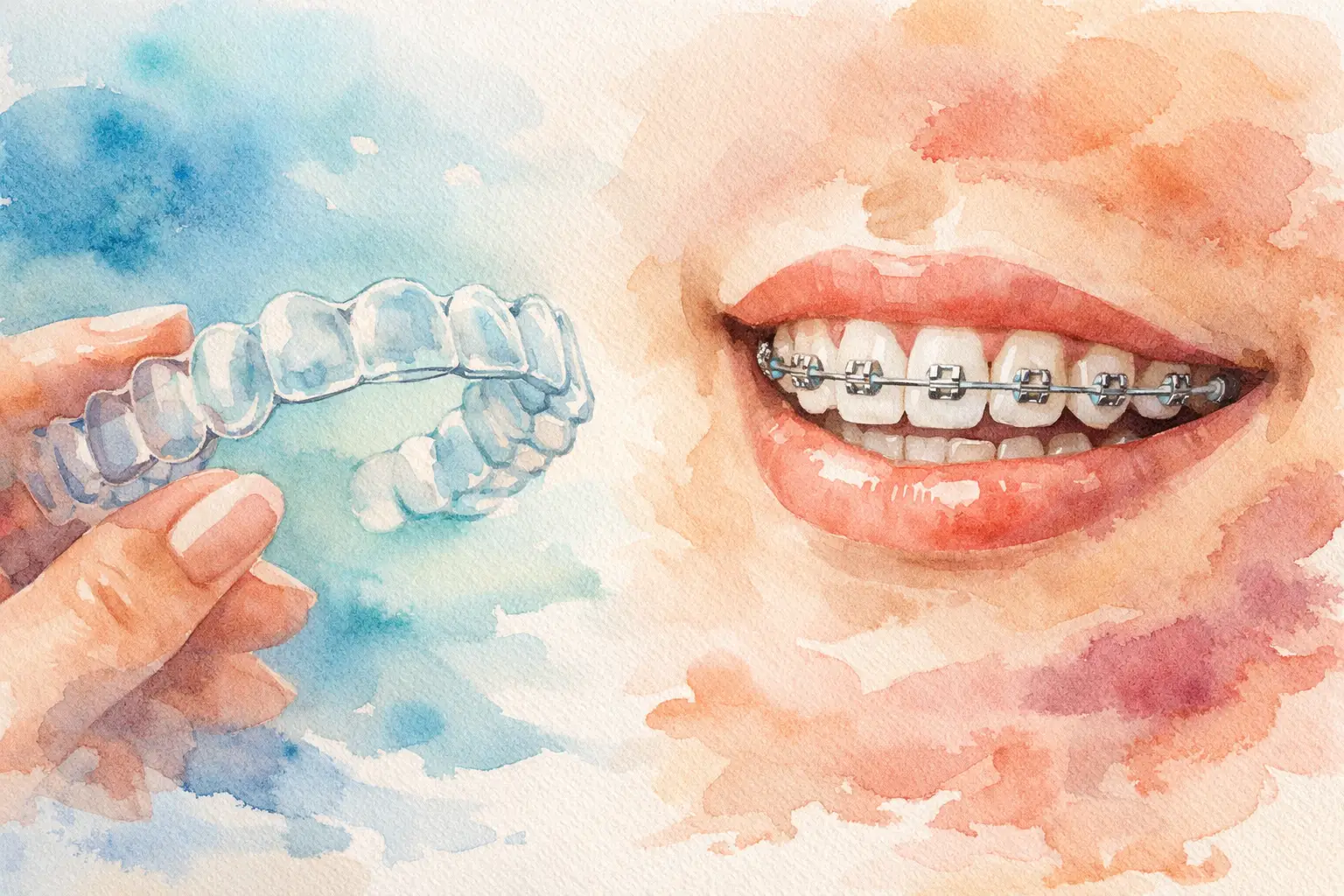
A work presentation, a wedding, a return to the office, or simply seeing your smile in photos can make orthodontic treatment feel more urgent. When considering invisalign versus braces for adults, appearance matters, but it should not be the only deciding factor. The right treatment also needs to move teeth predictably, support a healthy bite, fit your daily routine, and protect your long-term oral health.
Clear aligners and fixed braces can both create excellent results for adult patients. The best choice depends on the position of your teeth, how your upper and lower jaws meet, the condition of your gums and bone, and how realistically each option fits into your life.
Invisalign versus braces for adults: the core difference
Invisalign treatment uses a series of clear, removable aligners that gradually guide teeth into planned positions. Each set is worn for most of the day and changed according to the treatment plan. Because the aligners are transparent and removable, they are often appealing to adults who want a discreet orthodontic option.
Braces use brackets attached to the teeth and a wire that is adjusted over time. Modern braces can be smaller and less noticeable than many adults remember, and ceramic brackets may be available for patients seeking a subtler appearance. Since braces stay in place, they apply consistent force without relying on the patient to put them back in after meals or social occasions.
Neither option is automatically better. Clear aligners offer flexibility and aesthetics. Braces offer fixed, continuous treatment control. An orthodontic assessment determines which advantage matters most in your individual case.
When clear aligners can be a strong fit
Clear aligners are often suitable for adults with mild to moderate crowding, spacing, tooth rotation, or bite concerns. They can also be effective for many more complex cases when treatment is carefully planned and the patient wears the aligners as directed.
The ability to remove aligners is a practical benefit. You can eat without food catching around brackets and wires, brush and floss normally, and take the aligners out briefly for an important event. For professionals who regularly meet clients or speak publicly, that discretion can make starting treatment feel more comfortable.
However, removable treatment requires consistent habits. Aligners generally need to be worn about 20 to 22 hours each day. Leaving them out for long lunches, frequent snacking, or evenings at home can slow progress and affect the result. Lost or damaged aligners can also interrupt treatment.
Some patients assume clear aligners are always more comfortable. They can reduce the rubbing associated with brackets, but teeth still move through controlled pressure. A new set of aligners may feel tight for a day or two, especially early in treatment. Small tooth-coloured attachments are also commonly placed on teeth to help aligners grip and guide certain movements. They are discreet, but not entirely invisible at close range.
Clear aligners need healthy foundations
Before orthodontic movement begins, cavities, gum inflammation, active periodontal disease, and unstable restorations should be addressed. Adult teeth may have crowns, fillings, implants, wear, or previous dental work that affect treatment planning. An implant, for example, cannot be moved orthodontically once it has integrated with the bone, so surrounding teeth must be planned around it.
This is why a comprehensive assessment is valuable. Orthodontic treatment is not just about straightening visible front teeth. It should account for gum health, jaw function, tooth stability, and future restorative needs.
When braces may be the better choice
Braces can be an excellent option for adults with significant crowding, complex rotations, large bite discrepancies, or teeth that need more demanding movement. They give the orthodontic team direct control and can be particularly useful when tooth positioning requires detailed adjustments.
Fixed braces can also suit patients who know they would struggle with aligner wear. If remembering to insert trays after every meal feels unrealistic, braces remove that variable. The treatment is working around the clock, provided appointments and home-care instructions are followed.
Braces do ask more of your daily cleaning routine. Food can collect around brackets and wires, so careful brushing and flossing are essential to reduce the risk of plaque buildup, cavities, and swollen gums. A small interdental brush or floss threader can make cleaning easier. Patients also need to avoid very hard, sticky, or chewy foods that could damage brackets or wires.
There can be occasional inconveniences, such as a loose bracket or wire that irritates the cheek. These concerns are usually manageable, and orthodontic wax can provide temporary comfort until the issue is reviewed. For patients who want maximum treatment control and do not mind a more visible appliance, braces remain a dependable choice.
Treatment time and results depend on the case
Adults often ask which option works faster. The honest answer is that treatment length depends more on the complexity of the problem and patient cooperation than on the appliance alone. Some limited cosmetic corrections may take several months. Comprehensive bite correction often takes 12 to 24 months, and more complex cases can take longer.
Clear aligner treatment can fall behind schedule if aligners are not worn consistently. Braces can be delayed by missed adjustment appointments or repeated breakages. In either case, finishing on time is a shared effort between the patient and orthodontic team.
It is also worth looking beyond the visible result. Straight teeth are appealing, but a stable bite can make chewing more comfortable and help distribute pressure more evenly. Properly aligned teeth may also be easier to clean, although excellent brushing and flossing remain necessary regardless of orthodontic treatment.
Cost is personal, not one-size-fits-all
The cost of Invisalign or braces varies according to treatment complexity, anticipated duration, required records and imaging, retainer needs, and any additional dental care required before treatment. A short course intended to correct a small area may cost less than comprehensive treatment that changes the bite and positions many teeth.
Rather than choosing based on an advertised starting price, ask for a written treatment plan that explains what is included. Clarify whether retainers, refinement aligners, emergency visits, records, and follow-up appointments are part of the quoted fee. If you have dental benefits, it is helpful to understand your orthodontic coverage, lifetime maximums, and whether payment options are available.
A plan that fits your budget should still be clinically appropriate. Choosing a limited cosmetic approach when a bite concern needs comprehensive care may lead to compromises that are not obvious at the beginning.
Questions to bring to your orthodontic consultation
A good consultation should leave you clearer, not pressured. Ask whether your concerns are primarily cosmetic, functional, or both. Ask how each option would affect treatment time, visibility, hygiene, comfort, and the stability of your final bite. If you have gum disease, missing teeth, implants, crowns, jaw discomfort, or a history of grinding, ask how those factors change the plan.
You may also want to ask what retainers you will need after treatment. Retention is essential with both braces and aligners because teeth naturally tend to shift over time. Most adults should expect to wear retainers long term, often every night after an initial full-time retention period.
At ORIS Dental Clinics, coordinated care can be particularly helpful when orthodontic planning overlaps with restorative, periodontal, surgical, or cosmetic needs. Addressing the health and position of the teeth together helps create a result that looks natural and functions well.
The right choice should feel manageable on an ordinary Tuesday, not just at the consultation. If discreet, removable aligners will help you commit to treatment, they may be the right fit. If fixed braces give you the control and consistency your teeth need, that can be the more confident path forward. A personalised assessment can turn that decision into a clear, practical plan for your smile.