
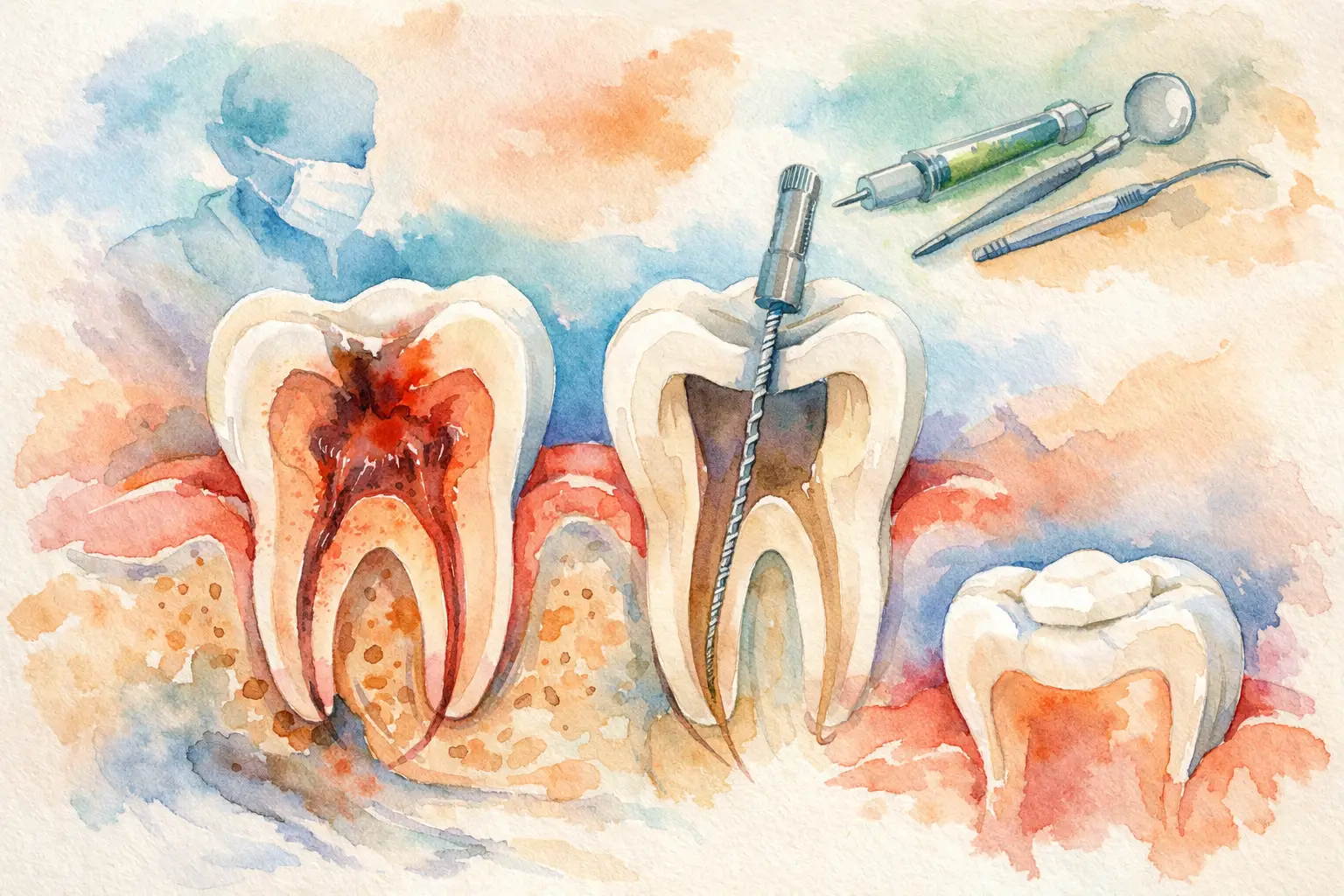
A deep, throbbing toothache can make eating, sleeping, and concentrating difficult. In some cases, root canal treatment is the procedure that stops the pain while preserving the tooth that caused it. Rather than removing the tooth, a root canal addresses infection or inflammation inside it, allowing you to keep your natural bite and smile.
For many people, the words “root canal” bring up memories of discomfort or anxiety. Modern endodontic care is far more precise and comfort-focused than that reputation suggests. With effective local anesthetic, digital imaging, and careful planning, the procedure is generally comparable to having a filling placed, particularly once the severe pain from an infected tooth is controlled.
What is root canal treatment?
At the centre of every tooth is a small space containing the pulp, which includes nerves, blood vessels, and connective tissue. The pulp helps a tooth develop, but once the tooth is fully formed, it can continue to function without it.
When deep decay, a crack, repeated dental work, or an injury allows bacteria to reach the pulp, the tissue can become inflamed or infected. This may cause significant pain, sensitivity, or swelling. If left untreated, infection can spread beyond the root tip into the surrounding bone and tissues.
Root canal treatment removes the damaged pulp, cleans and disinfects the inside of the tooth, then seals the narrow root canals to help prevent reinfection. The tooth is then restored, often with a filling and, when appropriate, a crown that protects it from fracture.
Signs you may need a root canal
Tooth pain is a common reason people seek care, but not every painful tooth requires a root canal. A thorough examination is needed to identify the source of the problem. Your dentist may use X-rays, temperature testing, bite testing, and an examination of the tooth and gums before recommending treatment.
Symptoms that can point to pulp inflammation or infection include lingering sensitivity to hot or cold, pain when biting or chewing, spontaneous throbbing, a pimple-like bump on the gum, swelling around a tooth, or darkening of the tooth. Sometimes there are no obvious symptoms at all, and an infection is found on an X-ray during a routine appointment.
A cracked tooth can be more complicated. Whether it can be saved depends on the location and depth of the crack. Similarly, a tooth with extensive decay may need evaluation to determine whether enough healthy structure remains for a reliable restoration after treatment.
What happens during the procedure?
Your care begins with a diagnosis and a discussion of the findings. If a root canal is recommended, the goal is straightforward: remove infection, preserve healthy tooth structure where possible, and create a strong plan for restoring the tooth afterward.
The tooth and nearby tissues are numbed with local anesthetic. A small protective barrier, often called a dental dam, is placed around the tooth to keep the area clean and dry. Your dentist then creates a small opening to access the pulp chamber and root canals.
Using fine instruments and disinfecting solutions, the inside of the tooth is cleaned and shaped. Digital imaging and modern endodontic techniques help guide this work, especially because root canals can be very narrow and curved. Once the canals are clean, they are filled with a biocompatible material and sealed.
Some teeth can be completed in one visit. Others need two appointments, particularly when infection, complex anatomy, or significant inflammation requires additional medication inside the tooth between visits. The timeline is based on the condition of the tooth, not on rushing a clinical decision.
Why a crown may be recommended afterward
Back teeth handle substantial chewing force. After a root canal, they can be more vulnerable to cracking, especially if decay or an old filling has already removed a large amount of tooth structure. A crown covers and supports the remaining tooth, which can reduce the risk of a future break.
A front tooth may not always require a crown. It depends on how much natural tooth remains, whether there is a crack, how the tooth meets the opposing teeth, and the quality of the final filling. Your dentist can explain the restoration options and the trade-offs for your specific tooth.
Does a root canal hurt?
The pain that leads to a root canal is often much worse than the treatment itself. Local anesthetic is used to keep you comfortable during the procedure. You may feel pressure, vibrations, or the need to keep your mouth open for a period of time, but you should not feel sharp pain.
Tell the dental team if you are anxious, have had difficulty getting numb in the past, or are concerned about a long appointment. Comfort planning can include breaks, clear explanations of each stage, and sedation options when clinically appropriate. At ORIS Dental Clinics, coordinated care means patients can discuss both the dental problem and the support they need to feel at ease receiving treatment.
Afterward, mild tenderness is common for several days, particularly when biting. This usually reflects healing in the tissues around the root. Your dentist may recommend an over-the-counter pain reliever if it is safe for you, along with specific instructions based on your medical history. Contact the clinic promptly if pain becomes severe, swelling increases, or you develop a fever.
Recovery and caring for the tooth
Most patients return to normal daily activities quickly. Until the final restoration is complete, avoid chewing hard or sticky foods on the treated tooth. A temporary filling can protect the access opening, but it is not meant to withstand heavy pressure for an extended period.
Continue brushing twice daily and cleaning between your teeth. A root canal removes the tissue inside a tooth, but the tooth and surrounding gums still need routine care. New decay at the edge of a filling or crown, gum disease, or a crack can still affect a treated tooth later.
Follow-up appointments matter. They allow the dentist to place the planned permanent restoration, check your bite, and monitor healing. When a treated tooth is properly restored and maintained, it can last for many years.
Is extraction a better option?
Extraction is sometimes necessary when a tooth cannot be predictably restored, has a severe vertical root fracture, or lacks adequate bone support. However, when a natural tooth can be saved, root canal treatment is often the preferred option.
Removing a tooth may seem like the simpler short-term choice, but the space can affect chewing and allow nearby teeth to shift. Replacing an extracted tooth with a bridge, dental implant, or removable appliance involves its own treatment timeline and cost. In many cases, saving a restorable natural tooth with root canal treatment and a proper restoration is the more conservative long-term path.
The right choice depends on the tooth’s prognosis, your overall oral health, your timeline, and your goals. A clear discussion should include both the benefits and limits of saving the tooth, as well as what replacement would involve if extraction is required.
When to seek prompt care
Do not wait for a routine checkup if you have facial swelling, worsening pain, drainage from the gums, or a tooth that is painful to bite on. Dental infections do not reliably resolve without treatment, and earlier assessment can sometimes make care more straightforward.
If swelling affects breathing or swallowing, seek emergency medical attention immediately. For non-life-threatening dental pain or swelling, contacting a dental clinic as soon as possible is the practical next step.
A painful tooth can make life feel smaller than it should. Prompt assessment gives you clear answers, appropriate comfort options, and the best opportunity to protect the natural tooth you already have.